AI: The Hidden Minefield in US-China Relations During Trump's Visit
The Geopolitical Chessboard: AI at the Heart of US-China Tensions
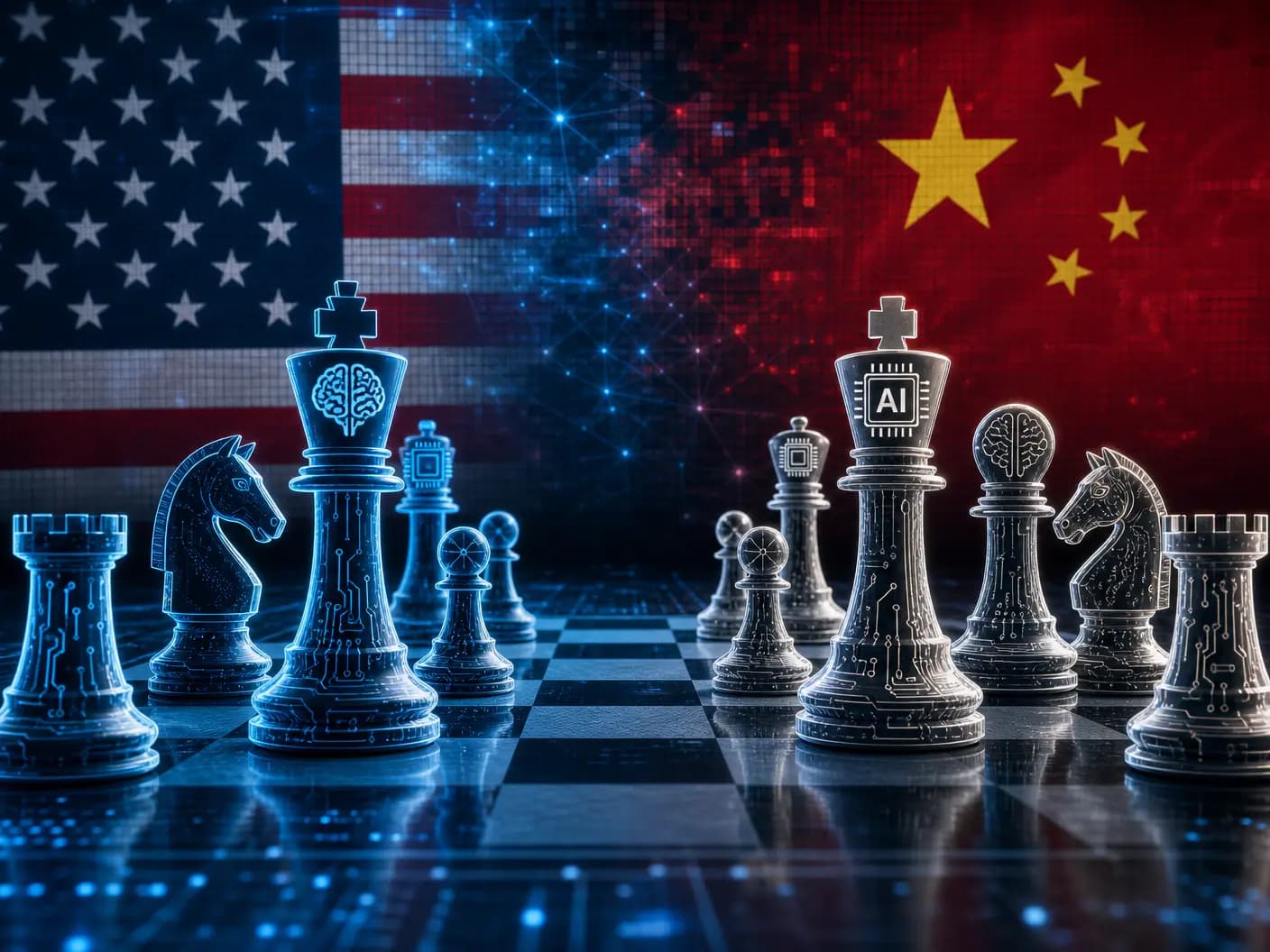
The recent visit of President Donald Trump to China in May 2026 marked a pivotal moment in the ongoing geopolitical dance between the world's two largest economies. While trade imbalances and regional security concerns often dominate headlines, a more subtle yet profoundly impactful issue simmered beneath the surface: Artificial Intelligence. Far from being a mere technological advancement, AI has emerged as a critical battleground, a hidden minefield that shapes military strategies, economic competitiveness, and the very future of global power dynamics. This article delves into the intricate web of AI-related discussions, rivalries, and potential collaborations that defined Trump's engagement with President Xi Jinping, exploring the high stakes involved for both nations and the broader international community.
The Dual-Use Dilemma: AI in Military Applications
One of the most contentious aspects of the US-China AI rivalry is its application in military technology. Both nations are engaged in an intense race to develop AI-powered weaponry, a development that raises profound ethical and strategic questions. The concept of autonomous weapons systems, capable of wreaking immense damage without direct human involvement, is no longer the stuff of science fiction but a rapidly approaching reality. For instance, China's recent military parade showcased advanced autonomous drones designed to operate alongside fighter jets, demonstrating a clear commitment to integrating AI into its defense capabilities. Similarly, the United States has openly boasted about leveraging AI for target selection in ongoing conflicts, such as the war in Iran. This dual-use dilemma—where AI advancements can serve both civilian and military purposes—creates a complex security landscape where trust is scarce and the incentive to outpace the adversary is paramount.
The Race for AI Supremacy: A Zero-Sum Game?
The underlying tension stems from a perception in both Washington and Beijing that AI supremacy is a zero-sum game. Policymakers in both countries fear that imposing any form of guardrails or regulations on AI development—for example, curtailing its ability to create bioweapons or conduct sophisticated cyberattacks—would grant the other side an insurmountable advantage. This competitive dynamic often overshadows calls for cooperation on AI safety and ethical guidelines, even as experts warn of the technology's potential for misuse by non-state actors or even the catastrophic scenario of a sentient AI. The economic implications are equally significant. The nation that dominates AI is poised to lead in various industries, from healthcare and finance to manufacturing and transportation, translating into unparalleled economic power and global influence.
The Economic and Societal Impact of AI: A Tale of Two Approaches
Beyond military applications, the US and China exhibit strikingly different approaches to AI adoption and regulation, reflecting their distinct political systems and societal values. These differences were a silent backdrop to the discussions between Trump and Xi, influencing perceptions of risk, innovation, and control.
China's Ambitious AI Penetration and Public Acceptance
China has embarked on an ambitious national strategy to achieve an AI penetration rate of over 70% in key industries by 2027. This top-down approach, driven by government mandates and significant state investment, has fostered an environment of rapid AI integration across various sectors. Real-world examples abound: in cities like Hangzhou, robotic police officers are being deployed, and AI-powered surveillance systems are commonplace. While such deployments raise privacy concerns in Western democracies, public acceptance in China appears to be significantly higher. This is partly due to a cultural emphasis on collective benefit and a pragmatic view of technology as a tool for societal advancement. The rapid adoption is also fueled by a perceived need to catch up and surpass Western technological prowess, particularly in areas deemed critical for national security and economic growth.
The Shifting Landscape of AI Research and Development
The notion that China is merely an imitator of Western technology is rapidly becoming outdated. Recent reports, including the Stanford AI Index, suggest that the US-China AI model performance gap has effectively closed. Chinese universities, such as Zhejiang University and Shanghai's Jiao Tong University, are now surpassing prestigious institutions like Harvard in scientific performance rankings. This academic excellence is translating into a vibrant startup ecosystem, with companies like DeepSeek emerging as significant players in the global AI landscape. Notably, China's open-source DeepSeek model is increasingly weaning itself off reliance on US-made chips, signaling a strategic push towards self-sufficiency in critical AI infrastructure. This shift has profound implications for global supply chains and the future of technological interdependence.
The United States: Innovation Tempered by Caution
In contrast, the United States, while a hotbed of AI innovation, approaches the technology with a more cautious and often fragmented regulatory framework. The public discourse in the US is characterized by a greater degree of skepticism and concern regarding AI's potential negative impacts. Pew surveys indicate that 50% of Americans are wary of AI, compared to an average of 33% in other G7 countries. This apprehension stems from various factors, including fears of job displacement, ethical concerns about algorithmic bias, and the potential for AI to be misused in ways that undermine democratic values. The backlash against defense-tech suppliers like Palantir, coupled with warnings from educators about AI's impact on literacy, underscores a societal debate that is still very much in its early stages.
The Role of Tech Giants and Chip Diplomacy
Despite public concerns, American tech giants continue to drive significant AI advancements. Companies like Anthropic have rolled out sophisticated AI models, such as
Mythos, which possess "unprecedented capabilities in cyberattacks." These developments highlight the dual nature of AI—its immense potential for progress alongside significant risks. A crucial aspect of the US-China AI dynamic revolves around chip diplomacy. The presence of Nvidia CEO Jensen Huang during Trump's China visit underscores the strategic importance of AI chips. While the Trump administration approved H200 exports to China in late 2025 and early 2026, the broader context of chip export controls remains a point of contention. The US seeks to maintain its technological lead by restricting China's access to advanced semiconductors, while China is actively pursuing self-sufficiency, as evidenced by the DeepSeek model's reduced reliance on US chips. This struggle for control over the foundational hardware of AI is a key element in the ongoing technological rivalry.
Bridging the Divide: The Path Towards AI Cooperation
Despite the intense competition and divergent approaches, there is a growing recognition among some policymakers and researchers of the urgent need for US-China cooperation on AI governance. The potential for an AI arms race, with its catastrophic implications for global stability, is a stark reminder that collaboration, not just competition, is essential. Discussions during the Trump-Xi summit touched upon the possibility of establishing "channels of deconfliction" and even exploring a global treaty to regulate the military use of AI. However, the path to such cooperation is fraught with challenges, including deep-seated mistrust, differing ethical frameworks, and the inherent difficulty of regulating a rapidly evolving technology.
The Role of International Dialogue and Shared Responsibility
Moving forward, sustained international dialogue and a commitment to shared responsibility will be crucial. This includes fostering greater transparency in AI research and development, establishing common standards for AI safety and ethics, and creating mechanisms for crisis communication to prevent unintended escalation. While governments often lag behind technological innovation, the urgency of AI's implications demands proactive engagement. The US and China, as the two leading AI powers, bear a unique responsibility to navigate this complex landscape in a way that benefits humanity rather than imperiling it. The outcome of their ongoing interactions, particularly on the critical issue of AI, will undoubtedly shape the geopolitical order for decades to come.
Conclusion: A Precarious Balance
President Trump's visit to China, while addressing a multitude of issues, brought the burgeoning AI rivalry into sharp focus. The discussions between the two leaders, however limited in immediate tangible outcomes, underscored the precarious balance between competition and cooperation in the age of artificial intelligence. Both nations are driven by national interests and the pursuit of technological supremacy, yet both also face the shared risks posed by unchecked AI development. The challenge lies in finding common ground, in recognizing that some aspects of AI governance transcend national borders and require a concerted global effort. The future of AI, and indeed the future of global stability, hinges on whether the US and China can transform this hidden minefield into a fertile ground for collaboration.
References
[1] Wang, Vivian. "Why A.I. is the Hidden Minefield of Trump’s China Visit."
The New York Times, 13 May 2026,
https://www.nytimes.com/2026/05/13/world/asia/us-china-trump-xi-beijing-ai.html.
[2] Cheng, Evelyn. "CNBC's The China Connection newsletter: Trump and Xi face a test over AI control."
CNBC, 11 May 2026,
https://www.cnbc.com/2026/05/11/trump-and-xi-face-a-test-over-ai-control.html.