- Malik Logix
- Posts
- Enterprise Shift OpenAI Saw Coming
Enterprise Shift OpenAI Saw Coming
Anthropic surpasses OpenAI in enterprise AI adoption, highlighting a critical shift in the competitive landscape and prompting OpenAI's strategic pivot towards business solutions.

Malik Farooq
May 15, 2026

Deep Dive
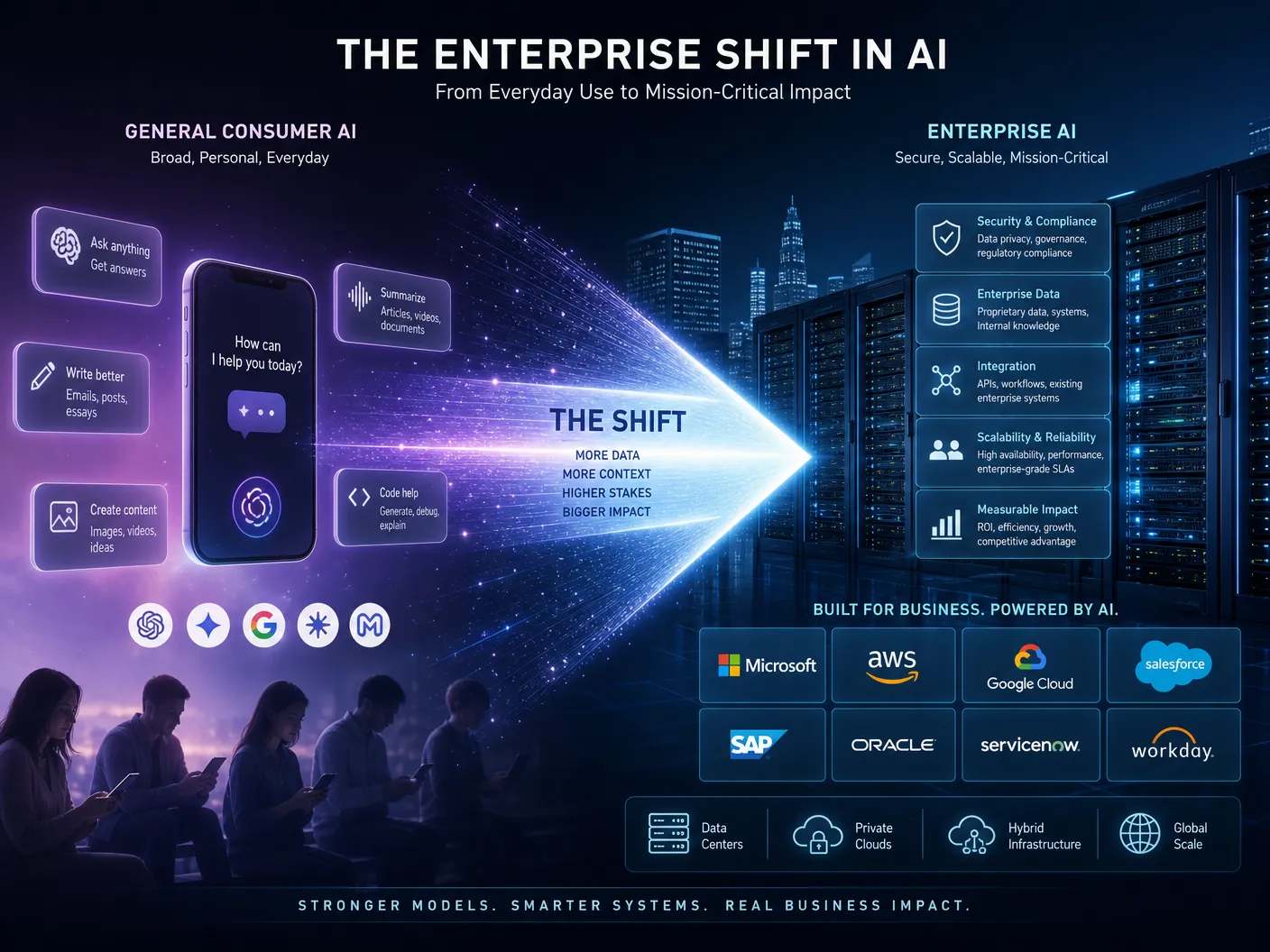
The Enterprise Shift OpenAI Saw Coming: Anthropic's Ascent and the AI Battleground
Anthropic's Meteoric Rise in the Enterprise Sector
Key Factors Driving Anthropic's Success:
- Claude Code's Impact: A major catalyst for Anthropic's surge has been its coding assistant, Claude Code. This tool has enabled Anthropic to expand its footprint beyond traditional technical teams, penetrating critical sectors such as finance, legal, and research workflows. Its ability to handle complex, nuanced tasks has resonated with enterprise clients seeking robust and reliable AI solutions.
- Focus on Enterprise Needs: Anthropic's strategic emphasis on developing AI solutions tailored for enterprise-level security, compliance, and integration has likely contributed to its growing appeal among large organizations. This focus addresses key concerns that often hinder the adoption of general-purpose AI tools in corporate environments.
- Rapid Adoption Curve: The fourfold increase in Anthropic's usage among paid business users since 2025 demonstrates a strong product-market fit and effective go-to-market strategies.
OpenAI's Strategic Pivot and the "Code Red"
OpenAI's Response and Future Directions:
- Codex and Enterprise Pushes: OpenAI's recent efforts, such as the mobile integration of Codex and other enterprise-focused initiatives, are direct responses to this competitive pressure. These moves aim to enhance the utility and accessibility of OpenAI's tools for business users, making them more competitive in the enterprise landscape.
- Leveraging Consumer Brand: Despite the enterprise shift, ChatGPT's strong consumer brand remains a significant asset for OpenAI. The challenge lies in translating this consumer appeal into sustained enterprise adoption, potentially through hybrid models that cater to both individual developers and large organizations.
- Addressing Enterprise Concerns: To regain ground in the enterprise sector, OpenAI will need to further address concerns around data privacy, customization, and seamless integration with existing corporate infrastructures. This may involve developing more specialized enterprise offerings and strengthening partnerships with cloud providers and system integrators.
The Broader AI Landscape: Trends and Challenges
Key Industry Insights:
- Specialization vs. Generalization: While general-purpose AI models like ChatGPT have broad appeal, the enterprise market often demands highly specialized AI agents capable of performing specific tasks with precision and accuracy. This trend favors companies that can develop and deploy niche AI solutions.
- Data Security and Privacy: For enterprises, the security and privacy of their data are paramount. AI providers that can offer robust data governance, encryption, and compliance with industry regulations will have a significant competitive advantage.
- Integration and Scalability: The ability to seamlessly integrate AI tools with existing enterprise systems and scale them to meet growing demands is crucial for successful adoption. This often requires flexible APIs, comprehensive SDKs, and strong technical support.
- Cost-Effectiveness: While the benefits of AI are clear, enterprises are also highly sensitive to costs. Providers that can offer cost-effective solutions without compromising on performance or security will be more attractive to budget-conscious organizations.
Real-World Examples of Enterprise AI:
- Financial Services: AI is being used for fraud detection, algorithmic trading, risk assessment, and personalized financial advice. For instance, AI-powered platforms can analyze vast amounts of transaction data to identify suspicious patterns, significantly reducing financial crime [1].
- Healthcare: AI assists in drug discovery, diagnostic imaging analysis, personalized treatment plans, and operational efficiency in hospitals. AI algorithms can analyze medical images with high accuracy, aiding in early disease detection [2].
- Manufacturing: AI optimizes supply chains, predicts equipment failures, and enhances quality control through computer vision. Predictive maintenance, powered by AI, can reduce downtime by up to 50% and increase equipment lifespan by 20-40% [3].
- Customer Service: AI-powered chatbots and virtual assistants handle routine inquiries, freeing human agents to focus on complex issues. This can lead to significant cost savings and improved customer satisfaction [4].
Conclusion

References
- The enterprise shift OpenAI saw coming - The Rundown AI
- AI in Finance: Use Cases and Benefits - Forbes
- AI in Healthcare: A Comprehensive Guide - IBM Research
- Predictive Maintenance: The Future of Asset Management - GE News
- AI in Customer Service: Benefits and Use Cases - Zendesk
Ready to master AI?
Malik Logix is an AI Marketing and Newsletter Blog Site. Join us and spend 10 minutes a day to master AI Digital Marketing.
Join Free NowKeep reading

AI Hidden Minefield Trump China
Explore the complex AI landscape during Trump's China visit, focusing on the US-China AI race, military applications, and the challenges of global AI governance.

Android Enters Gemini Intelligence Era
Google unveils Gemini Intelligence for Android, integrating AI across devices with new Googlebook laptops and an AI-infused cursor, setting a new standard for mobile AI utility.

Microsoft Open-Source Toolkit Secures AI Agents
Discover how Microsoft's new open-source toolkit enhances runtime security for enterprise AI agents, addressing governance challenges and preventing unauthorized actions.