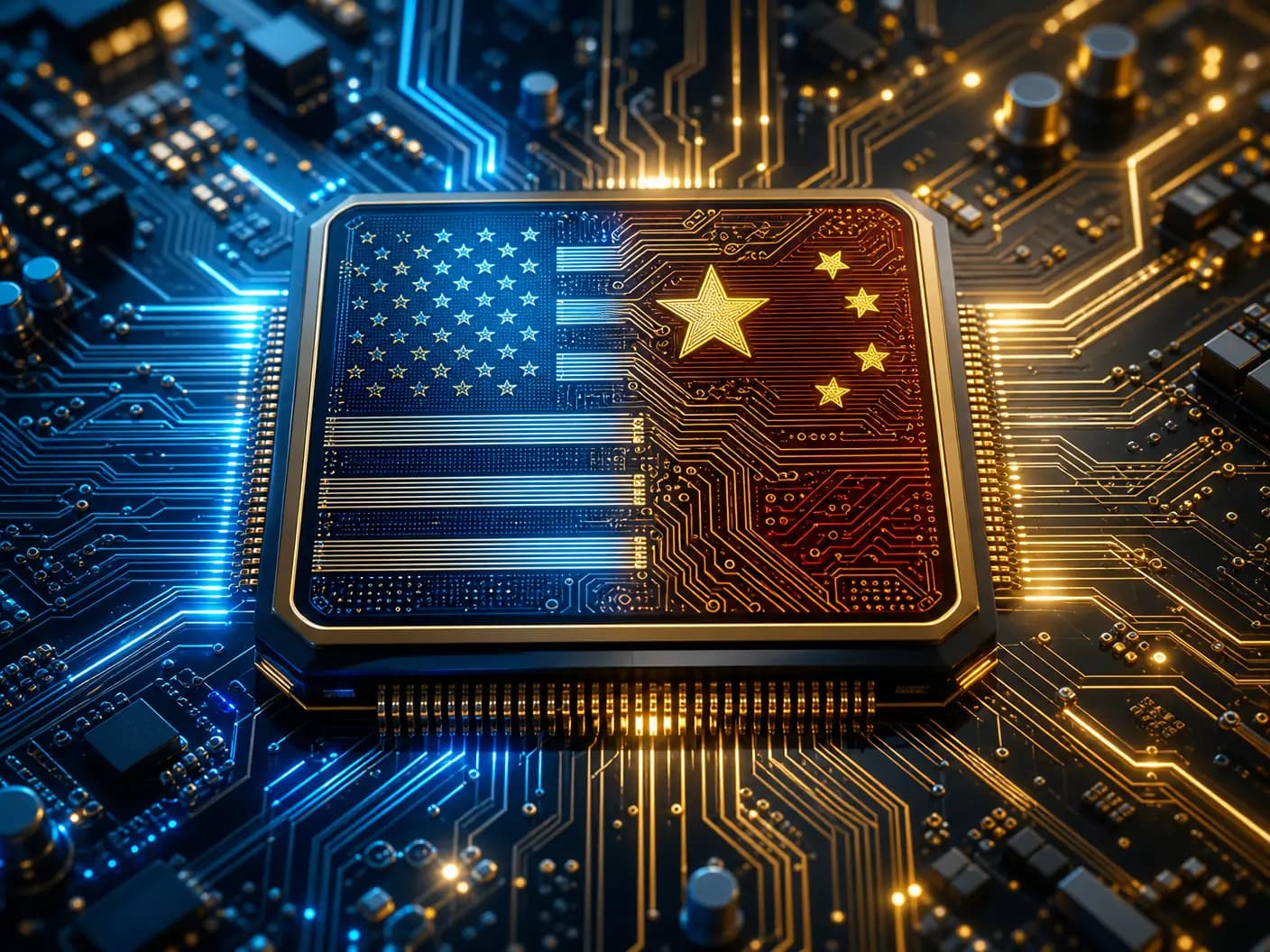
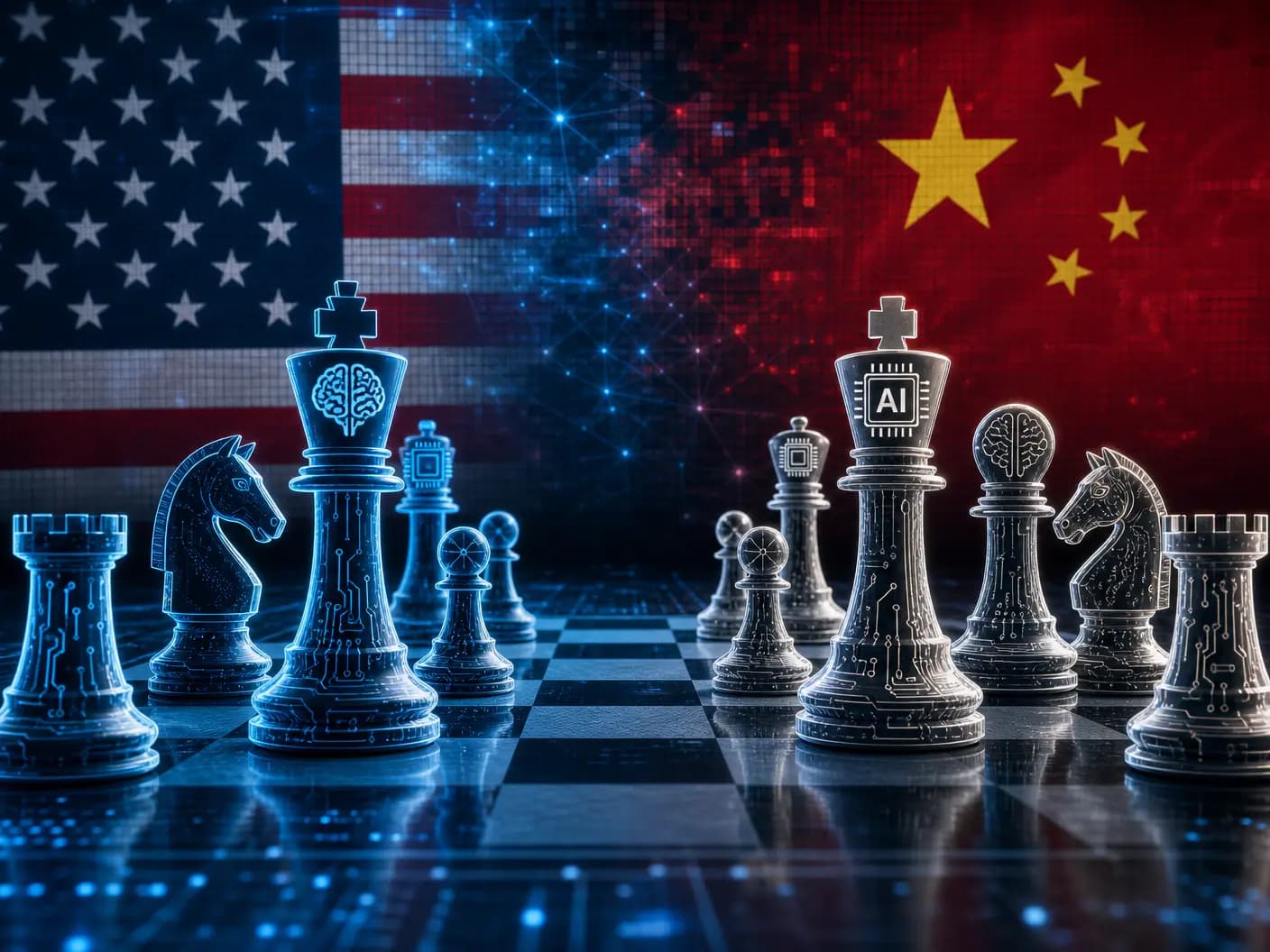
The US-China AI Tech Race: Chip Diplomacy, Public Perception, and the Future of Innovation
The Intensifying Battle for Technological Supremacy
The global landscape of artificial intelligence is increasingly defined by the intense competition between the United States and China. This rivalry, far from being a purely economic contest, encompasses strategic military applications, the control of critical technologies, and the shaping of future global influence. President Donald Trump's recent visit to China in May 2026, while ostensibly focused on broader bilateral relations, brought the underlying AI tech race into sharp relief. This article explores the multifaceted dimensions of this competition, examining the pivotal role of chip diplomacy, the divergent public perceptions of AI in both nations, and the significant contributions of tech giants in this high-stakes technological arms race.
Chip Diplomacy: The New Geopolitical Leverage
At the heart of the US-China AI tech race lies the critical domain of semiconductor technology. Advanced AI models require powerful chips, and the control over their design, manufacturing, and export has become a potent tool of geopolitical leverage. The presence of prominent tech leaders, such as Nvidia CEO Jensen Huang, during President Trump's China visit underscored the centrality of chip diplomacy. Discussions around AI chips and export controls were a major talking point, reflecting the US's strategy to maintain its technological lead by restricting China's access to cutting-edge semiconductors. While the Trump administration had approved H200 exports to China in late 2025 and early 2026, the broader policy remains one of cautious control. Conversely, China is actively pursuing self-sufficiency in chip production, with its open-source DeepSeek model demonstrating a reduced reliance on US-made components. This drive for indigenous capabilities is a direct response to perceived vulnerabilities and a strategic imperative to secure its AI future.
The Shifting Sands of Innovation: Academic and Industrial Advancements
The narrative of China as a mere technological follower is rapidly evolving. Recent assessments, including the Stanford AI Index, indicate that the performance gap between US and Chinese AI models has significantly narrowed, if not effectively closed. This convergence is not accidental but a result of concerted national efforts and a burgeoning innovation ecosystem. Chinese universities, such as Zhejiang University and Shanghai's Jiao Tong University, are now recognized globally for their scientific performance, even surpassing long-standing Western academic powerhouses like Harvard in certain rankings. This academic prowess feeds directly into industrial innovation, with these institutions serving as incubators for high-tech startups. The emergence of companies like DeepSeek, rooted in these academic environments, signifies China's growing capacity to generate groundbreaking AI technologies independently. This shift challenges the traditional hierarchy of global innovation and sets the stage for a more balanced, albeit competitive, technological future.
Public Perception and AI Adoption: A Cultural Divide
The pace and nature of AI adoption in the US and China are profoundly influenced by differing public perceptions and cultural values. These contrasting viewpoints shape regulatory approaches, investment priorities, and the societal integration of AI technologies.
China's Embrace of AI: Efficiency and National Progress
In China, there is a widespread embrace of AI, often viewed through the lens of national progress and efficiency. The government's ambitious target of achieving over 70% AI penetration in key industries by 2027 reflects a top-down commitment to integrating AI into every facet of society. This is evident in real-world applications, from the deployment of robotic police officers in cities like Hangzhou to the pervasive use of AI in urban management and public services. While such extensive integration might raise privacy concerns in Western contexts, the Chinese public generally exhibits a higher degree of acceptance, often prioritizing collective benefits and national advancement. This cultural predisposition, coupled with a pragmatic outlook on technology, facilitates rapid adoption and experimentation, allowing China to quickly scale AI solutions across its vast population and diverse industries.
The US Perspective: Innovation Tempered by Ethical Concerns
In contrast, the United States approaches AI with a more nuanced and often cautious perspective. While a global leader in AI research and development, the US public demonstrates a higher degree of wariness regarding the technology's potential downsides. Surveys indicate that 50% of Americans are wary of AI, significantly higher than the 33% average in other G7 countries. This apprehension stems from concerns about job displacement, algorithmic bias, data privacy, and the ethical implications of autonomous systems. The public discourse often highlights the
potential for AI misuse, as seen in the backlash against defense-tech suppliers like Palantir and the ongoing debates about AI's impact on education and literacy. This cautious approach, while potentially slowing down widespread adoption compared to China, fosters a more robust discussion around ethical AI development and responsible innovation.
The Path Forward: Competition, Cooperation, and Global Governance
The US-China AI tech race is not a simple binary of winners and losers; it is a complex interplay of competition, strategic cooperation, and the urgent need for global governance. While both nations are driven by the imperative to secure technological leadership, the inherent risks of unchecked AI development necessitate a degree of collaboration.
The Imperative for Dialogue and De-escalation
The discussions between President Trump and President Xi during the Beijing summit, though not yielding immediate breakthroughs, highlighted the mutual recognition of AI's transformative power and its potential for both benefit and harm. The call for "channels of deconfliction" and the exploration of a global treaty to regulate the military use of AI underscore a nascent understanding that certain aspects of AI governance transcend national rivalries. The presence of industry leaders like Jensen Huang also signals a recognition that private sector innovation must be aligned with broader strategic objectives, particularly concerning critical technologies like AI chips. The challenge lies in translating these nascent discussions into concrete frameworks for cooperation, building trust in an environment of intense competition, and establishing shared norms for responsible AI development.
Conclusion: Navigating the AI Frontier
The US-China AI tech race is arguably the most defining technological and geopolitical contest of the 21st century. It is a race not just for technological supremacy but for the very future of global influence and the ethical stewardship of a transformative technology. President Trump's visit to China served as a stark reminder of the complexities and high stakes involved. As both nations continue to push the boundaries of AI innovation, the world watches to see if they can navigate this intricate landscape with a blend of competitive drive and cooperative wisdom. The future of AI, and indeed the future of the global order, will depend on their ability to manage this delicate balance, ensuring that the pursuit of progress does not inadvertently lead to unforeseen perils.
References
[1] Cheng, Evelyn. "CNBC's The China Connection newsletter: Trump and Xi face a test over AI control."
CNBC, 11 May 2026,
https://www.cnbc.com/2026/05/11/trump-and-xi-face-a-test-over-ai-control.html.
[2] Wang, Vivian. "Why A.I. is the Hidden Minefield of Trump’s China Visit."
The New York Times, 13 May 2026,
https://www.nytimes.com/2026/05/13/world/asia/us-china-trump-xi-beijing-ai.html.