Explore the rapid rise of autonomous AI agents, their impact on various industries, and the future of human-AI collaboration. Featuring insights from the 2026 AI Index report.
Malik Farooq
May 1, 2026
Sponsored by
Deep Dive
Agents Take Lead
The Autonomous Revolution Unfolds
In the dynamic landscape of artificial intelligence, a new paradigm is rapidly taking shape: the era of autonomous AI agents. These aren't merely sophisticated algorithms or advanced chatbots; they are intelligent entities capable of independent decision-making, learning, and execution across complex tasks. From optimizing supply chains to revolutionizing software development, AI agents are transitioning from being mere copilots to becoming proactive leaders in various domains. This shift marks a significant evolution in AI, promising unprecedented efficiencies and reshaping the very fabric of how we work and interact with technology.
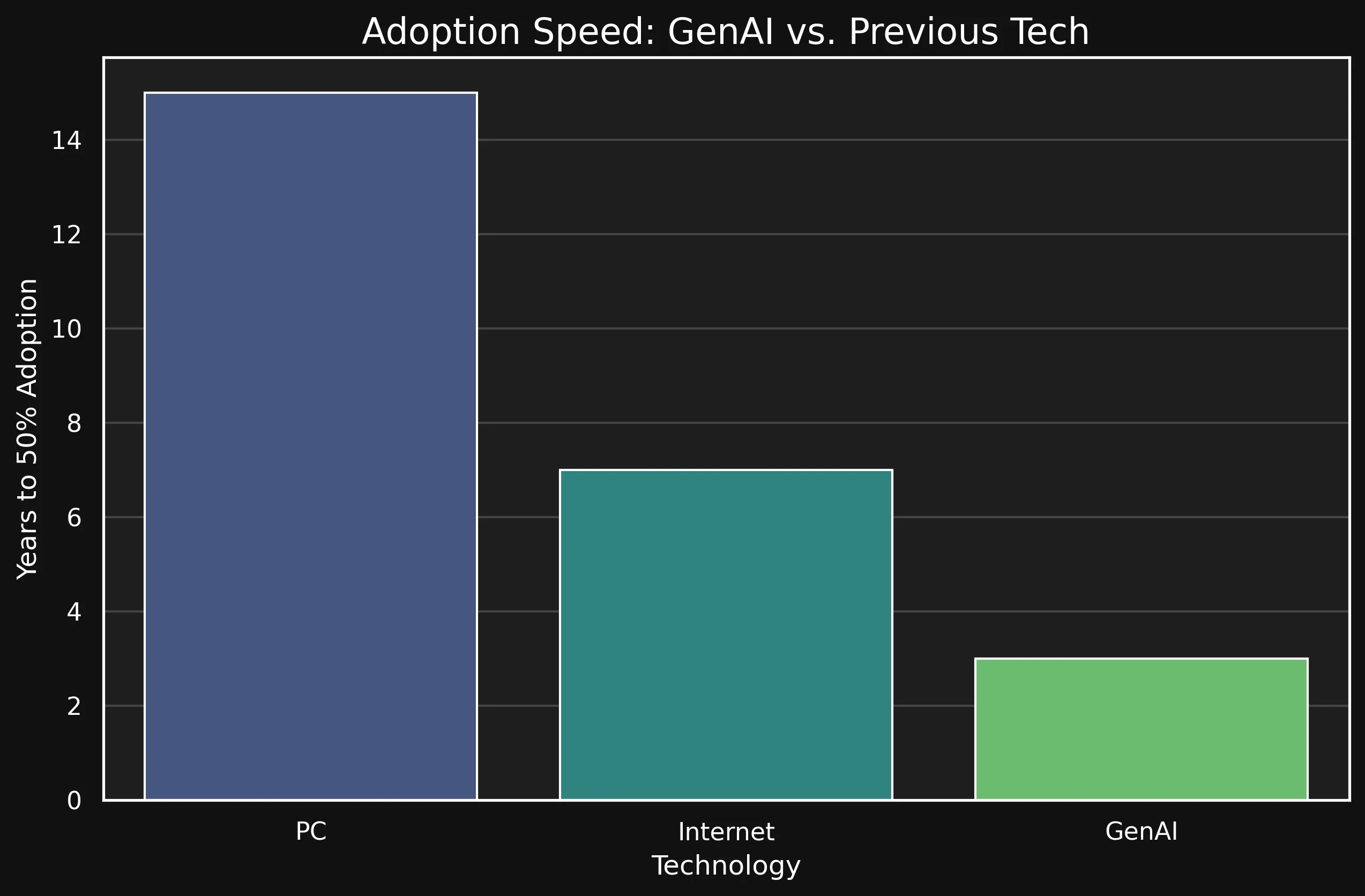
The acceleration of AI adoption is nothing short of remarkable. According to the 2026 AI Index report, generative AI has achieved 53% population adoption within just three years, a pace significantly faster than both the personal computer and the internet. This rapid integration underscores the immediate value and transformative potential that users perceive in these advanced AI systems. The estimated value of generative AI tools to U.S. consumers alone reached an astounding $172 billion annually by early 2026, with the median value per user tripling between 2025 and 2026. This surge in adoption and economic impact highlights a profound societal embrace of AI's capabilities.
Beyond Automation: The Essence of Autonomy
What distinguishes an AI agent from traditional automation is its capacity for autonomy. While automation follows predefined rules, agents can perceive their environment, make decisions, and take actions to achieve goals without constant human oversight. This capability is proving invaluable in sectors demanding real-time adaptation and complex problem-solving. For instance, in logistics, AI agents are orchestrating intricate networks of drones and autonomous vehicles, optimizing delivery routes, managing inventory, and predicting demand with unparalleled precision. This level of operational intelligence is transforming supply chains, making them more resilient and responsive to global fluctuations.
The impact extends to creative and technical fields as well. The concept of
"
vibe coding
" where AI assists in generating code based on high-level descriptions, or even autonomously developing software components, is becoming a reality. This signifies a move from simple code completion to AI systems that understand context, intent, and can contribute significantly to the development lifecycle.
The Human-AI Collaboration Frontier
As AI agents become more sophisticated, the nature of human-AI collaboration is evolving. Instead of replacing human roles entirely, these agents are augmenting human capabilities, allowing professionals to focus on higher-level strategic thinking and creativity. The partnership between humans and AI is becoming more symbiotic, with agents handling routine, data-intensive, or complex computational tasks, thereby freeing up human intellect for innovation and critical problem-solving. This collaborative model is fostering environments where productivity and innovation can flourish at an accelerated pace.
The integration of AI agents into daily life and professional workflows is not without its challenges. Ethical considerations, data privacy, and the need for robust regulatory frameworks are paramount. Ensuring transparency in AI decision-making processes and developing mechanisms for accountability are crucial steps in building public trust and facilitating responsible AI deployment. The self-education wave, where individuals are actively acquiring AI skills, from prompt engineering to advanced AI development, highlights a proactive societal response to these technological shifts, preparing the workforce for the demands of an AI-driven future.
The Future is Autonomous
The trajectory of AI development points towards increasingly autonomous systems that will permeate every aspect of society. From personalized learning agents that adapt educational content to individual needs, to AI-driven healthcare assistants that provide diagnostic support and treatment recommendations, the potential applications are vast. The continuous advancements in machine learning, natural language processing, and robotics are fueling this evolution, making once-futuristic concepts a present-day reality. The journey towards a fully autonomous AI ecosystem is complex, but the benefits in terms of efficiency, innovation, and problem-solving capacity are immense.
As we navigate this transformative period, the emphasis remains on harnessing AI's power responsibly and ethically. The development of AI agents must be guided by principles that prioritize human well-being, societal benefit, and environmental sustainability. The ongoing dialogue between technologists, policymakers, and the public will be instrumental in shaping an AI future that is both advanced and equitable.
Key Takeaways:
Rapid Adoption: Generative AI has outpaced previous technological revolutions in adoption speed, reaching 53% population adoption in just three years.
Economic Impact: The economic value generated by generative AI tools for U.S. consumers alone reached $172 billion annually by early 2026.
Enhanced Collaboration: AI agents are augmenting human capabilities, fostering a symbiotic relationship that boosts productivity and innovation.
Ethical Imperatives: The rise of autonomous AI necessitates robust ethical guidelines, data privacy measures, and transparent regulatory frameworks.
The future is not just about AI, but about how intelligently we integrate autonomous agents into our lives to create a more efficient, innovative, and sustainable world. The lead has been taken, and the journey has just begun.
Author: Malik Farooq
Date: April 27, 2026
Ready to master AI?
Join 1,000+ professionals getting the edge in AI marketing. 3 minutes a day to 10x your growth.