AI is Distorting Practically Everything About the Economy
Artificial intelligence (AI) has rapidly transitioned from a niche technological advancement to a pervasive force fundamentally reshaping the global economy. Its swift integration into various sectors has brought about unprecedented growth and efficiency, yet it has also introduced significant distortions across key economic indicators. From Gross Domestic Product (GDP) and stock market valuations to employment trends and trade balances, AI's influence is creating a complex and often misleading economic landscape.
This article delves into how AI is creating a "reality distortion field" that makes traditional economic analysis increasingly difficult.
The "Two Economies" Phenomenon
Until recently, AI was viewed simply as a welcome tailwind for economic growth. Today, it operates more like a hurricane-strength weather system, swamping the effects of other major global events.
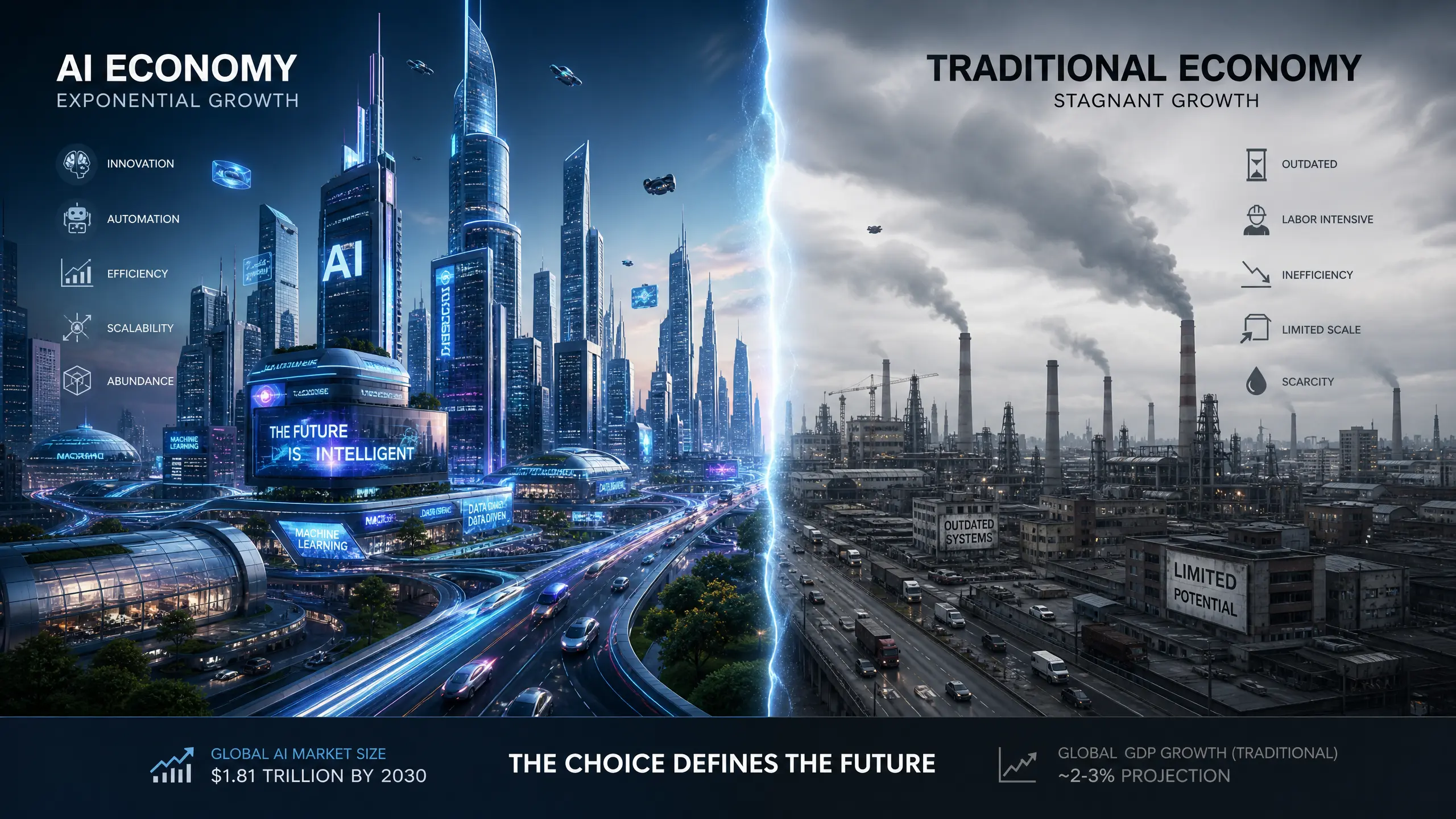
When examining the broadest measure of growth—inflation-adjusted GDP—the numbers appear solid. However, beneath the surface, a stark division exists: the AI economy versus everything else.
- The AI Boom: Investment in tech equipment, software, and data-center infrastructure is soaring at unprecedented rates. Morgan Stanley projects capital spending by the top five AI "hyperscalers" to exceed $1.1 trillion next year—a figure surpassing projected national defense spending.
- The Traditional Economy: Conversely, traditional sectors are experiencing muted growth. Personal consumption remains sluggish, and investments in housing and traditional business structures are declining.
Some estimates suggest the AI sector is growing at a staggering 31%, while the non-AI economy is barely expanding at 0.1%. This massive disparity makes the overall economic picture look healthier than it might actually be for the average business.
Distorting Global Trade and Stock Markets
The AI boom is not just a domestic phenomenon; it's heavily skewing international trade. The massive demand for advanced semiconductors and related equipment has led to a surge in U.S. imports, widening the trade deficit. Simultaneously, countries like Taiwan, home to major semiconductor manufacturers, are seeing their trade surpluses reach historic highs.
The "Magnificent Seven" and Beyond
The stock market is perhaps where AI's distortion is most visible. The "Magnificent Seven" tech giants have driven much of the market's recent gains, masking underlying weaknesses in other sectors.
However, the "AI halo effect" extends beyond these giants. Companies involved in the AI supply chain, particularly semiconductor manufacturers, are seeing their stock prices and profits skyrocket. This creates a skewed picture of corporate health:
- Profit Disparity: While total S&P 500 earnings are rising, the vast majority of that growth is concentrated within a small group of tech and semiconductor companies. The remaining companies are seeing significantly lower profit growth.
The Disconnect: Capital vs. Labor
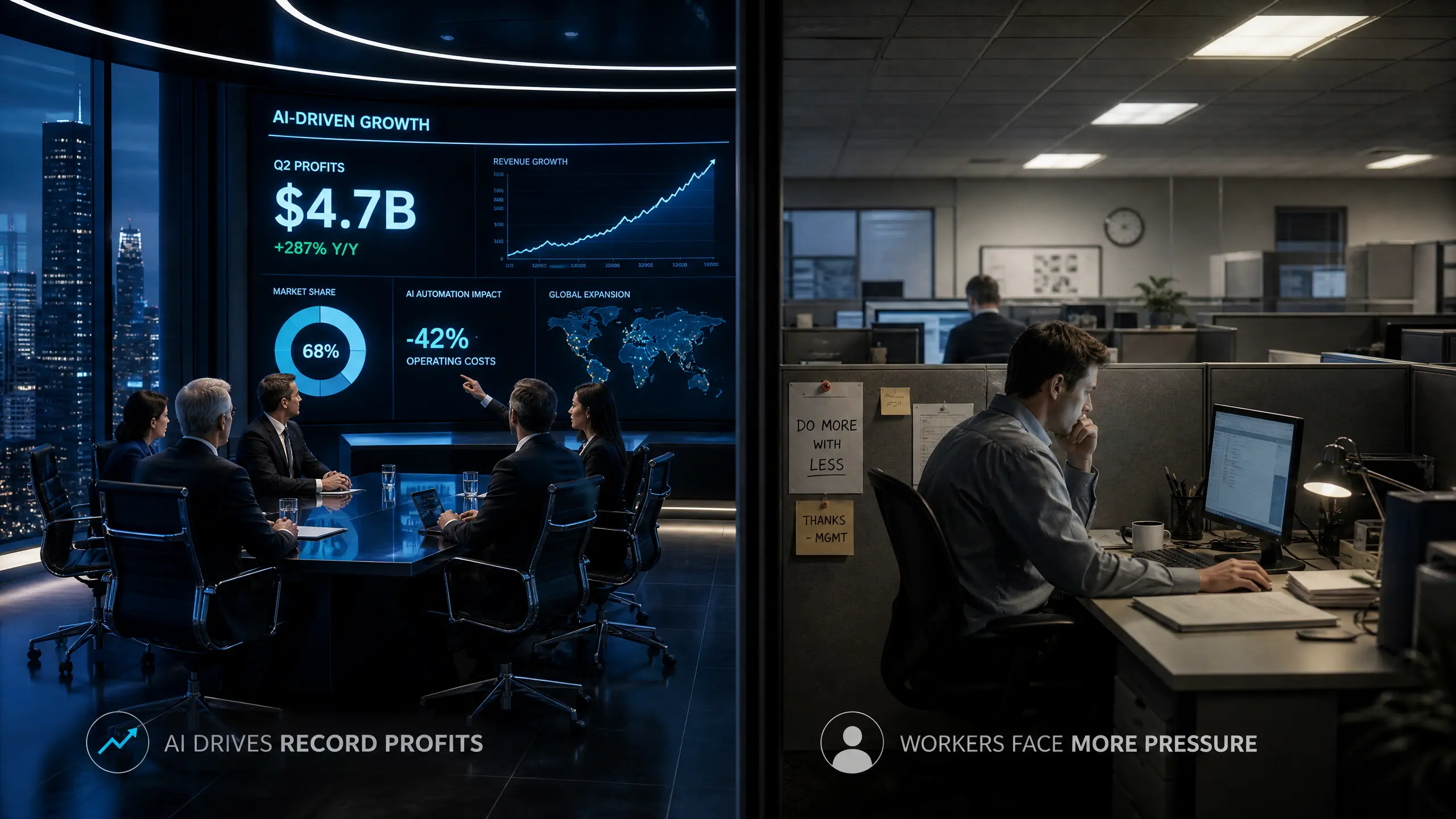
Perhaps the most concerning distortion is the widening gap between capital and labor. As corporate profits—driven by AI efficiencies and market exuberance—gallop ahead, labor compensation is struggling to keep pace. In fact, labor's share of total business-sector output has recently hit historic lows.
This dynamic feeds a profound disconnect between economic data and public sentiment. While businesses and investors celebrate record highs, ordinary workers feel increasingly insecure.
The Job Market Illusion
The narrative surrounding AI and employment is fraught with anxiety. Companies frequently cite AI efficiencies when announcing layoffs, and a significant portion of the workforce fears their jobs will be automated within the next five years.
However, this gloom may be another distortion. Hard evidence of widespread, AI-driven job losses remains thin. It's highly probable that some companies are using AI as a convenient scapegoat to mask broader management failures or necessary restructuring. The fear of AI, rather than actual job displacement, may be what's truly suppressing wage growth, as anxious workers are less likely to demand raises.
Conclusion: What if the Bubble Bursts?
The current AI frenzy raises a critical question: What happens if the investment boom turns into a bust?
While a sudden halt in AI spending would undoubtedly slow overall U.S. growth and cause a significant correction in stock prices and corporate profits, the impact on the average worker might be surprisingly muted. Because the current boom is so heavily concentrated in specific sectors and geographic areas (like data center hubs), a downturn wouldn't necessarily trigger a broad economic collapse.
In fact, an economy free from AI's current distortions might offer a clearer, more stable picture of reality—one where the focus returns to sustainable, broad-based growth rather than the hyper-inflated expectations of a single technological trend.