- Malik Logix
- Posts
- AI Knowledge Graphs
AI Knowledge Graphs
Discover how AI-native knowledge systems and LLMWikis are revolutionizing information organization and retrieval in 2026, creating connected intelligence layers.

Malik Farooq
April 28, 2026
Sponsored by
Deep Dive
AI Knowledge Graphs
In an increasingly data-rich world, the challenge isn't just generating information, but effectively organizing, retrieving, and understanding it. As of April 2026, the traditional methods of fragmented documentation and keyword-based search are proving insufficient for the demands of advanced AI systems and human knowledge workers alike. This has led to the rapid ascent of AI-native knowledge systems and the concept of LLMWikis, which are fundamentally transforming how we interact with and leverage information. This trend signifies a profound shift from static data repositories to dynamic, interconnected intelligence layers.
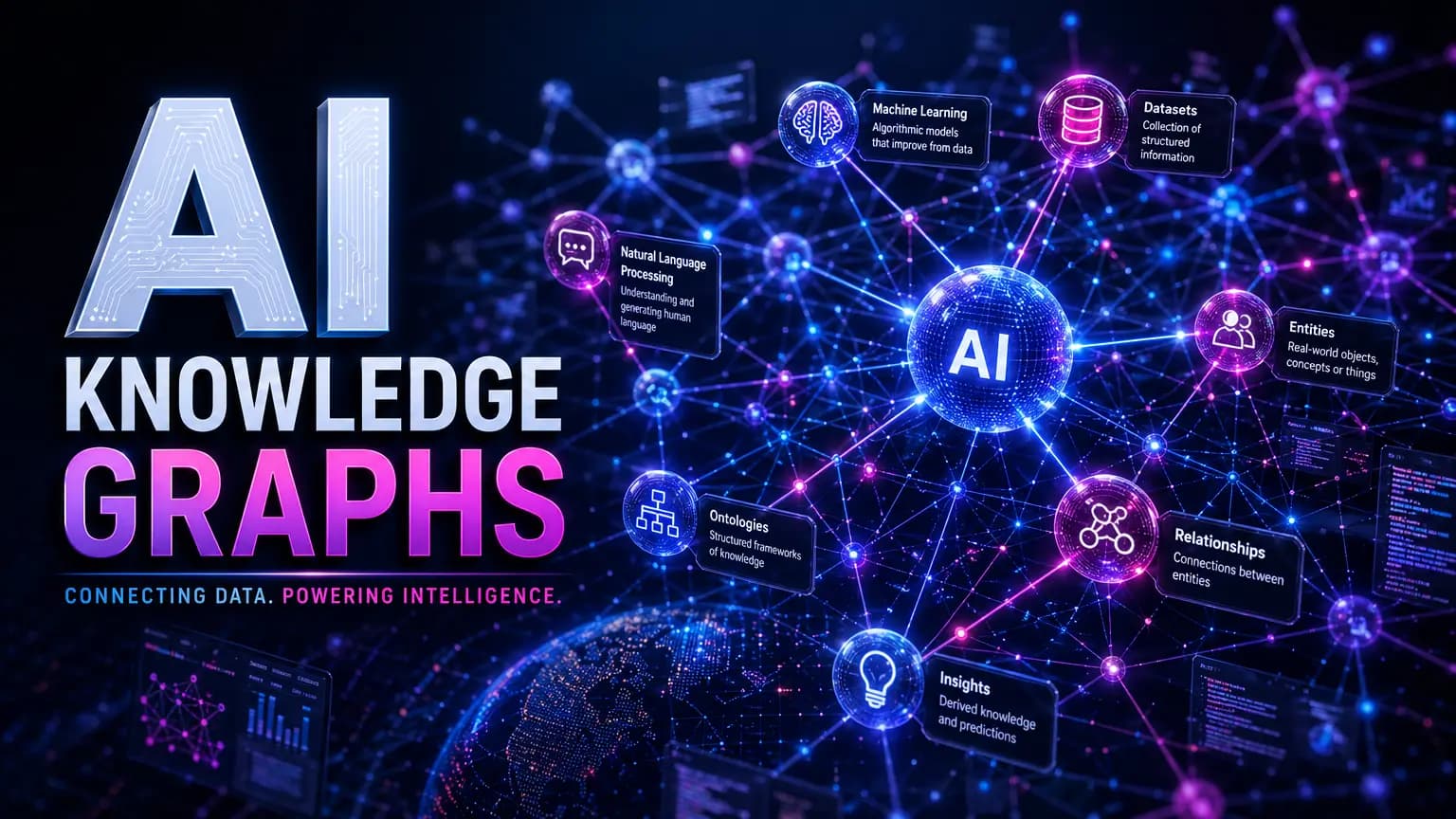
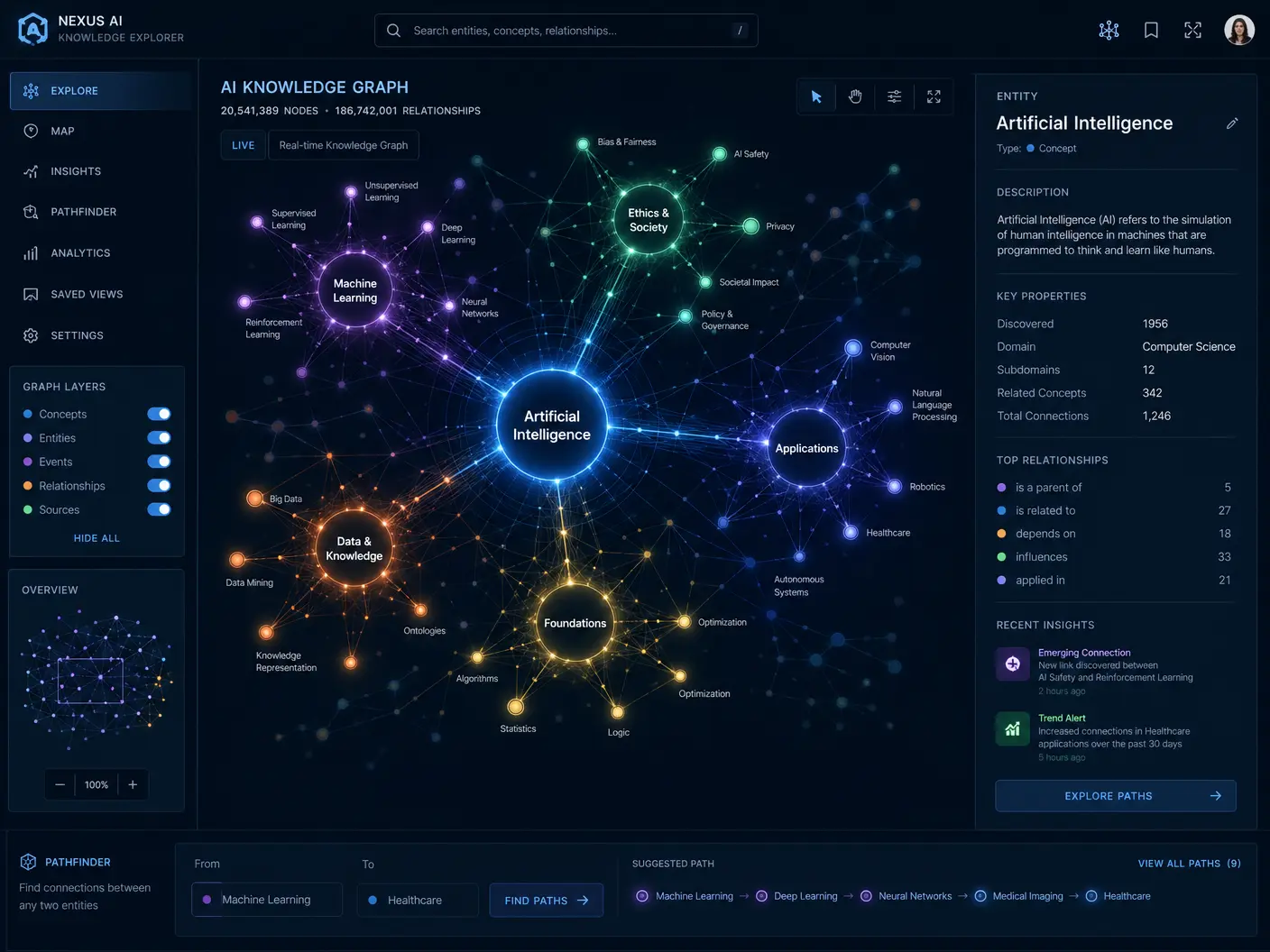
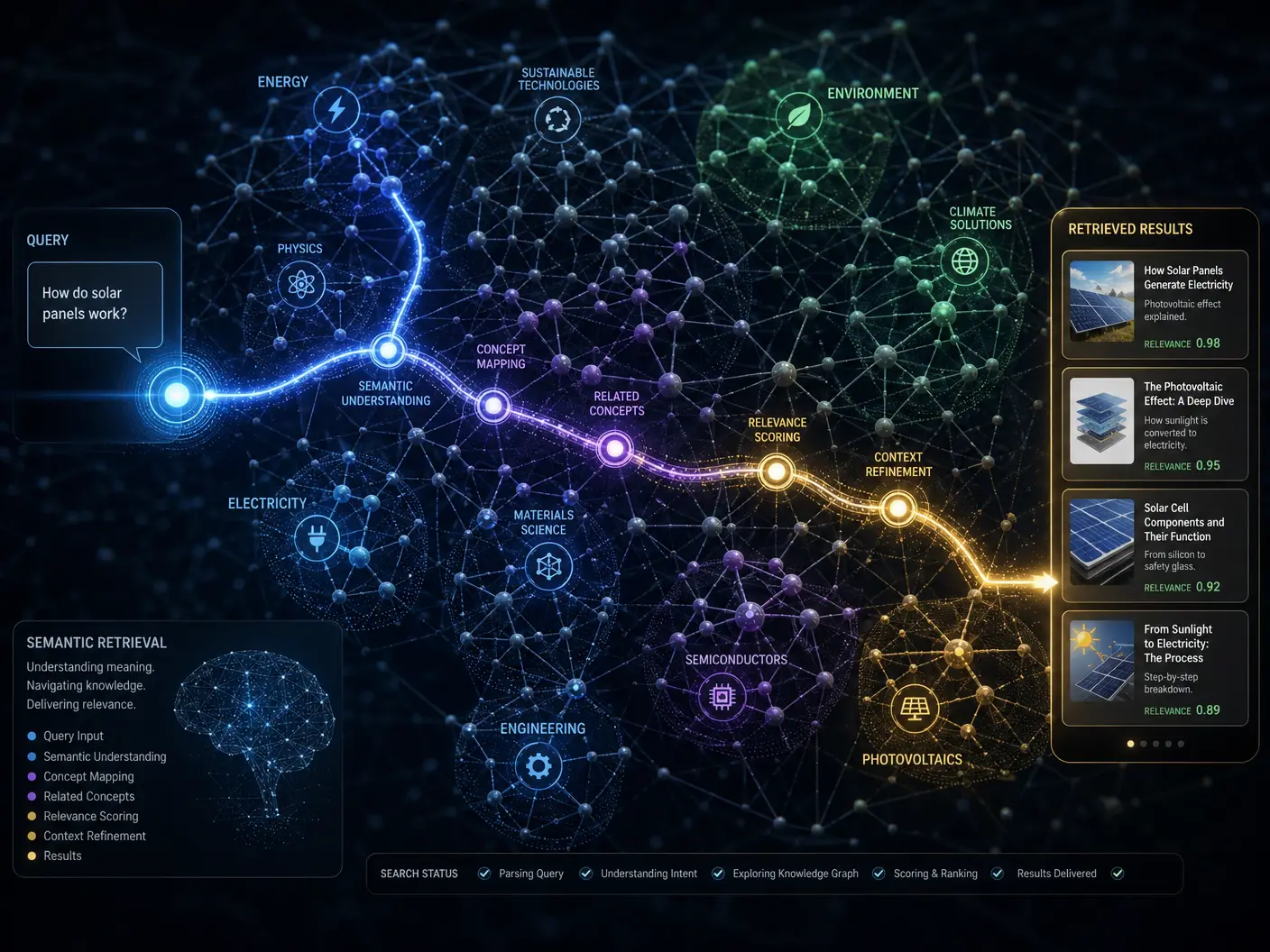
The core idea behind AI knowledge graphs is to move beyond hierarchical folders and isolated documents. Instead, information is organized based on its relationships and semantic meaning, creating a rich, interconnected web of knowledge that is intuitively understandable by both humans and artificial intelligence. This approach promises to unlock unprecedented levels of contextual understanding and efficient retrieval, making knowledge a truly actionable asset.
The Limitations of Traditional Knowledge Management
For decades, knowledge management has struggled with inherent limitations:
- Fragmented Context: Information often resides in disparate systems, leading to a loss of context when viewed in isolation.
- Duplicated Knowledge: Teams frequently recreate information that already exists elsewhere, wasting time and resources.
- Information Silos: Data gets trapped within specific tools or departments, preventing holistic understanding.
- Lack of Semantic Understanding: Traditional search engines often rely on exact keyword matches, failing to grasp the underlying meaning or relationships between concepts.
These challenges become particularly acute in the age of AI, where models require vast amounts of coherent, contextually rich data to perform effectively. The need for a more intelligent way to manage knowledge has never been more pressing.
The Rise of LLMWikis and Semantic Retrieval
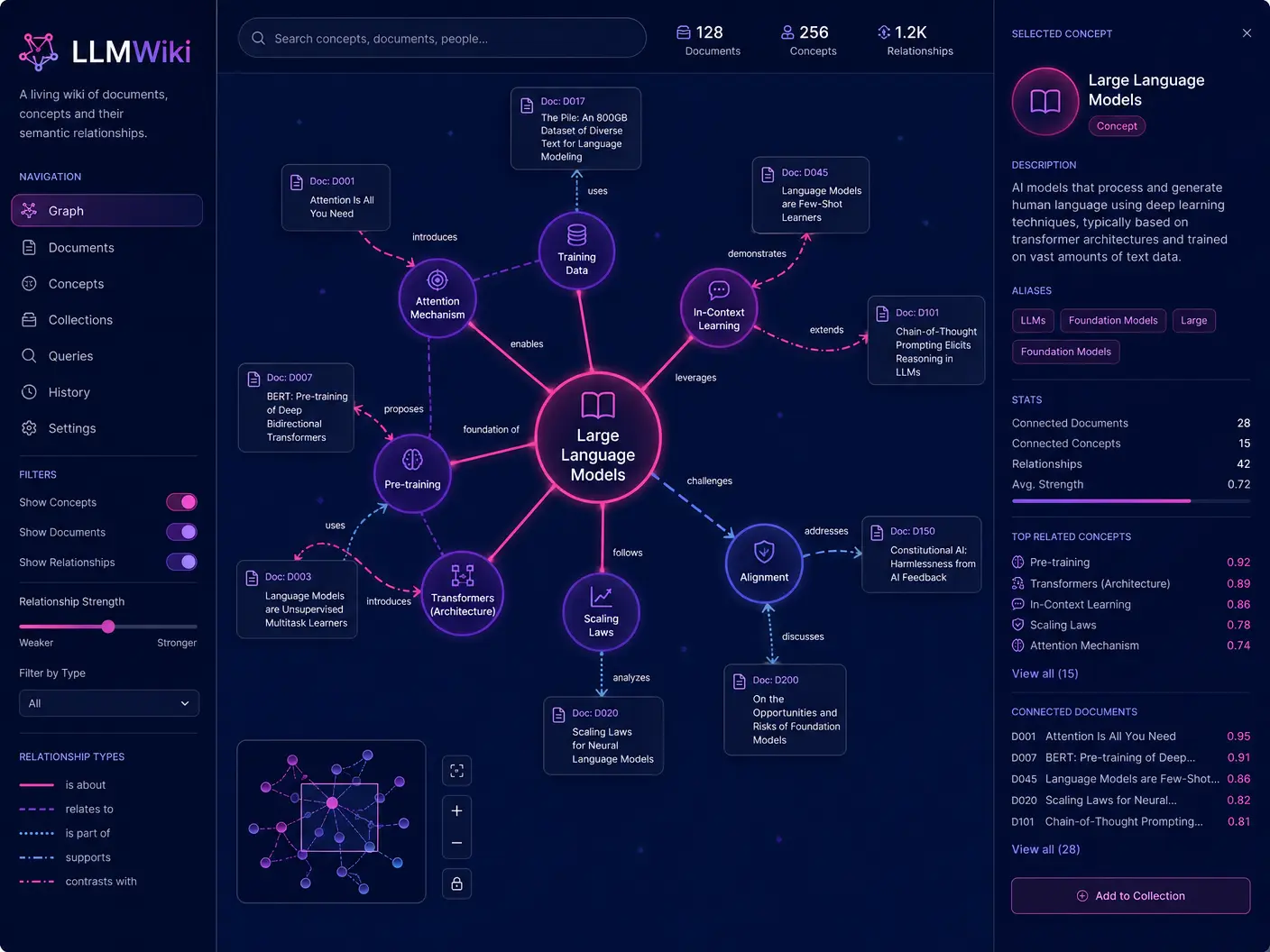
The concept of an "LLMWiki" gained significant momentum in April 2026, particularly after discussions by prominent AI researchers like Andrej Karpathy. An LLMWiki isn't a single product but a pattern: using large language models to create and maintain personal or enterprise-wide knowledge bases that are inherently AI-native. This reframes how we think about memory, retrieval, and context for both human and AI agents [1].
Key aspects of AI-native knowledge graphs and LLMWikis include:
- Persistent Memory for AI Workflows: Providing AI agents with a consistent, evolving knowledge base they can query and update.
- Semantic Indexing and Retrieval: Moving beyond keywords to understand the meaning and relationships within data, allowing for more intelligent search and discovery.
- Context-Aware Search: Delivering answers that are not just relevant to a query but also to the broader context of the user's current task or conversation.
- Personalized Knowledge Graphs: Tailoring information access and presentation based on individual user roles, preferences, and historical interactions.
This approach creates a memory structure that is not only useful for humans seeking information but also foundational for long-term AI memory systems, enabling agents to operate with a deeper, more consistent understanding of their environment and objectives.
Accelerating AI Adoption and Productivity
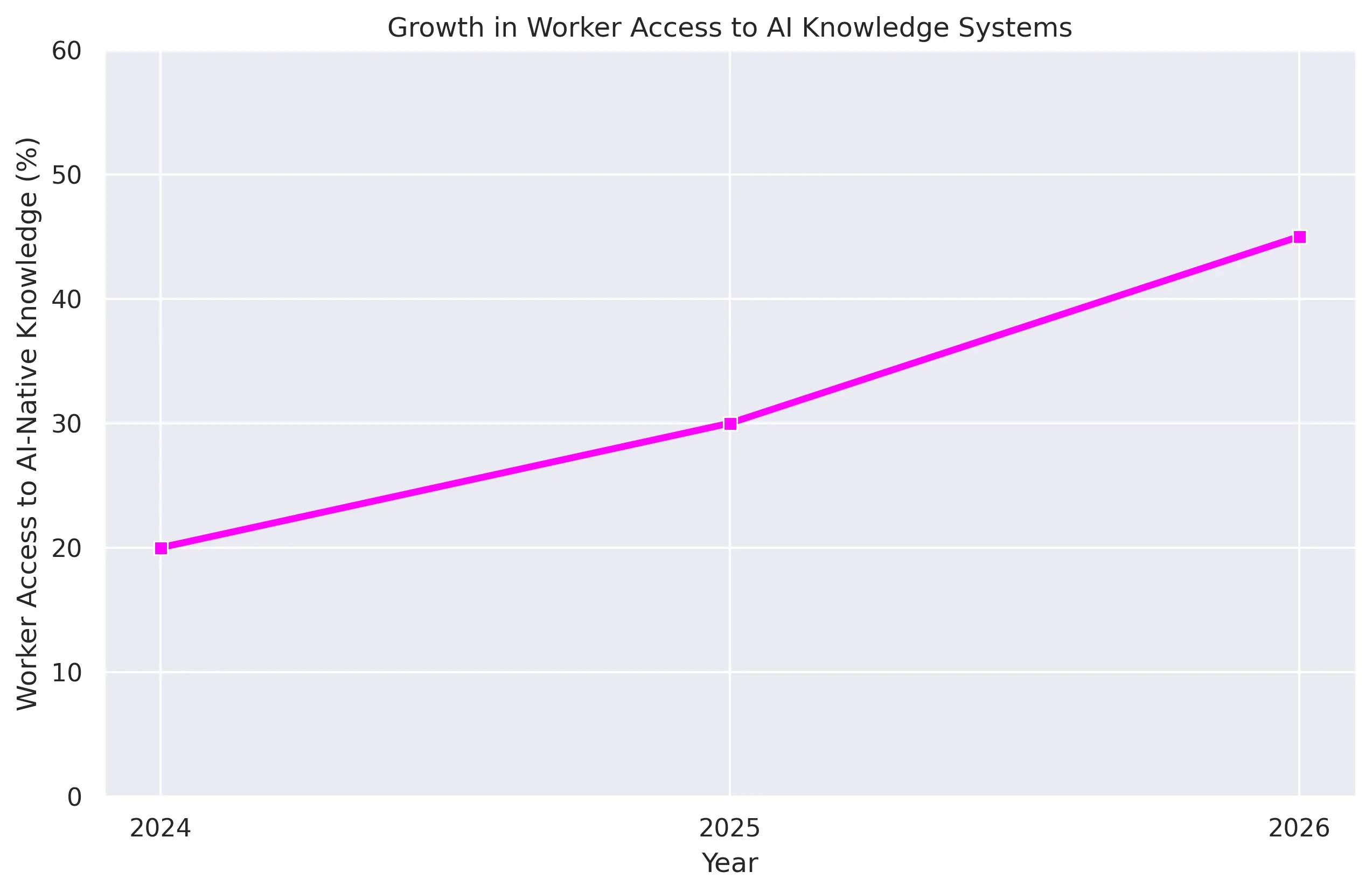
The ability to effectively manage and leverage knowledge is a critical factor in the successful adoption of AI within organizations. As AI-native knowledge systems make information more accessible and actionable, they directly contribute to increased productivity and innovation. Worker access to AI tools, which includes these advanced knowledge systems, saw a remarkable 50% increase in 2025 [4].
This trend is further supported by the general optimism surrounding AI's impact on productivity. With 60% of business owners believing AI will boost their productivity, and an expected 40% improvement in overall employee productivity, the integration of AI knowledge graphs is a key enabler of these gains [3]. By providing AI with better data and context, these systems empower AI to perform more complex tasks and deliver more accurate results.
The Future of Connected Intelligence
The development of AI knowledge graphs is an ongoing journey. We can anticipate further advancements in areas such as:
- Automated Knowledge Extraction: AI models becoming even more adept at automatically extracting structured knowledge from unstructured text and multimedia.
- Dynamic Graph Evolution: Knowledge graphs that can automatically update and refine their structure and content as new information emerges.
- Interoperability and Standardization: Efforts to create common standards and protocols for knowledge graph exchange, fostering a more interconnected ecosystem.
- Multi-modal Knowledge Representation: Integrating information from text, images, audio, and video into a unified knowledge graph.
These advancements will solidify AI knowledge graphs as a foundational layer for future AI applications, enabling more intelligent decision-making, advanced reasoning, and truly personalized experiences.
Conclusion
AI Knowledge Graphs represent a pivotal trend in April 2026, redefining how we organize, access, and utilize information. By moving beyond the limitations of traditional knowledge management, these AI-native systems, exemplified by the LLMWiki concept, are creating interconnected intelligence layers that empower both human and artificial intelligence. As organizations continue to embrace this paradigm shift, the ability to harness semantic understanding and contextual retrieval will be paramount for driving innovation, boosting productivity, and navigating the complexities of the digital age. The future of knowledge is intelligent, connected, and deeply integrated with AI.
References
[1] Vishal Mysore. "The Biggest AI Trends and Tools Emerging in April 2026." Medium, April 2026.
[2] NVIDIA Blog. "How AI Is Driving Revenue, Cutting Costs and Boosting Productivity." March 2026.
[3] National University. "131 AI Statistics and Trends for 2026." March 2025.
[4] Deloitte US. "The State of AI in the Enterprise - 2026 AI report." 2026.
Ready to master AI?
Join 1,000+ professionals getting the edge in AI marketing. 3 minutes a day to 10x your growth.
Join Free NowKeep reading
Humanoid Robotics Reality
Witness the real-world deployment of humanoid robots in 2026, powered by Vision-Language-Action models. Explore their impact on industries and daily life.
Malik Farooq/
Agentic Execution Rise
Discover how AI is moving from simple chatbots to autonomous agentic execution systems in 2026. Explore the multi-agent orchestration revolution.
Malik Farooq/
The Agentic AI Marketing Revolution
Learn the latest AI strategies to stay ahead in the marketing game.
Malik Farooq/
Back to archive
Share