AI-Based Visual Analysis of Photovoltaic Panels: Revolutionizing Fault Detection and Maintenance
The Critical Need for Automated PV System Inspection
As the global energy landscape rapidly shifts towards renewable sources, photovoltaic (PV) systems have emerged as a cornerstone of sustainable power generation. However, ensuring the continuous operational reliability and efficiency of these systems, particularly in large-scale solar installations, presents a significant challenge. Traditional manual inspection methods are not only labor-intensive but also economically inefficient, often failing to detect subtle anomalies that can lead to substantial energy losses and system degradation. The imperative for more advanced, automated diagnostic frameworks has never been greater.
This article delves into a groundbreaking study that proposes an automated diagnostic framework for classifying anomalies associated with PV panels using sophisticated deep learning approaches. By leveraging techniques such as Fine-tuned Transfer Learning (FTL), Deep Feature Extraction–Classifier (DFE-C), and Alternative Fine-tuning Setup (AFS), researchers are paving the way for a new era of PV system maintenance, promising enhanced reliability and significant cost savings.
Deep Learning Approaches for Anomaly Classification
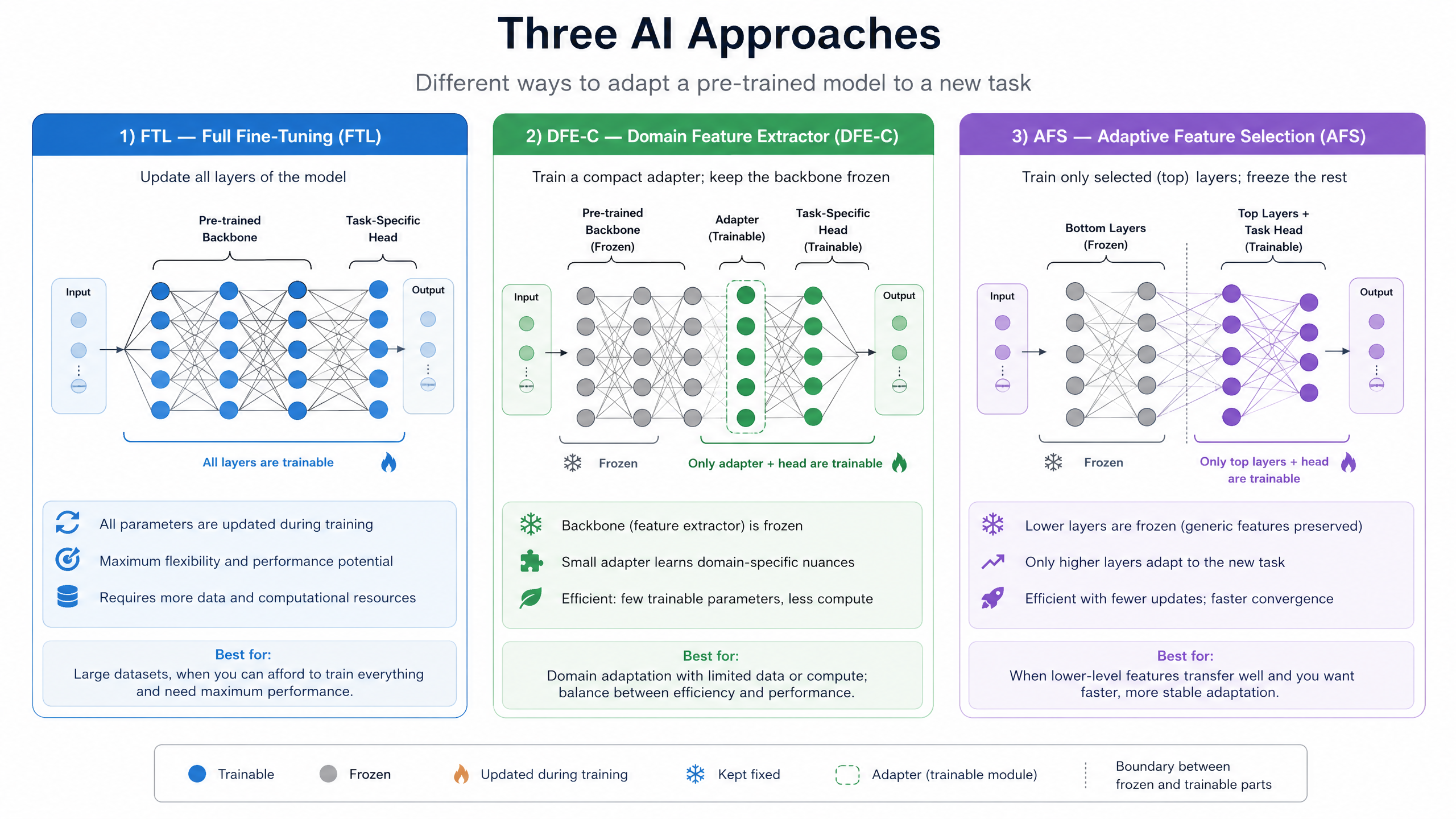
The study meticulously evaluates the efficacy of three distinct deep learning strategies, all built upon the robust EfficientNet architecture, in detecting various defect categories in PV panels. The consistent data partitioning strategy derived from the same PV image dataset allows for a systematic and comparative analysis of their classification accuracy, robustness, and consistency.
Fine-tuned Transfer Learning (FTL)
FTL involves taking a pre-trained model (in this case, EfficientNet) and fine-tuning it on a specific dataset – the PV panel anomaly dataset. This approach is particularly effective in enhancing domain adaptability, allowing the model to quickly learn the nuances of PV panel defects even with a relatively smaller, specialized dataset. FTL leverages the vast knowledge acquired by the model during its initial training on a large, general image dataset, and then refines this knowledge for the specific task of PV anomaly detection.
Deep Feature Extraction–Classifier (DFE-C)
DFE-C utilizes the pre-trained EfficientNet as a fixed feature extractor. The features extracted from the PV panel images are then fed into a separate, newly trained classifier. This method is noted for exhibiting the greatest overall stability and performance under limited and variable data conditions. By separating feature extraction from classification, DFE-C can be more robust to variations in the training data and less prone to overfitting, making it ideal for real-world deployment where data quality and quantity can vary.
Alternative Fine-tuning Setup (AFS)
AFS offers a balanced trade-off between flexibility and convergence. This approach typically involves fine-tuning a subset of the pre-trained model's layers while keeping others frozen, or using different learning rates for different layers. This allows for a more nuanced adaptation to the target domain, providing a middle ground between the full fine-tuning of FTL and the fixed feature extraction of DFE-C.
Experimental Framework and Performance Benchmarking
The experimental framework employed in the study incorporates structured training pipelines, rigorous hyperparameter control, and comprehensive performance benchmarking. Key metrics used for evaluation include accuracy, macro F1-score, and fold-based stability analysis. The results underscore the significant potential of these AI-based diagnostic systems:
| Approach | Overall Accuracy | Physical Damage Detection | Snow Coverage Detection | Key Advantage |
|---|
| FTL | High | Excellent | Excellent | Enhanced domain adaptability |
| DFE-C | 94.05% | 100% | 96% | Superior stability and performance with limited data |
| AFS | Balanced | Very Good | Very Good | Trade-off between flexibility and convergence |
Notably, the DFE-C approach achieved a superior overall accuracy of 94.05%, demonstrating near-perfect diagnostic capability in critical categories such as physical damage (100%) and snow coverage (96%). This level of precision is crucial for preventing costly repairs and maximizing energy output from PV installations.
Real-World Implications and Future Outlook
The proposed framework and its findings offer invaluable insights for the development of more reliable AI-based diagnostic systems for PV energy applications. The ability to automatically and accurately detect faults in solar panels has profound real-world implications:
- Reduced Maintenance Costs: Automated inspection reduces the need for manual labor, leading to significant operational cost savings.
- Increased Energy Yield: Early detection of anomalies prevents energy losses, ensuring PV systems operate at their peak efficiency.
- Extended System Lifespan: Proactive maintenance based on AI diagnostics can extend the operational life of PV panels, maximizing return on investment.
- Enhanced Safety: Automated systems can identify hazardous defects, improving safety for maintenance personnel.
- Scalability: The framework is particularly beneficial for large-scale solar farms, where manual inspection is impractical.
As the world continues its transition to renewable energy, the integration of advanced AI technologies for monitoring and maintaining critical infrastructure like PV systems will be paramount. This research represents a significant step forward in making solar energy more reliable, efficient, and economically viable on a global scale.
References
- Åen, O., Onsomu, O.N. & YeÅilata, B. AI-based visual analysis of photovoltaic panels for fault detection and maintenance support. Sci Rep (2026). https://doi.org/10.1038/s41598-026-51711-8