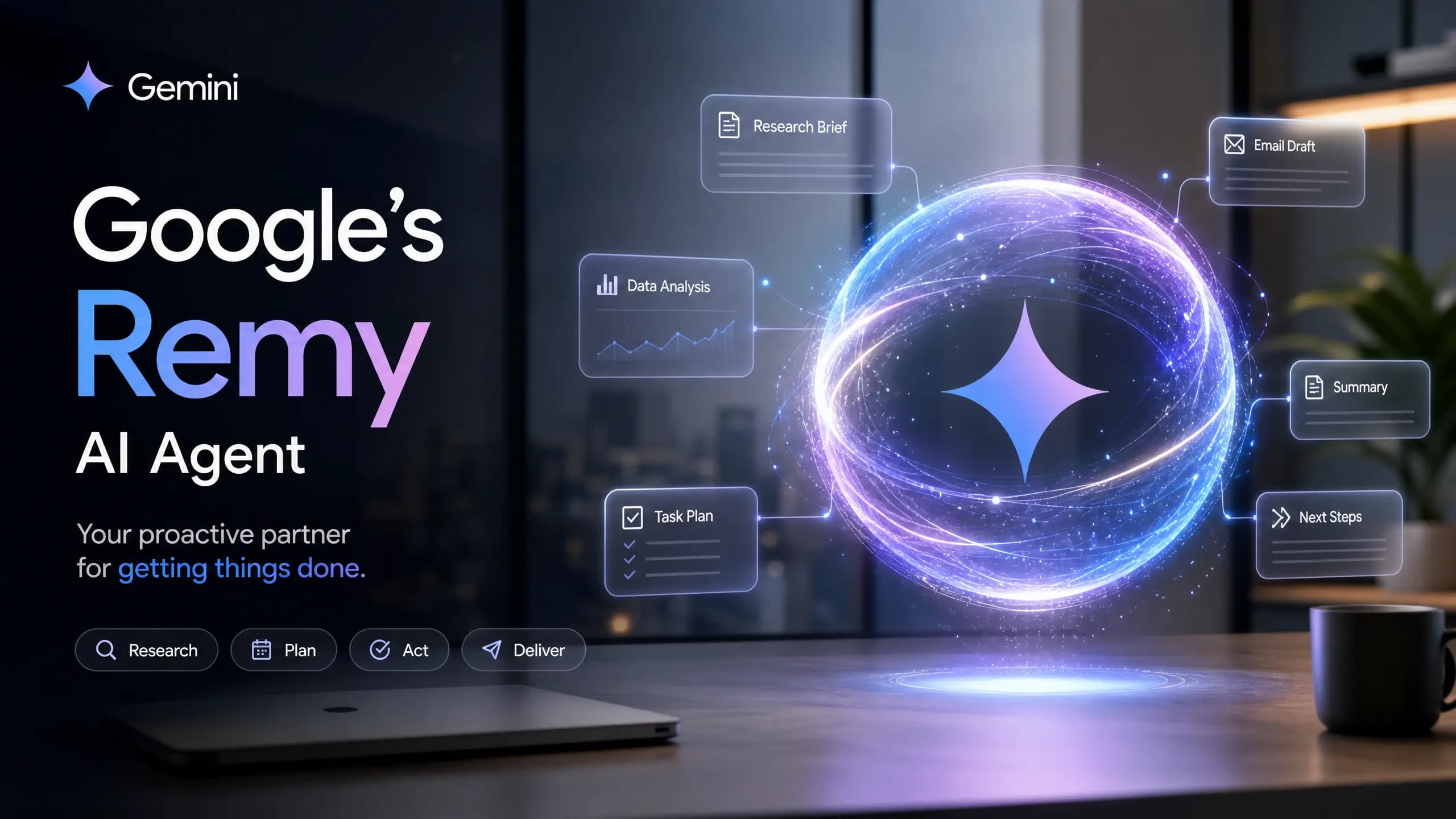
Google Remy AI Agent Gemini: A New Era of Autonomous Assistance
In the rapidly evolving landscape of artificial intelligence, the concept of an AI agent capable of autonomously performing complex tasks is no longer a distant dream. Google is at the forefront of this revolution, with internal testing underway for Remy, a groundbreaking AI personal agent for Gemini. This initiative, as reported by Business Insider, signifies a pivotal shift towards AI systems that not only understand but also actively execute user commands, fundamentally transforming our interaction with digital platforms.
The Dawn of Autonomous AI: Understanding Remy's Role
Remy is currently being rigorously tested within a staff-only version of the Gemini app, indicating Google's meticulous approach to development before a public release. Described internally as a "24/7 personal agent," Remy aims to elevate Gemini from a conversational AI to a proactive assistant that can operate on a user's behalf. This capability extends beyond simple queries, encompassing a wide array of work and daily tasks, promising an unprecedented level of digital assistance.
The development of Remy aligns with Google's broader strategy to expand Gemini's functionalities beyond traditional chat-based responses. While Gemini already offers agent-related features, such as Agent Mode, Remy represents a significant leap forward. It is designed for deeper integration with Google services, enabling it to monitor user-relevant information, manage intricate tasks, and continuously learn user preferences. This adaptive learning is crucial for an AI agent to truly become a personalized and efficient assistant.
Real-World Implications: Beyond the Hype
The potential impact of Remy on daily life and professional workflows is immense. Imagine an AI agent that can:
- Automate routine tasks: Scheduling meetings, managing emails, and organizing digital files without direct human intervention.
- Proactive information retrieval: Gathering relevant data for a presentation based on your calendar and recent communications.
- Personalized recommendations: Learning your habits to suggest optimal routes, manage smart home devices, or curate content.
These capabilities are not just theoretical; they are the practical applications that Remy is being engineered to deliver. For instance, in a business context, Remy could streamline project management by automatically assigning tasks, tracking progress, and generating summary reports, freeing up human capital for more strategic endeavors. This moves beyond mere automation to intelligent, context-aware task execution.
Navigating the Connected Ecosystem: Gemini's Integration Power
Remy's effectiveness is deeply rooted in Gemini's extensive connected-app surface. Google's documentation highlights Gemini's ability to seamlessly integrate with a diverse range of services, both within and outside the Google ecosystem. This includes:
- Google Workspace: Gmail, Calendar, Docs, Drive, Keep, and Tasks.
- Third-party applications: GitHub, Spotify, YouTube Music, Google Photos, WhatsApp, Google Home, and various Android utilities.
This broad integration allows Remy to act as a central orchestrator, pulling information and executing actions across multiple platforms to fulfill complex user requests. For example, Remy could analyze your Gmail for flight details, add them to your Google Calendar, and then use Google Home to adjust your thermostat upon your return, all without explicit, step-by-step instructions from the user. This level of interconnectedness is what makes Remy a truly powerful agent.
The Paramount Importance of Control and Privacy
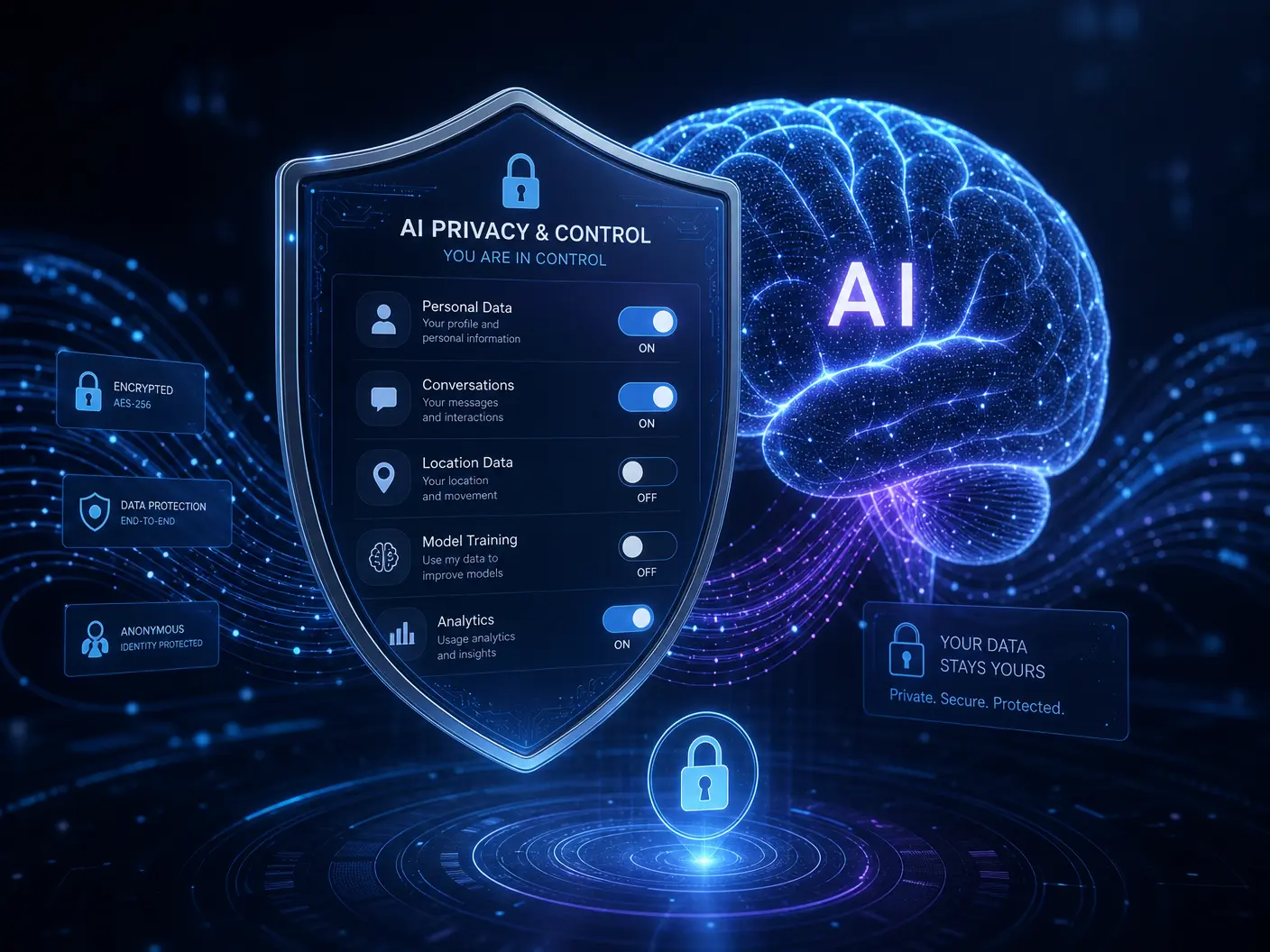
As AI agents gain more autonomy and access to personal data, questions of control, privacy, and ethical governance become paramount. Google is addressing these concerns through its Gemini Privacy Hub, which provides users with granular control over their data and AI interactions. Key features include:
- Review and delete Gemini Apps Activity: Users can monitor and erase their interaction history.
- Change auto-delete settings: Customize how long data is retained.
- Manage data usage for AI improvement: Decide whether their data contributes to enhancing Google AI models.
- Control access to other apps and saved information: Dictate which connected services Remy can interact with and what information it can store.
Google's existing Gemini documentation further elaborates on the varying levels of user impact associated with different actions, from retrieving information to controlling device functions. This tiered approach ensures that users are aware of and can manage the scope of Remy's capabilities.
Industry Insights: Governance and Transparency
Leading AI researchers and industry experts, including those at Google Research and Google Cloud, emphasize critical principles for AI agent development:
- Well-defined human controllers: Ensuring human oversight and intervention capabilities.
- Carefully limited powers: Restricting agents to their intended functions to prevent unintended consequences.
- Observable actions: Making agent activities transparent and auditable through logging.
- Ability to plan: Equipping agents with the capacity for strategic task execution.
- Least-privilege principle: Limiting agent powers based on purpose and user risk tolerance.
These guidelines are not merely theoretical; they are practical frameworks for building responsible AI. The internal document describing Remy as a "dog-fooding project"—a term for internal product testing—underscores Google's commitment to refining these controls before a wider rollout. The comparison of Remy's concept to OpenClaw, an AI agent known for its autonomous messaging and research capabilities, further highlights the advanced nature of this project and the industry's move towards more independent AI systems.
The Future of Human-AI Collaboration
The emergence of AI agents like Remy signals a transformative period in human-AI relationships. The goal is not to replace human intelligence but to augment it, allowing individuals to offload mundane or time-consuming tasks to intelligent systems. This collaboration promises increased productivity, enhanced personalization, and a more intuitive digital experience.
However, the journey towards fully autonomous and universally trusted AI agents is ongoing. Technical details regarding Remy's architecture, model version, and autonomy levels remain undisclosed. The critical question of whether Remy can act independently without user confirmation, and how it handles approvals and logs completed actions, will be central to its public acceptance and utility.
Google DeepMind CEO Demis Hassabis has long championed the vision of a digital assistant that can truly understand and assist users. Remy appears to be a significant step towards realizing this vision. As AI continues to evolve, the focus will remain on developing agents that are not only intelligent and efficient but also transparent, controllable, and ultimately, beneficial to humanity.
Conclusion: A Glimpse into Tomorrow's Digital Assistant
Google's Remy AI agent for Gemini represents a fascinating and potentially revolutionary development in artificial intelligence. By combining advanced task automation with extensive app integration and robust privacy controls, Remy aims to redefine the role of a digital assistant. While challenges remain in ensuring full transparency and user control, the ongoing internal testing suggests a future where AI agents seamlessly integrate into our lives, managing complex tasks and freeing us to focus on what truly matters. The era of the proactive, intelligent digital companion is rapidly approaching, promising a future of enhanced productivity and a more harmonious human-AI relationship.