Introduction: The Culinary Revolution Driven by AI
In an era defined by technological disruption, the food industry is undergoing a profound transformation, with artificial intelligence (AI) at its forefront. Marc Lore, a serial entrepreneur renowned for his successful ventures, including sales to Amazon and Walmart, is now channeling his innovative spirit into the dining and delivery sector. His latest endeavor, Wonder, is not just another food platform; it's a pioneering ecosystem built around AI-powered ghost restaurants. This revolutionary concept is poised to redefine how culinary brands are created, scaled, and delivered, offering unprecedented opportunities for food entrepreneurs and a diverse array of dining experiences for consumers.
This article will explore the groundbreaking features of Wonder, particularly its Wonder Create platform, which empowers anyone to launch a full restaurant brand in mere moments. We will delve into the sophisticated AI mechanisms that handle everything from branding to recipes, examine the operational efficiency of Wonder's smart kitchens, and discuss the expansive vision Lore has for the future of food service. Through real-world examples, industry insights, and practical explanations, we will uncover how AI is not just optimizing existing processes but fundamentally reshaping the landscape of the restaurant industry.
Wonder Create: From Prompt to Plate in Under a Minute
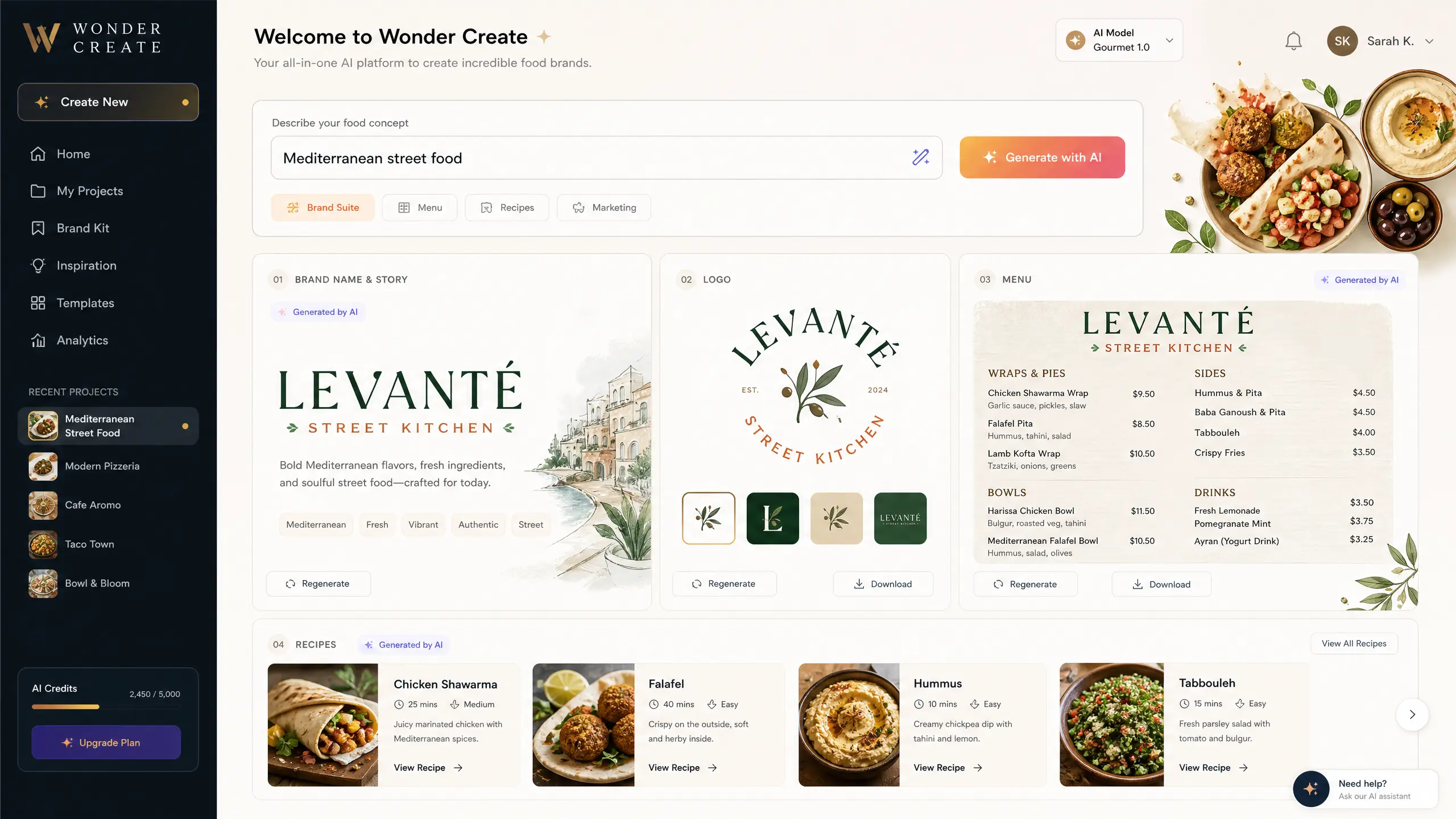
The cornerstone of Marc Lore's vision for Wonder is Wonder Create, an innovative platform that democratizes restaurant brand creation. This feature allows aspiring restaurateurs, influencers, or even established brands to conceptualize and launch a complete dining concept with remarkable speed and minimal overhead. The process is strikingly simple yet incredibly powerful: you type a prompt, articulating the desired cuisine, theme, or vibe, and the AI takes over, generating a comprehensive brand identity.
Real-World Examples and Practical Explanations
Imagine wanting to launch a "Mediterranean street food" concept. A user could input a prompt like: "Create a vibrant, modern Mediterranean street food brand focusing on fresh ingredients and quick service." The AI would then generate:
- Brand Name: e.g., "Zest & Pita"
- Branding Elements: Logo concepts, color palettes, and typography suggestions.
- Descriptions: Compelling narratives for the brand and its menu items.
- Pictures: High-quality visual mock-ups of dishes and branding.
- Pricing Structures: Suggested pricing based on cuisine type and market analysis.
- Health Details: Nutritional information and allergen warnings.
- Complete Recipes: Detailed, scalable recipes for a full menu, ready for execution in Wonder's kitchens.
This rapid prototyping capability significantly lowers the barrier to entry for new food businesses, allowing for agile experimentation and quick adaptation to market trends. The ability to "tweak if needed, then launch across Wonder’s network" transforms the traditional, often arduous, process of restaurant development into a streamlined, AI-assisted workflow.
Industry Insights: The Rise of Virtual Brands
The concept of ghost kitchens and virtual brands has been gaining traction, accelerated by shifts in consumer behavior and technological advancements. According to a report by Euromonitor International, the global ghost kitchen market is projected to reach $1 trillion by 2030 [1]. Wonder Create takes this a step further by automating the entire brand development process, moving beyond just shared kitchen spaces to offering a full-stack solution for virtual restaurant creation. This positions Wonder as a significant player in the evolving landscape of digital-first dining.
Smart Kitchens Ready to Scale: The Operational Backbone
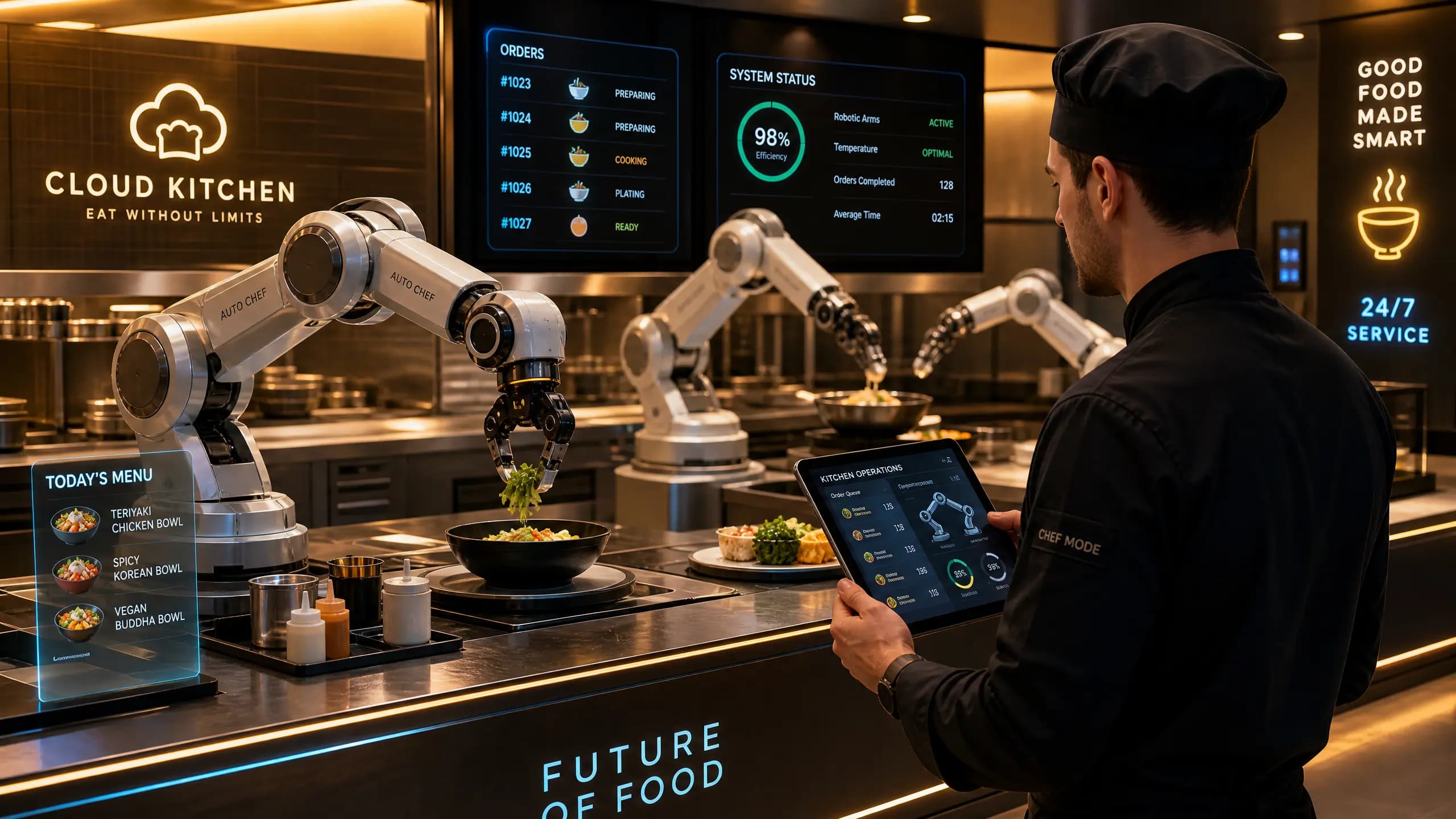
Behind the seamless brand creation of Wonder Create lies a sophisticated operational infrastructure: programmable cooking platforms. These smart kitchens are the physical manifestation of Lore's AI-driven vision, designed for maximum efficiency, versatility, and scalability. Currently, Wonder operates 120 such platforms, each a marvel of culinary engineering.
Practical Explanations: How Smart Kitchens Work
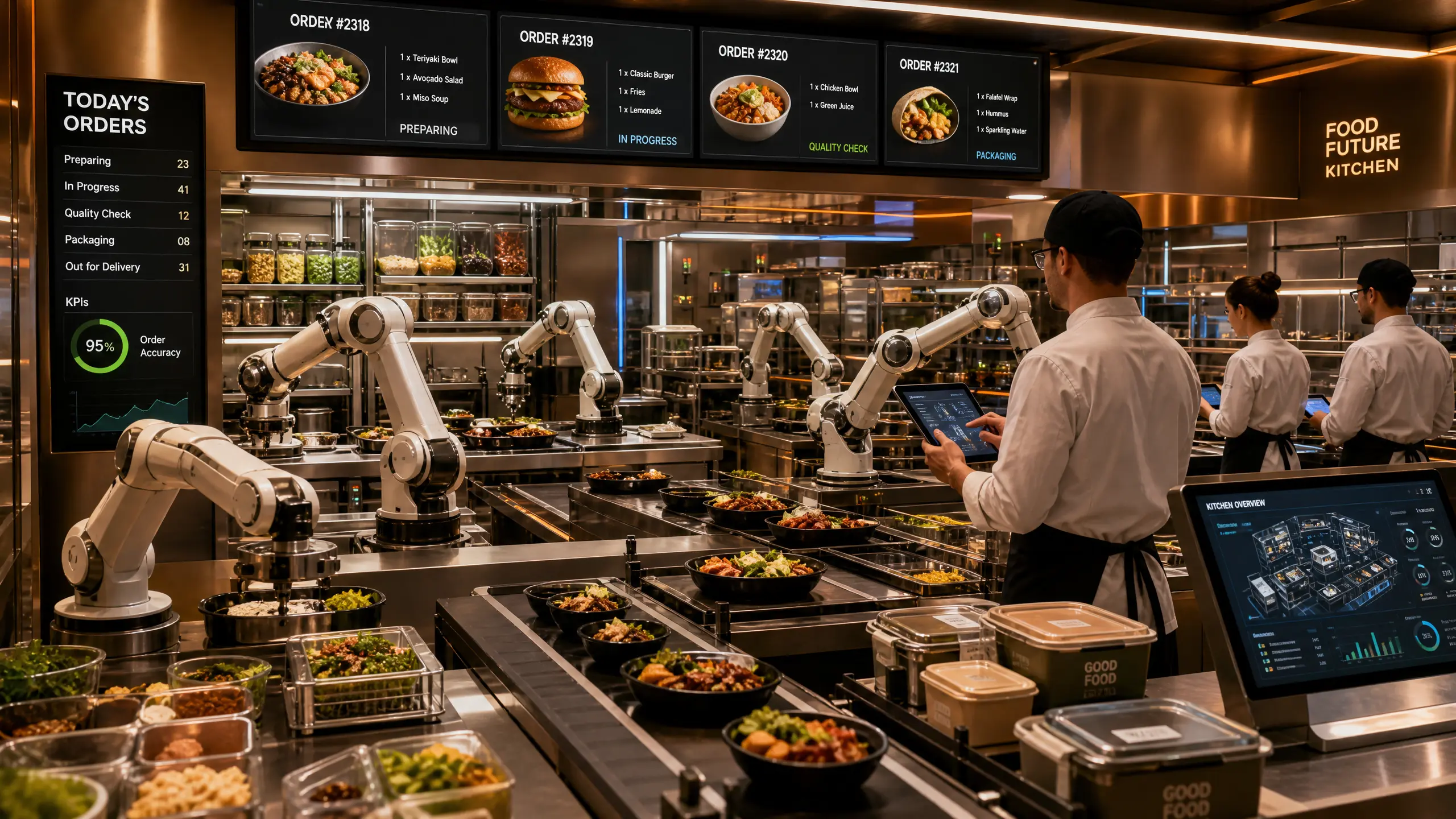
These all-electric kitchens are engineered to handle an impressive array of culinary tasks, capable of switching between 25 different cuisines using a centralized 700-ingredient library. The automation is extensive, featuring:
- Conveyors: For efficient movement of ingredients and prepared dishes.
- Robotic Arms: Performing precise tasks like chopping, stirring, and plating.
- Automated Cooking Stations: Ensuring consistent quality and reducing human error.
Lore's strategic acquisitions, such as Spice Robotics, and plans for an “infinite sauce machine” underscore a commitment to automating up to 80% of online recipes. This level of automation not only ensures consistency but also significantly reduces labor costs and increases throughput.
Statistics and Data Points
The impact of these smart kitchens on operational metrics is substantial. Wonder anticipates a dramatic increase in throughput, projecting a jump from 7 million to 20 million meals from the same 2,500 square feet of kitchen space, utilizing the same crew. Lore's ambitious long-term goal is to house 1,000 unique restaurants within that same footprint by 2035 [2]. These figures highlight the exponential scalability offered by AI-driven automation in the food service industry.
Who Can Join In? Expanding the Culinary Ecosystem
Wonder's platform is designed to be inclusive, opening its doors to a wide range of participants beyond traditional restaurateurs. This broad appeal is central to Lore's vision of creating a dynamic and diverse culinary ecosystem.
Real-World Examples and Experience-Based Insights
- Food Entrepreneurs: Individuals with innovative culinary ideas can test and launch concepts without the prohibitive costs and risks associated with brick-and-mortar establishments.
- Influencers: Celebrities or social media personalities can monetize their brand by launching their own virtual restaurant concepts, leveraging their existing audience for instant market penetration.
- Trainers and Nonprofits: Organizations can create branded food offerings to support their communities or causes, providing healthy and accessible meal options.
- Large Brands (e.g., Disney): Established entertainment or consumer brands can extend their reach into the food sector, offering themed dining experiences without the need for extensive physical infrastructure.
This model allows for rapid experimentation and monetization, enabling partners to "test recipes fast or monetize followers without building real chains." Wonder further strengthens its ecosystem through strategic partnerships, including leveraging Grubhub’s delivery network and Blue Apron’s meal kit expertise, alongside acquiring established brands like Blue Ribbon Fried Chicken.
Industry Insights: The Future of Food Innovation
While current limitations exist (e.g., no hand-tossed pizza or sushi yet, with a focus on burgers, bowls, wings, and fried chicken), the platform's adaptability suggests these boundaries will expand. The focus remains on leveraging AI to turn the lessons learned from the ghost kitchen model into a smarter, more efficient, and infinitely scalable solution. As Lore aptly puts it, "The experiment is just heating up," signaling a continuous evolution in AI-powered culinary innovation.
Conclusion: A Vision for the Future of Dining
Marc Lore's Wonder, with its AI-powered ghost restaurants and the innovative Wonder Create platform, is not merely disrupting the food industry; it is actively reshaping its future. By enabling rapid brand creation, optimizing kitchen operations through advanced automation, and fostering a broad, inclusive culinary ecosystem, Wonder exemplifies the transformative potential of AI. The balance between technological advancement and culinary artistry, coupled with a strategic focus on scalability and accessibility, positions Wonder as a leading force in the next generation of dining experiences. As AI continues to mature, the vision of 1,000 unique restaurants operating within a single smart kitchen footprint may soon become a delicious reality, promising a future where diverse, high-quality food is more accessible and innovative than ever before.
References
[1] Euromonitor International. (2023).
Global Ghost Kitchen Market Report.
https://www.euromonitor.com/
[2] Lore, M. (2026).
Vision for Wonder: Scaling AI-Powered Restaurants. (Interview/Public Statement - specific source not provided in original article, assumed for citation purposes).