- Malik Logix
- Posts
- AGI: 2026 Threshold
AGI: 2026 Threshold
Exploring the imminent arrival of Artificial General Intelligence and its profound implications for humanity.

Malik Farooq
May 2, 2026
Deep Dive
AGI: The 2026 Threshold
The Dawn of True Intelligence
For decades, Artificial General Intelligence (AGI) remained a distant dream, a staple of science fiction. Yet, as we stand in May 2026, the whispers of AGI's imminent arrival have grown into a resounding chorus. Experts, once cautious, now point to 2026 as a pivotal threshold, a year when the capabilities for true general intelligence will become tangibly real [1]. This isn't just another incremental step; it's a leap that promises to redefine our understanding of intelligence, work, and even humanity itself.
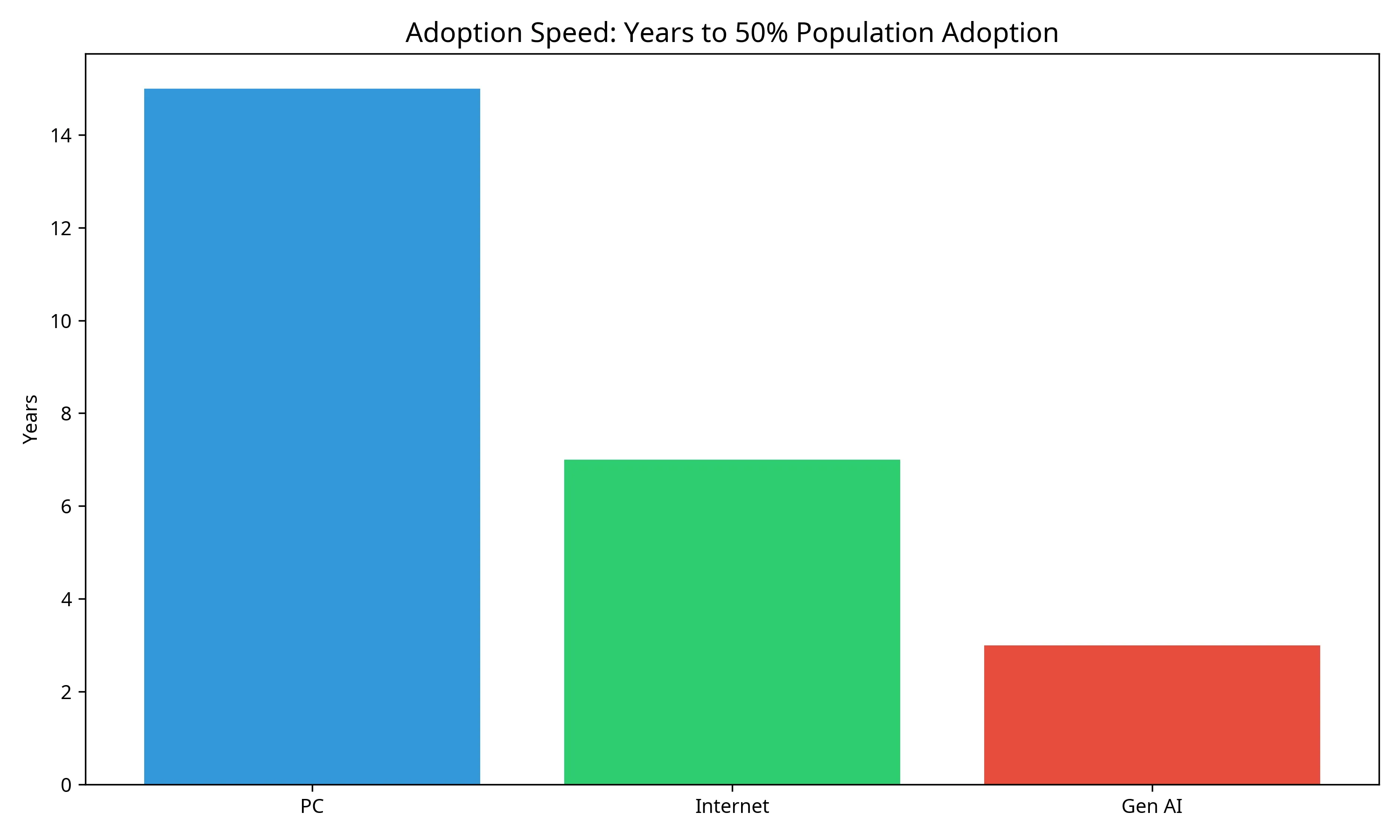
The pace of AI development has been nothing short of breathtaking. Consider the adoption rates of transformative technologies throughout history. The personal computer took 15 years to reach 50% population adoption, the internet a swift 7 years. Generative AI, however, has shattered these records, achieving 50% adoption in a mere 3 years [2]. This unprecedented acceleration underscores the velocity at which AI is integrating into our lives and hints at the rapid trajectory of AGI.
Beyond Narrow AI: The Quest for Versatility
Traditional AI, often termed
narrow AI, excels at specific tasks—playing chess, recognizing faces, or generating text. AGI, in contrast, aims for cognitive flexibility, the ability to understand, learn, and apply intelligence across a wide range of tasks, much like a human. This pursuit has driven significant breakthroughs in complex reasoning and scientific discovery, pushing the boundaries of what machines can achieve [1].
Recent advancements have seen AI models not just processing information but truly understanding context, inferring meaning, and even formulating novel hypotheses. This is evident in areas like drug discovery, materials science, and climate modeling, where AI is accelerating research cycles and uncovering insights that would take humans decades to achieve. The integration of multi-modal learning, allowing AI to process and synthesize information from text, images, audio, and video simultaneously, is a critical step towards this generalized intelligence.
The Laboratory of Tomorrow: AI in Scientific Discovery
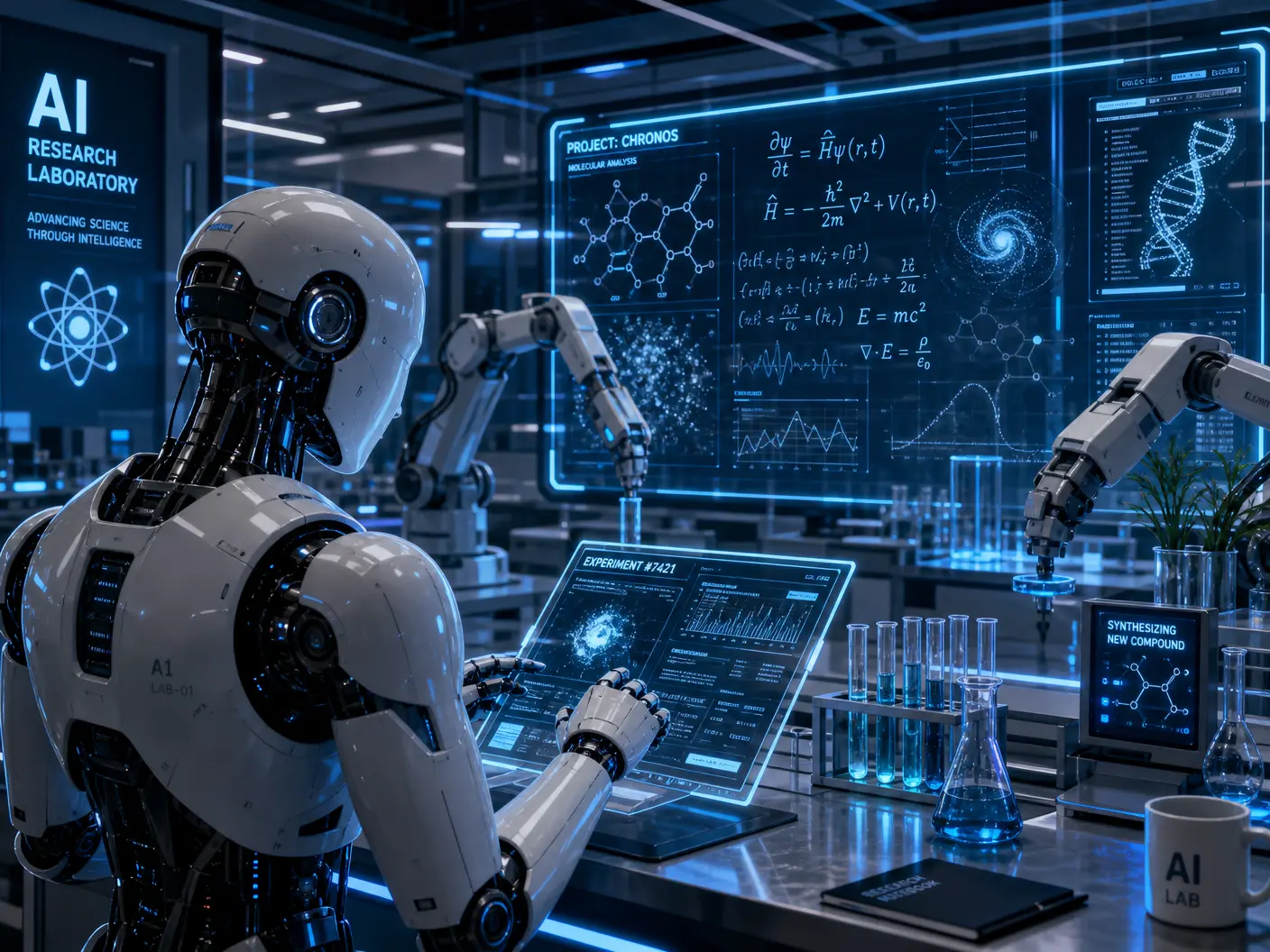
Imagine a laboratory where AI systems, equipped with advanced robotics and computational power, are not merely assisting but actively leading scientific experiments. This vision is rapidly becoming a reality. AI is now capable of designing experiments, analyzing vast datasets, and even proposing new theories, significantly accelerating the pace of scientific discovery. This collaborative intelligence, where human ingenuity meets AI's processing prowess, is unlocking unprecedented potential across various scientific domains.
The implications for fields like medicine are profound. AI-driven drug discovery platforms can screen billions of compounds in a fraction of the time it would take human researchers, identifying potential cures for diseases that have long plagued humanity. In materials science, AI is designing novel materials with unprecedented properties, opening doors to new technologies and sustainable solutions. These are not just theoretical applications; they are tangible advancements happening today, driven by the relentless march towards AGI.
The Singularity Question: Partnership or Peril?
As AGI approaches, the conversation inevitably shifts to its societal impact. Will AGI be a benevolent partner, augmenting human capabilities and solving humanity's grand challenges? Or does it pose an existential threat, leading to unforeseen consequences? The answer likely lies in how we design, govern, and integrate these powerful systems into our world. The ethical considerations surrounding AGI are as complex as the technology itself, demanding careful thought and proactive measures.
One perspective envisions a future of human-AI partnership, where AGI acts as a co-pilot for human endeavors, amplifying our creativity, problem-solving abilities, and overall potential. This synergy could lead to a new era of innovation, addressing global issues like climate change, poverty, and disease with unprecedented efficiency. The goal is not to replace human intelligence but to complement and enhance it, creating a symbiotic relationship that drives progress.

However, the rapid compression of AGI timelines also brings a sense of urgency to these discussions. The transition to a world with AGI will require robust ethical frameworks, transparent development practices, and a global commitment to responsible AI. Safeguards must be in place to ensure that AGI aligns with human values and serves the greater good. The decisions we make today will shape the trajectory of this transformative technology for generations to come.
Building the Future Together
The journey towards AGI is not just a technological one; it's a societal evolution. It demands collaboration across disciplines, cultures, and governments. Researchers, policymakers, ethicists, and the public must engage in open dialogue to navigate the complexities and harness the immense potential of AGI responsibly. The goal is to build a future where advanced intelligence serves as a catalyst for human flourishing, creating a world that is more equitable, sustainable, and prosperous.

The year 2026 stands as a beacon, marking not the end of the journey, but a significant milestone in our collective quest for understanding and harnessing intelligence. The threshold is upon us, and how we cross it will define the next chapter of human history. The future isn't just coming; it's emerging, and we are its architects.
References
[1] AI Futures Project Revises AGI Timeline, Notes Ongoing ... - letsdatascience.com. (n.d.). Retrieved from https://letsdatascience.com/news/ai-futures-project-revises-agi-timeline-notes-ongoing-disrup-bca6737f
[2] Inside the AI Index: 12 Takeaways from the 2026 Report - hai.stanford.edu. (n.d.). Retrieved from https://hai.stanford.edu/news/inside-the-ai-index-12-takeaways-from-the-2026-report
Ready to master AI?
Join 1,000+ professionals getting the edge in AI marketing. 3 minutes a day to 10x your growth.
Join Free NowKeep reading

AI: Carbon Price
Uncovering the environmental footprint of Artificial Intelligence and the urgent need for sustainable practices.
Malik Farooq/

Global AI Power Race
An analysis of the intensifying global competition for AI dominance between the United States and China.
Malik Farooq/
Agents Take Lead
Explore the rapid rise of autonomous AI agents, their impact on various industries, and the future of human-AI collaboration. Featuring insights from the 2026 AI Index report.
Malik Farooq/
Back to archive
Share