- Malik Logix
- Posts
- AI: Carbon Price
AI: Carbon Price
Uncovering the environmental footprint of Artificial Intelligence and the urgent need for sustainable practices.

Malik Farooq
May 2, 2026

Deep Dive
AI: Hidden Carbon Price

The Unseen Cost of Intelligence
As Artificial Intelligence continues its rapid ascent, transforming industries and daily lives, a critical question emerges: What is the true environmental cost of this technological revolution? The immense computational power required to train and operate advanced AI models comes with a significant, often hidden, carbon price. In May 2026, the scale of this impact is becoming increasingly clear, demanding urgent attention and innovative solutions for sustainable AI development [1].
The figures are stark. The estimated training emissions for a single frontier model like Grok 4 reached an astonishing 72,816 tons of CO2 equivalent—a footprint comparable to driving 17,000 cars for an entire year. This highlights the energy-intensive nature of AI development, where complex algorithms and vast datasets consume colossal amounts of electricity [1].
Powering the Future: A Growing Demand
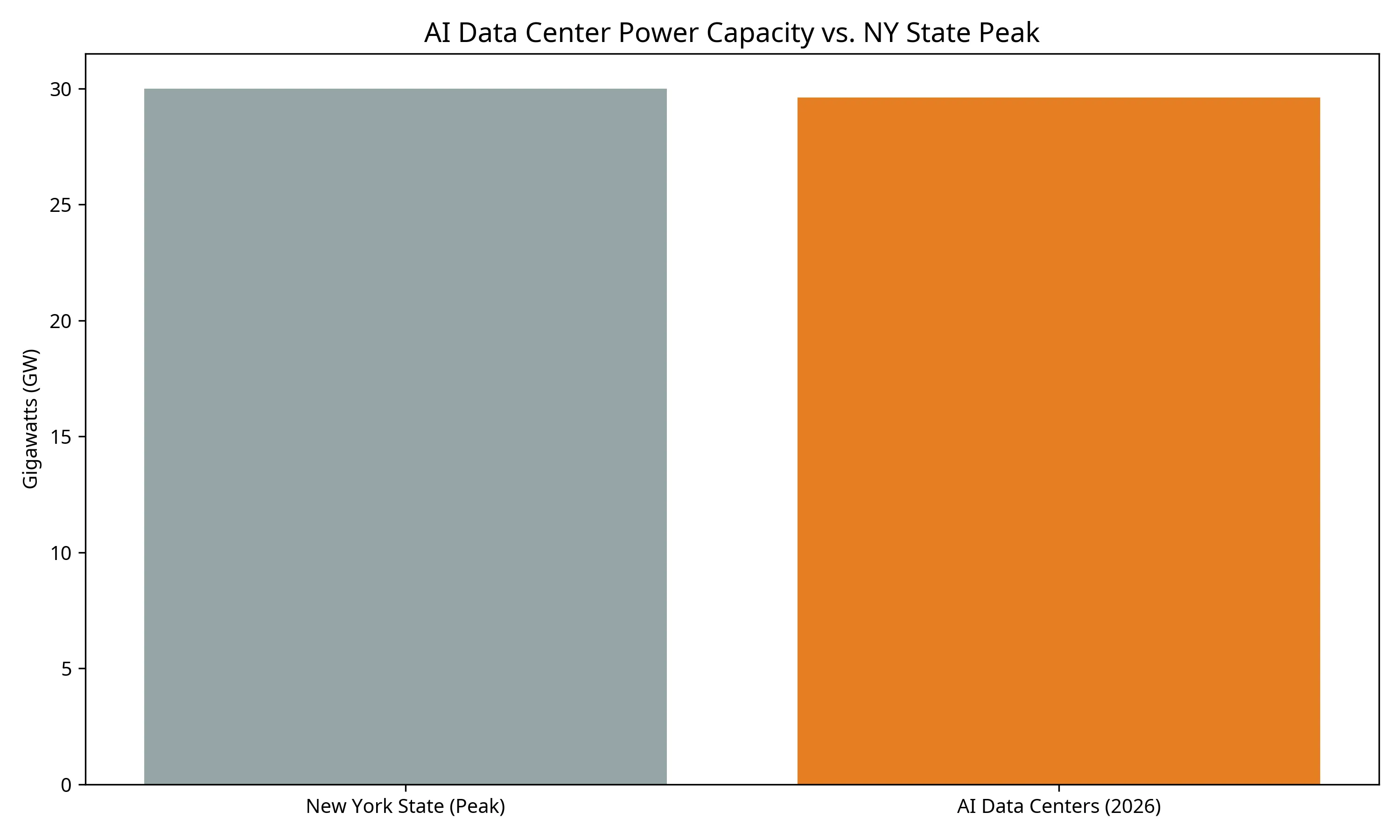
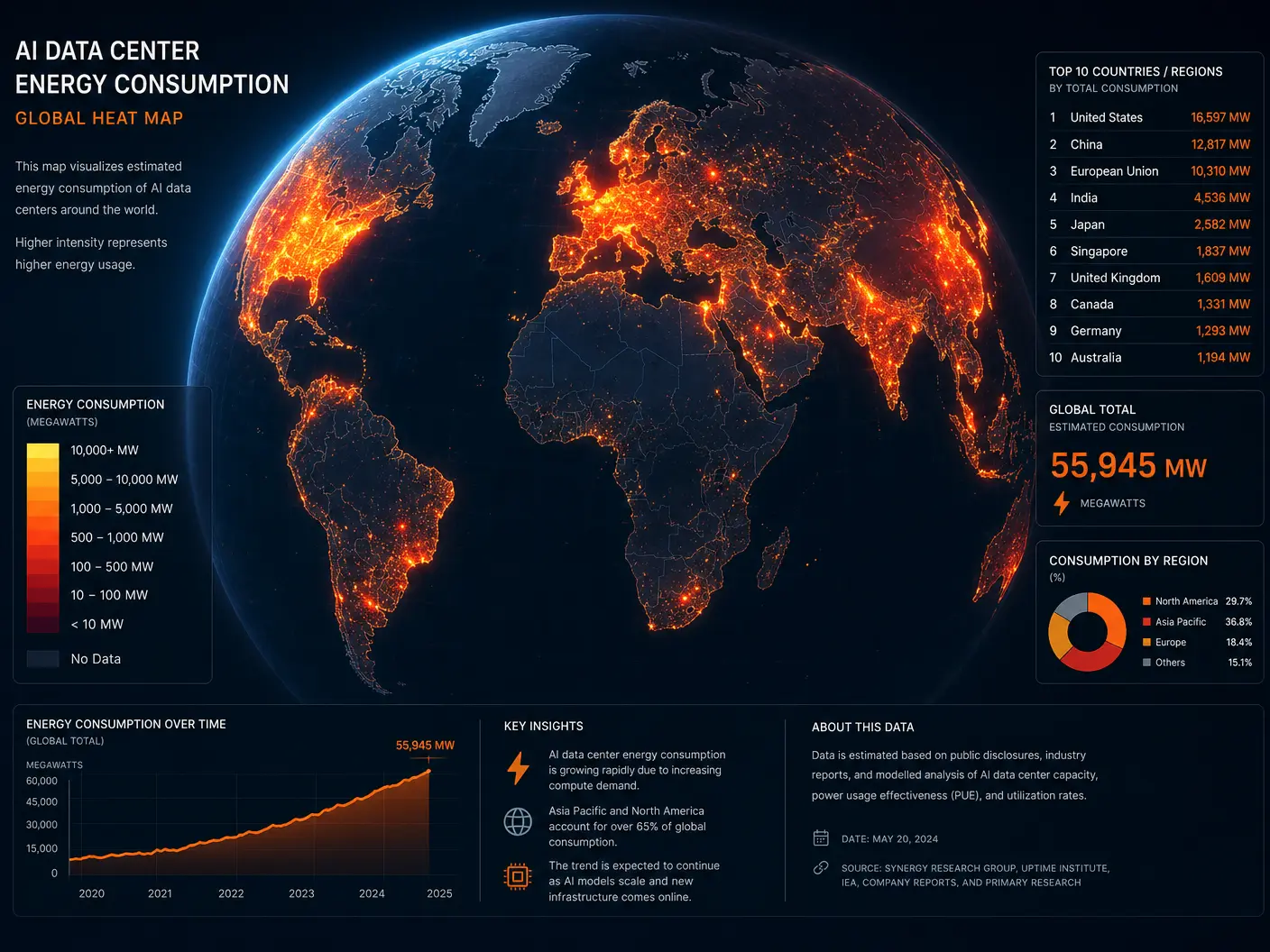
The infrastructure supporting AI is expanding at an unprecedented rate. AI data center power capacity has surged to 29.6 GW, a figure roughly equivalent to the peak electricity demand of the entire state of New York. This massive energy requirement is not just for training; it extends to the continuous inference processes, where AI models are deployed to perform tasks in real-world applications [1].
Beyond electricity, water consumption is another critical concern. The annual water usage for GPT-4o inference alone is projected to exceed the drinking water needs of 12 million people. This water is primarily used for cooling data servers or for generating hydroelectricity to power these facilities. The cumulative power demand of all AI systems globally is now comparable to the national electricity consumption of entire countries like Switzerland or Austria [1]. These statistics paint a vivid picture of the environmental challenges posed by the AI boom.

Towards Green AI: Strategies for Sustainability
Recognizing the growing environmental footprint, the AI community is increasingly focusing on
developing more sustainable practices, often termed 'Green AI.' This involves a multi-faceted approach, encompassing everything from optimizing algorithms for energy efficiency to investing in renewable energy sources for data centers.
One key strategy is the development of more efficient AI models. Researchers are exploring methods to reduce the computational cost of training and inference, such as model compression, quantization, and more efficient neural network architectures. These advancements aim to achieve similar performance with significantly less energy consumption, thereby mitigating the environmental impact.
Furthermore, there's a growing push for data centers to transition to renewable energy. Companies are investing heavily in solar, wind, and geothermal power to offset their carbon emissions. Innovations in cooling technologies, such as liquid cooling and advanced airflow management, are also playing a crucial role in reducing the energy and water demands of these facilities.

The Role of Policy and Innovation
Addressing AI's carbon footprint requires not only technological innovation but also robust policy frameworks. Governments and international bodies are beginning to explore regulations and incentives that promote sustainable AI development. This includes setting standards for energy efficiency, encouraging transparency in reporting environmental impact, and funding research into green AI technologies.
Innovation is also driving solutions in areas like carbon capture and utilization, where AI itself can be used to optimize processes for reducing greenhouse gas emissions. The circular economy principles are being applied to hardware, with efforts to extend the lifespan of AI infrastructure and improve recycling processes, minimizing electronic waste.
A Call for Collective Responsibility
The environmental impact of AI is a shared responsibility. Developers, researchers, corporations, and policymakers all have a role to play in ensuring that the advancement of AI does not come at an unsustainable cost to our planet. The choices made today will determine whether AI becomes a tool for environmental destruction or a powerful ally in the fight against climate change.
The journey towards truly sustainable AI is complex, but it is imperative. By prioritizing energy efficiency, embracing renewable energy, and fostering responsible development practices, we can harness the transformative power of AI while safeguarding our planet for future generations. The hidden carbon price of AI is no longer hidden; it's a challenge we must collectively address, and the time for action is now.
References
[1] Inside the AI Index: 12 Takeaways from the 2026 Report - hai.stanford.edu. (n.d.). Retrieved from https://hai.stanford.edu/news/inside-the-ai-index-12-takeaways-from-the-2026-report
Ready to master AI?
Join 1,000+ professionals getting the edge in AI marketing. 3 minutes a day to 10x your growth.
Join Free NowKeep reading

AGI: 2026 Threshold
Exploring the imminent arrival of Artificial General Intelligence and its profound implications for humanity.
Malik Farooq/

Global AI Power Race
An analysis of the intensifying global competition for AI dominance between the United States and China.
Malik Farooq/

Agents Take Lead
Explore the rapid rise of autonomous AI agents, their impact on various industries, and the future of human-AI collaboration. Featuring insights from the 2026 AI Index report.
Malik Farooq/
Back to archive
Share