- Malik Logix
- Posts
- AI Platform Bob: Revolutionizing SDLC Cost Regulation
AI Platform Bob: Revolutionizing SDLC Cost Regulation
Discover how IBM's AI platform Bob is transforming software development lifecycle (SDLC) governance and cost regulation for enterprises.

Malik Farooq
May 6, 2026
Deep Dive
Introduction: The Challenge of SDLC Costs in the AI Era
In today's rapidly evolving technological landscape, enterprises are constantly seeking ways to accelerate their software development lifecycles (SDLC) while maintaining stringent governance and cost controls. The advent of AI-powered coding assistants has introduced unprecedented speed, yet it also presents a paradox: unchecked velocity can lead to significant technical debt, compliance issues, and unmanaged liabilities. This is where IBM's innovative AI platform, Bob, steps in, offering a groundbreaking solution to regulate SDLC costs and anchor enterprise engineering in the age of artificial intelligence.
The Paradox of Speed: AI's Impact on SDLC
The promise of AI in software development is immense, offering the potential to automate repetitive tasks, generate code snippets, and significantly reduce development time. However, this speed comes with inherent risks. Without proper oversight, AI-generated code can introduce vulnerabilities, increase technical debt, and complicate compliance efforts. The challenge for businesses is to harness the power of AI without sacrificing control and transparency.
The Growing Burden of Technical Debt and Legacy Systems
Many enterprises grapple with accumulated technical debt and complex hybrid cloud structures. Upgrading older systems often consumes a substantial portion of engineering budgets—estimated at 60-80 percent—and these projects can drag on for months. This problem is exacerbated by fragmented development workflows, where work is scattered across disparate tools, roles, and project stages, leading to inefficiencies and increased risk.
Legacy architecture integration presents a particularly formidable barrier. Mainframe systems, some running decades-old code, cannot be easily updated with simple AI-generated snippets. The deep dependencies within corporate database structures necessitate rigorous mapping and understanding before any code modification can occur. This is a critical area where AI, if not properly governed, can create more problems than it solves.
IBM Bob: An AI-First Approach to SDLC Governance
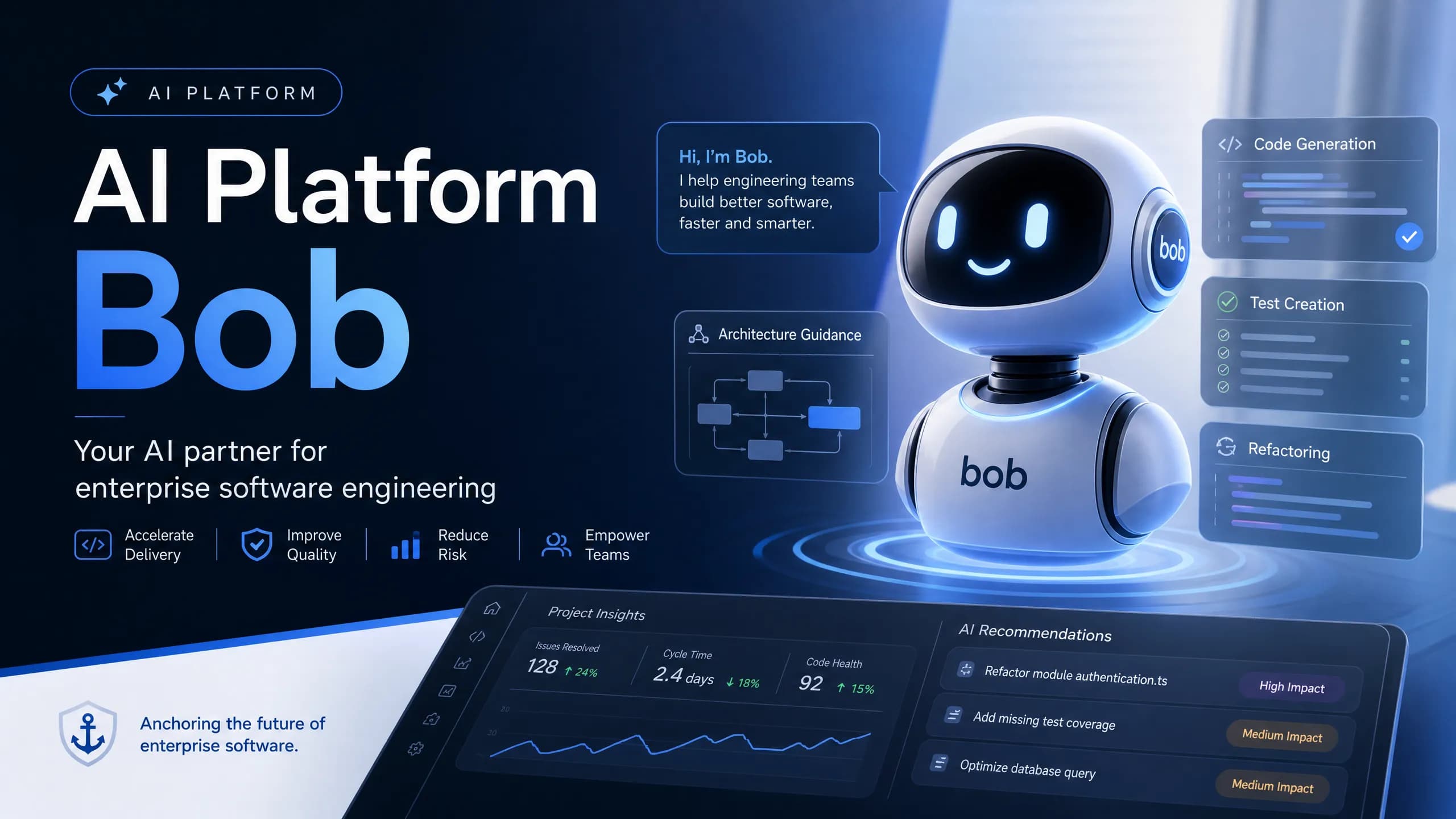
IBM Bob is designed as an AI-first development partner, seamlessly embedding within the entire software development lifecycle. Its structured framework integrates persona-based modes, intelligent tool calling, and crucial human-in-the-loop controls. This ensures that development momentum is maintained while enforcing strict standards and governance policies.
Agentic AI: Mapping Dependencies and Modernizing Systems
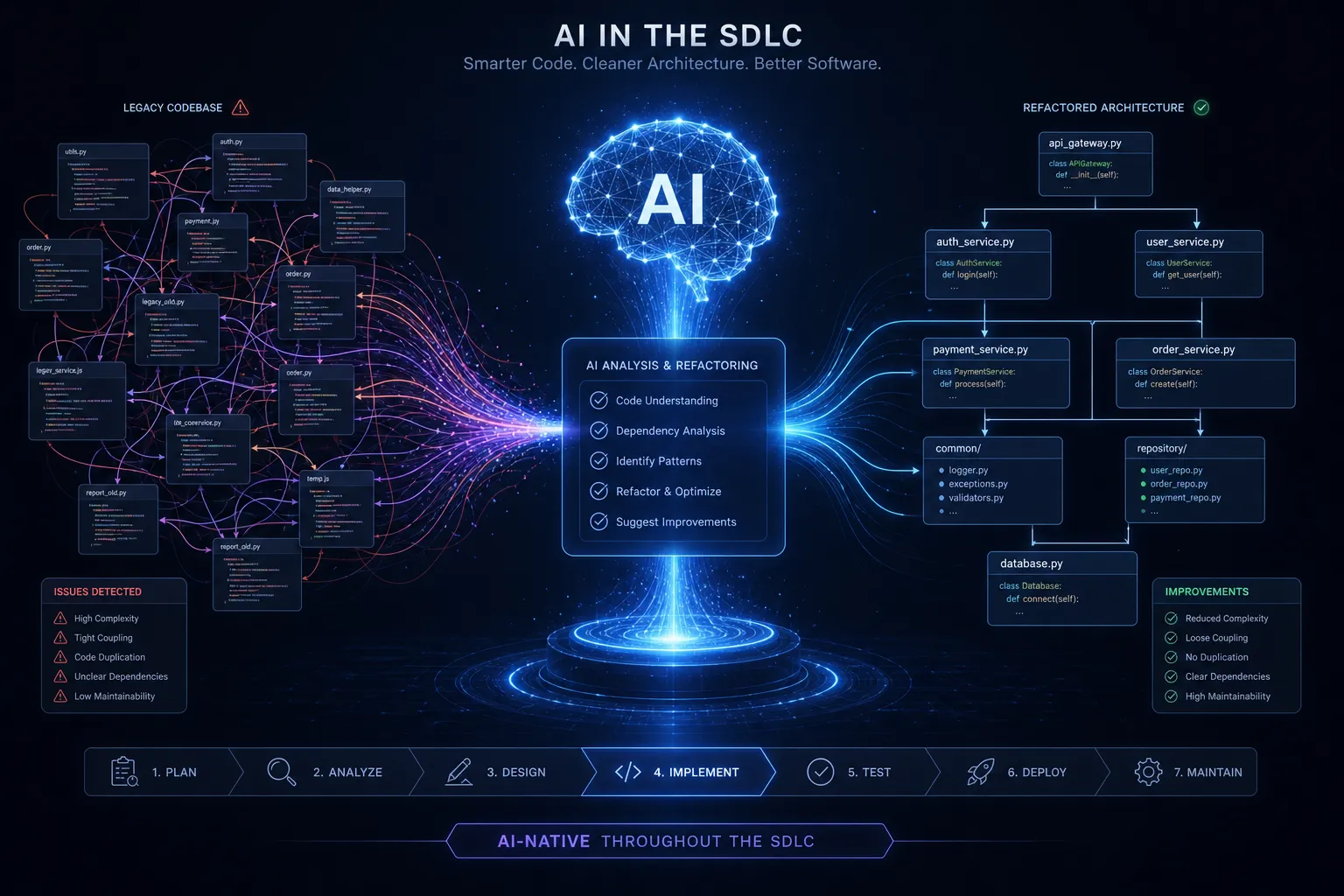
The agentic nature of IBM Bob is a key differentiator. It intelligently maps dependencies within complex systems before initiating code refactoring. This coordinated approach involves specialized agents working across testing, documentation, and continuous integration pipelines to execute comprehensive modernization tasks. This capability is particularly vital for integrating legacy systems, where understanding intricate dependencies is paramount.
Real-world Example: APIS IT, a public sector IT service provider, successfully utilized IBM Bob to overhaul government systems burdened by decades of technical debt. By deploying the platform, they achieved architecture analysis and documentation 10 times faster, with 100 percent accuracy on legacy JCL/PL/I systems. Veran Pokornić, Solution Architect at APIS IT, noted, "Bob migrated our complex .NET services in hours instead of weeks."
Dynamic Task Routing and Model Orchestration
Integrating large language models (LLMs) into enterprise environments can be challenging, often leading to issues like hallucination when parsing undocumented legacy systems. IBM Bob addresses this through dynamic multi-model orchestration, routing tasks based on accuracy requirements, latency tolerances, and operational costs.
Optimizing Compute Expenditure
A significant friction point in scaling engineering automation is the selection of models and associated compute expenditure. Bob intelligently evaluates the complexity of each request. Simple tasks are routed to lighter, cost-effective models, while more demanding architectural reasoning tasks are assigned to frontier models. This optimized approach ensures efficient resource utilization and cost management.
Bob's underlying engine leverages a diverse pool of models, including Anthropic Claude, open-source options from Mistral, and IBM Granite, along with specialized fine-tuned variants for next-edit prediction and security screening. This pass-through pricing structure provides transparent usage visibility, allowing leaders to align AI spend with actual production outcomes.
Embedding Guardrails: Security and Compliance in the SDLC
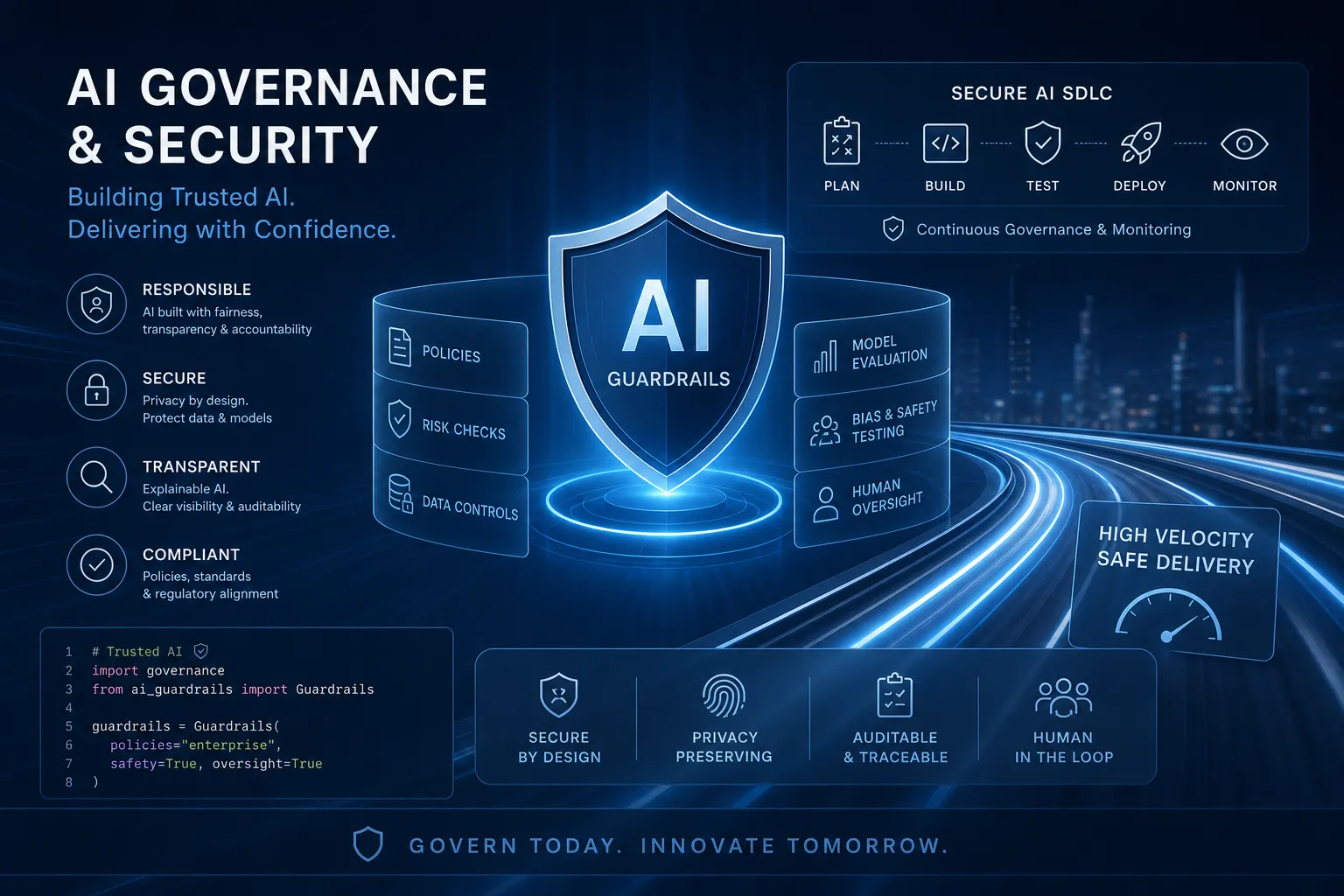
Accelerated delivery cycles can strain traditional quality assurance and security review processes. AI-generated code, while fast, can bypass standard reviews, creating compliance blind spots and introducing new attack vectors. IBM Bob directly embeds guardrails into the daily developer routine to mitigate these risks.
Proactive Security Measures
The platform executes prompt normalization, sensitive data scanning, and real-time policy enforcement, alongside automated red-teaming. Customizable approval checkpoints maintain developer transparency, allowing engineering leads to configure manual gates or enable auto-approvals based on task type. This proactive approach ensures that security and compliance are integral to the development process.
Industry Insight: The integration of LLMs introduces entirely new attack vectors. Traditional security measures may not be sufficient to address these evolving threats. Platforms like IBM Bob are crucial for adapting enterprise security profiles to the realities of AI-driven development.
Traceability and Auditability
Tracking automated actions requires deep integration. The BobShell command-line interface generates self-documenting agentic processes in real time. Every automated decision and code modification is traceable from inception to deployment, satisfying stringent enterprise audit requirements. This level of transparency is critical for regulated industries and for maintaining trust in AI-driven development.
Quantifying Developer Productivity and Business Impact
IBM's internal rollout of Bob to over 80,000 employees has yielded impressive results. Surveyed users reported a 45 percent average productivity gain across new feature development, security remediation, and modernization tasks. Specific teams saw even greater efficiencies:
| Team | Task | Time Savings |
|---|---|---|
| IBM Maximo | Complex refactoring | 69% |
| Instana Division | Specific assignments | 70% |
Practical Explanation: These statistics demonstrate that AI platforms like Bob are not just theoretical advancements but are delivering tangible, measurable improvements in developer productivity and operational efficiency. The ability to save significant engineering hours translates directly into reduced costs and faster time-to-market.
External clients have also experienced similar benefits. Blue Pearl, a cloud solutions provider, compressed a 30-day Java upgrade into just three days using Bob, saving over 160 engineering hours with zero post-deployment defects on their BlueApp platform.
Neel Sundaresan, GM of Automation & AI at IBM Software, emphasizes, "Developers need a system that understands the full context of their work and can act on it. That’s what we built with Bob. It’s an agentic platform that embeds an AI partner into every role across the SDLC, from the architect sketching a design to the security engineer reviewing code before it ships."
Conclusion: The Future of Enterprise SDLC with IBM Bob
IBM Bob represents a significant leap forward in managing the complexities and costs of the software development lifecycle in an AI-driven world. By providing robust governance, dynamic task routing, and embedded security guardrails, Bob empowers enterprises to embrace AI speed without compromising control, transparency, or compliance. As businesses continue to modernize and integrate AI into their core operations, platforms like IBM Bob will be indispensable for achieving efficiency, reducing technical debt, and ensuring the secure and cost-effective delivery of high-quality software.
References
[1] IBM launches AI platform Bob to regulate SDLC costs. (2026, April 28). AI News. https://www.artificialintelligence-news.com/news/ibm-launches-ai-platform-bob-to-regulate-sdlc-costs/
Ready to master AI?
Join 1,000+ professionals getting the edge in AI marketing. 3 minutes a day to 10x your growth.
Join Free NowKeep reading
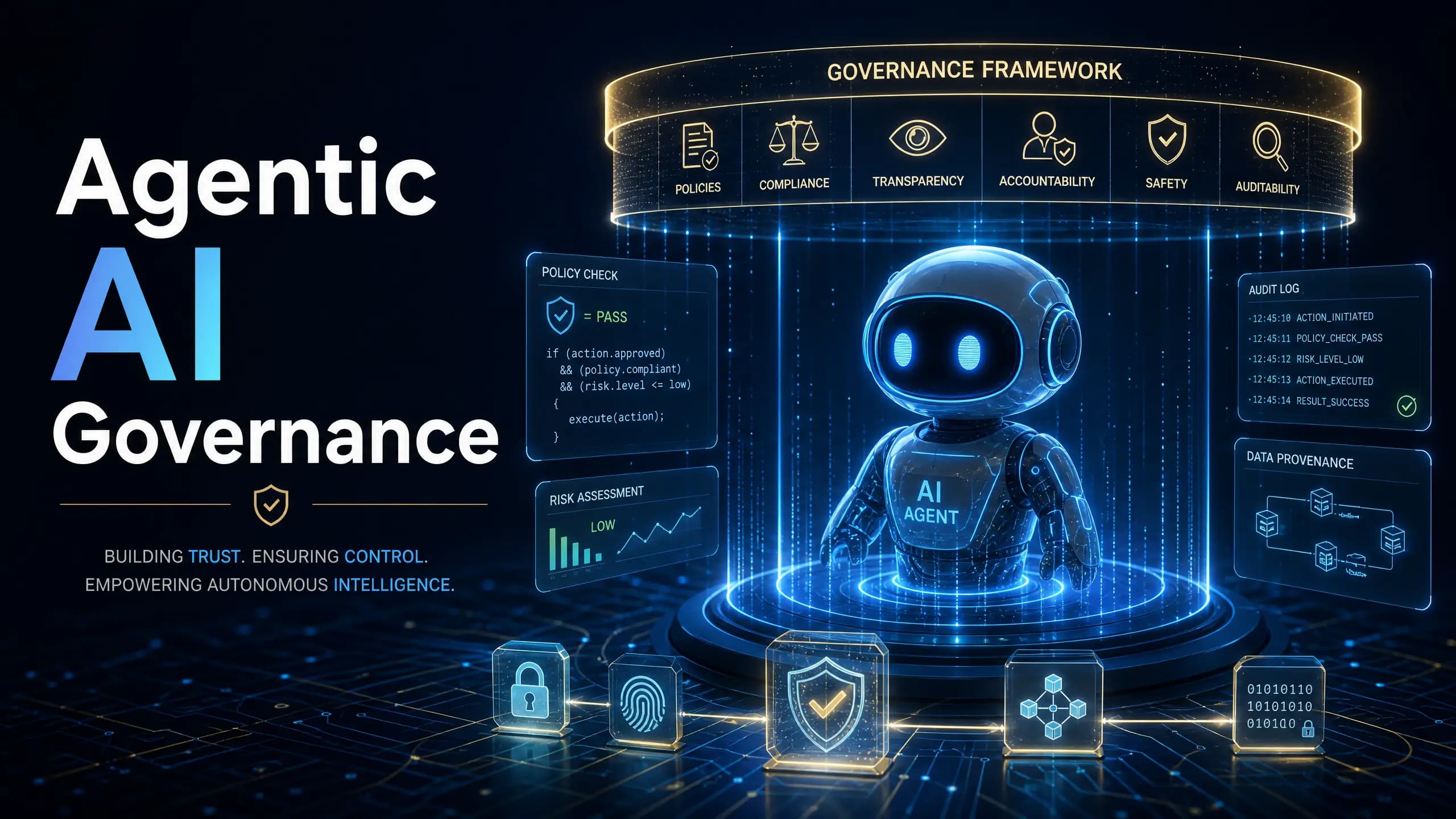
Agentic AI Governance Enterprise Readiness
Explore Google's innovative agentic AI governance platform and assess whether enterprises are truly prepared for the shift towards autonomous AI systems.
Malik Farooq/

AI Agents Interaction Infrastructure
Explore why AI agents require robust interaction infrastructure to prevent automation waste and ensure efficient, secure, and compliant operations in enterprise environments.
Malik Farooq/
AI Transforming Business Strategy
Explore how AI is transforming business strategy with agentic AI governance and its impact on enterprise readiness.
Malik Farooq/
Back to archive
Share