- Malik Logix
- Posts
- Reversing Enterprise Security Costs with AI Vulnerability Discovery
Reversing Enterprise Security Costs with AI Vulnerability Discovery
Discover how AI-powered vulnerability discovery is transforming enterprise security, reducing costs, and shifting the advantage from attackers to defenders.

Malik Farooq
May 6, 2026
Deep Dive

Introduction: The Shifting Landscape of Enterprise Security
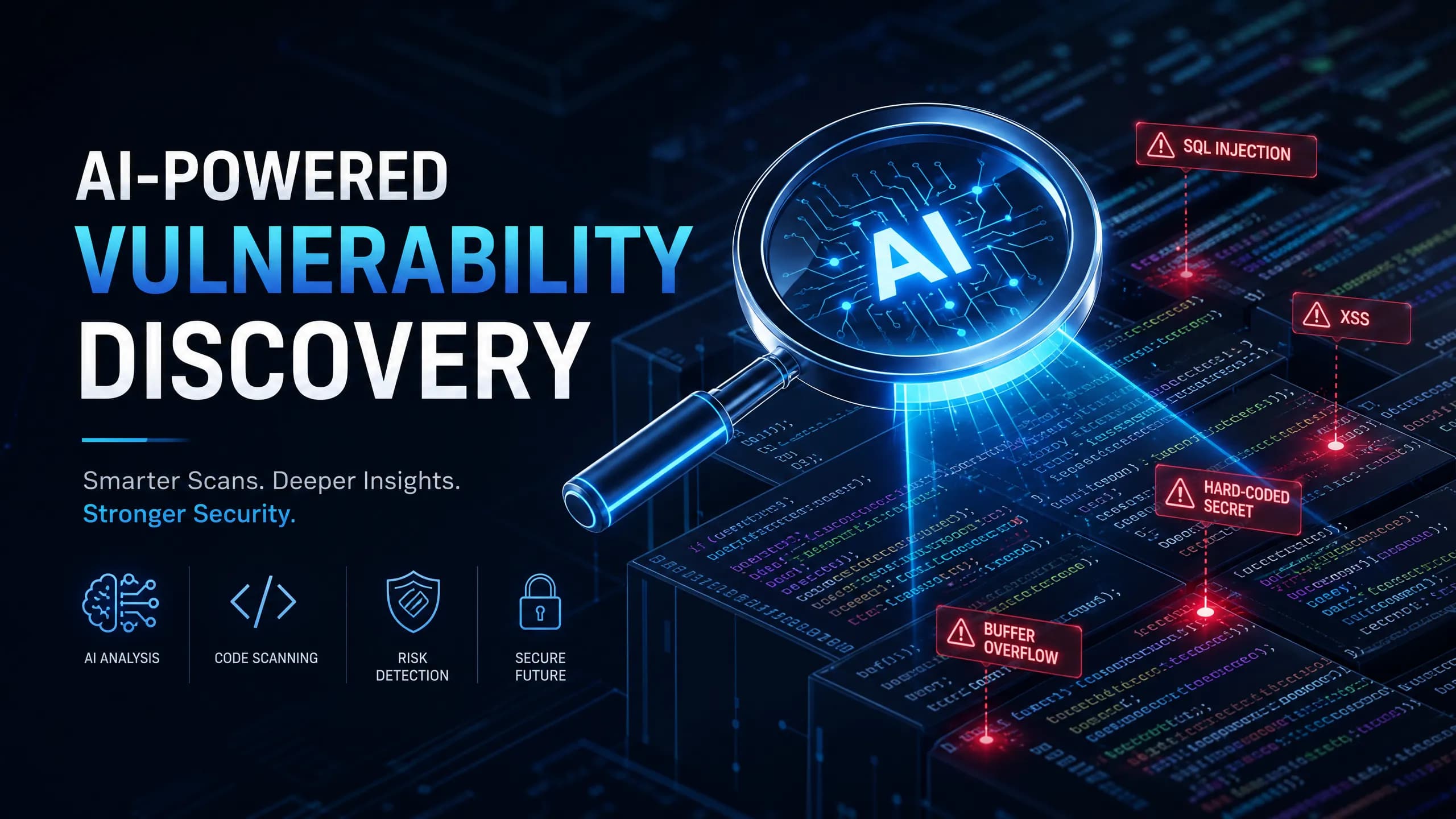
In the constant cat-and-mouse game between cyber attackers and defenders, the cost of security has traditionally favored the aggressor. Exploits were once considered too expensive to eliminate entirely, with the prevailing strategy focused on making attacks prohibitively costly for all but the most well-funded adversaries. However, the emergence of advanced AI-powered vulnerability discovery is fundamentally altering this dynamic, reversing enterprise security costs and ushering in an era where defense holds a decisive advantage.
AI's Breakthrough in Vulnerability Identification
The recent evaluation by the Mozilla Firefox engineering team, utilizing Anthropic’s Claude Mythos Preview, marks a significant turning point. This collaboration demonstrated AI's unprecedented ability to identify and fix vulnerabilities at scale, challenging long-held assumptions about the feasibility of achieving a near-zero exploit environment.
Quantifying AI's Impact on Vulnerability Discovery
During their initial evaluation, the Firefox team identified and fixed 271 vulnerabilities for their version 150 release using Claude Mythos Preview. This builds upon a previous collaboration with Anthropic, where Opus 4.6 contributed to 22 security-sensitive fixes in version 148. These figures highlight the immense potential of AI in rapidly uncovering and addressing security flaws.
Real-world Example: Uncovering hundreds of vulnerabilities simultaneously places a significant strain on a team's resources. However, in today's strict regulatory climate, the effort to prevent a data breach or ransomware attack is a worthwhile investment. Automated scanning, driven by AI, further reduces costs by continuously checking code against known threat databases, thereby minimizing the need for expensive external consultants.
Overcoming Compute Expenditure and Integration Friction
Integrating frontier AI models into existing continuous integration pipelines presents challenges related to compute costs and integration friction. Running millions of tokens of proprietary code through advanced models like Claude Mythos Preview requires substantial capital expenditure. Enterprises must establish secure vector database environments to manage the context windows necessary for vast codebases, ensuring proprietary corporate logic remains strictly partitioned and protected.
Mitigating Hallucinations and Validating Outputs
Evaluating AI-generated outputs demands rigorous hallucination mitigation. A model producing false-positive security vulnerabilities can lead to wasted human engineering hours. Therefore, deployment pipelines must cross-reference model outputs against existing static analysis tools and fuzzing results to validate findings and ensure accuracy.
Automated security testing heavily relies on dynamic analysis techniques, particularly fuzzing, often conducted by internal red teams. While fuzzing is highly effective, it can struggle with certain parts of the codebase. Elite security researchers traditionally overcome these limitations by manually reasoning through source code to identify logic flaws—a time-consuming process constrained by the scarcity of human expertise.
Industry Insight: The integration of advanced AI models eliminates this human constraint. Computers, once incapable of such tasks, now excel at reasoning through code. Mythos Preview demonstrates parity with the world’s best security researchers, with the engineering team reporting no category or complexity of flaw that humans can identify which the model cannot. This suggests a future where AI can augment, and in some cases, surpass human capabilities in vulnerability discovery.
Eliminating the Human Discovery Constraint
The traditional gap between what machines and humans can discover heavily favors attackers, who can dedicate months of costly human effort to uncover a single exploit. Closing this discovery gap makes vulnerability identification more efficient and cost-effective, eroding the long-term advantage of the attacker. While the initial influx of identified flaws may seem daunting, it ultimately strengthens enterprise defense.
Vendors of vital internet-exposed software are increasingly adopting similar evaluation methods, which is expected to change the baseline standard for software liability. If models can reliably find logic flaws in a codebase, failing to use such tools could soon be viewed as corporate negligence.
Importantly, these systems are not inventing entirely new categories of attacks. Software applications, designed with modularity, allow for human reasoning about correctness. While complex, software defects are finite. By embracing advanced automated audits, technology leaders can actively defeat persistent threats. Although the initial data influx demands intense engineering focus and reprioritization, teams committed to remediation will achieve a positive outcome, leading to a future where defense teams have a decisive advantage.
Conclusion: A New Era of Proactive Security
AI-powered vulnerability discovery is ushering in a new era of proactive security, fundamentally altering the economics of cyber defense. By enabling rapid, comprehensive, and cost-effective identification of security flaws, platforms like Anthropic’s Claude Mythos Preview are empowering enterprises to strengthen their defenses, reduce operational costs, and shift the advantage from attackers to defenders. This paradigm shift promises a more secure digital landscape, where AI acts as a powerful ally in the ongoing battle against cyber threats.
References
[1] Reversing enterprise security costs with AI vulnerability discovery. (2026, April 22). AI News. https://www.artificialintelligence-news.com/news/reversing-enterprise-security-costs-with-ai-vulnerability-discovery/
Ready to master AI?
Join 1,000+ professionals getting the edge in AI marketing. 3 minutes a day to 10x your growth.
Join Free NowKeep reading
Agentic AI Governance Enterprise Readiness
Explore Google's innovative agentic AI governance platform and assess whether enterprises are truly prepared for the shift towards autonomous AI systems.
Malik Farooq/

AI Agents Interaction Infrastructure
Explore why AI agents require robust interaction infrastructure to prevent automation waste and ensure efficient, secure, and compliant operations in enterprise environments.
Malik Farooq/
AI Platform Bob: Revolutionizing SDLC Cost Regulation
Discover how IBM's AI platform Bob is transforming software development lifecycle (SDLC) governance and cost regulation for enterprises.
Malik Farooq/
Back to archive
Share