- Malik Logix
- Posts
- Enterprise AI Governance Secures Profits
Enterprise AI Governance Secures Profits
Discover how enterprise AI governance secures profit margins by replacing statistical guesses with deterministic control, according to SAP.

Malik Farooq
May 6, 2026

Deep Dive
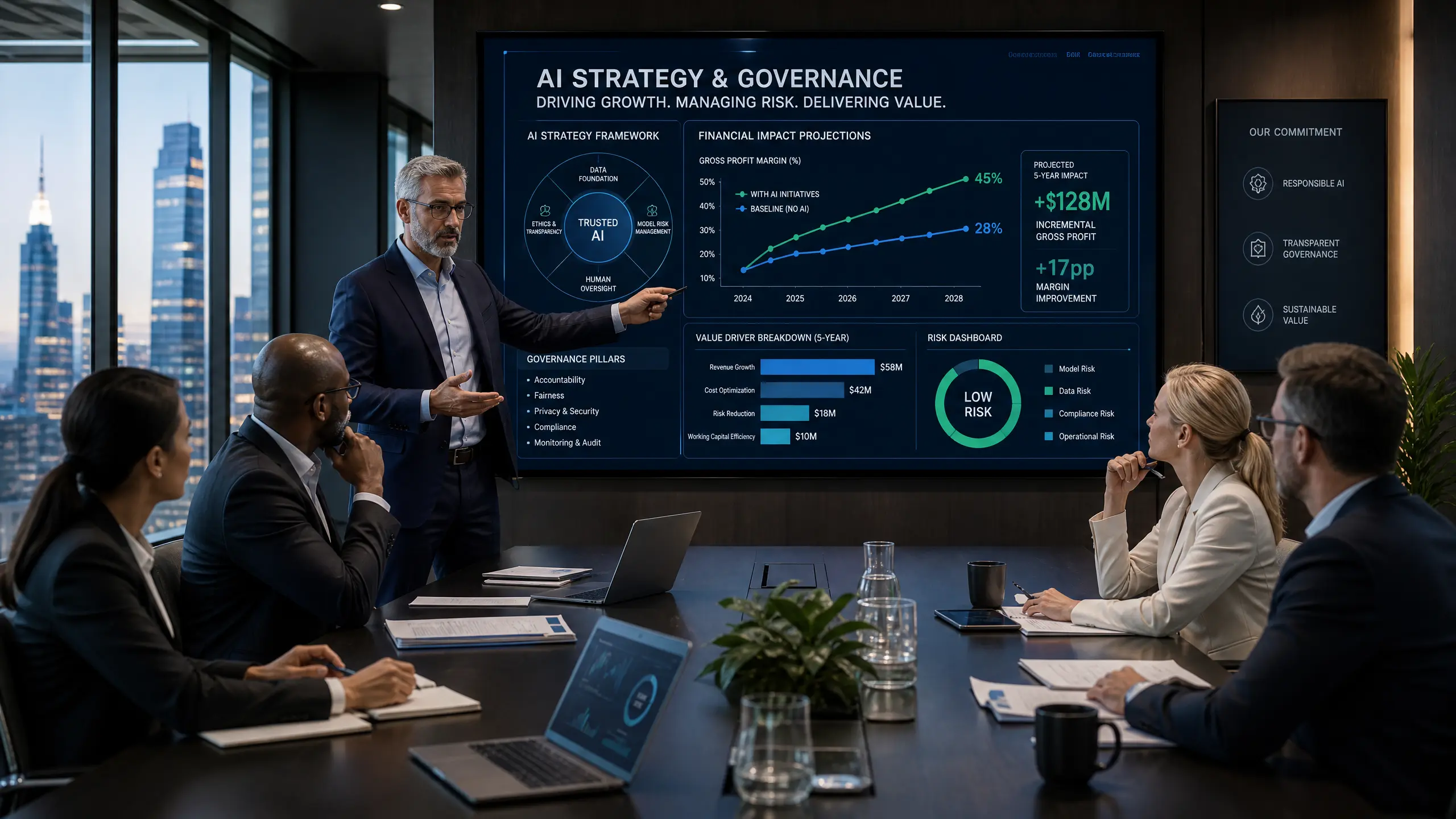
Enterprise AI Governance Secures Profits
Introduction
This introduction will focus on how enterprise AI governance is no longer just a compliance issue but a critical driver of profit margins and operational stability, drawing insights from SAP's leadership.
The Shift from Statistical Guesses to Deterministic Control
In the realm of enterprise AI, the margin for error is razor-thin. As Manos Raptopoulos of SAP points out, the difference between 90% and 100% accuracy is not merely incremental; it is existential. This reality is driving a fundamental shift from relying on statistical probabilities to demanding deterministic control over AI outputs.
The Governance Imperative for Agentic Systems
The evolution from passive AI tools to active, autonomous agents represents a critical governance moment. These systems can plan, reason, and execute workflows, interacting directly with sensitive corporate data. Failing to govern them with the same rigor applied to a human workforce exposes organizations to severe operational risks, potentially leading to a crisis far more damaging than the shadow IT issues of the past.
The Cost of Control: Engineering and Compute
Implementing robust governance is not without its costs. Integrating modern vector databases with legacy architectures requires significant engineering effort. Furthermore, restricting an agent's inference loop to prevent hallucinations and ensure deterministic outputs increases computational latency and drives up hyperscaler compute costs, directly impacting P&L projections.
Real-World Implications and Industry Insights
The practical application of enterprise AI governance involves addressing foundational issues before deployment. Corporate boards must determine accountability for AI errors, establish clear audit trails, and define thresholds for human escalation. This is further complicated by geopolitical factors, such as sovereign cloud requirements and data localization mandates.
Structuring Relational Intelligence
A critical aspect of enterprise AI is the quality of the underlying data. Fragmented master data and siloed systems introduce dangerous unpredictability. True enterprise intelligence must be grounded in proprietary corporate data—orders, invoices, supply chain records—embedded directly into business processes. Relational foundation models optimized for this structured data consistently outperform generic models.
Designing Intent-Based Interfaces
The interaction paradigm is shifting towards generative user experiences. Employees will increasingly express their intent to the system, which will then orchestrate the necessary workflows. However, adoption hinges on trust. Employees must be confident that the AI respects governance boundaries and delivers tangible productivity gains.
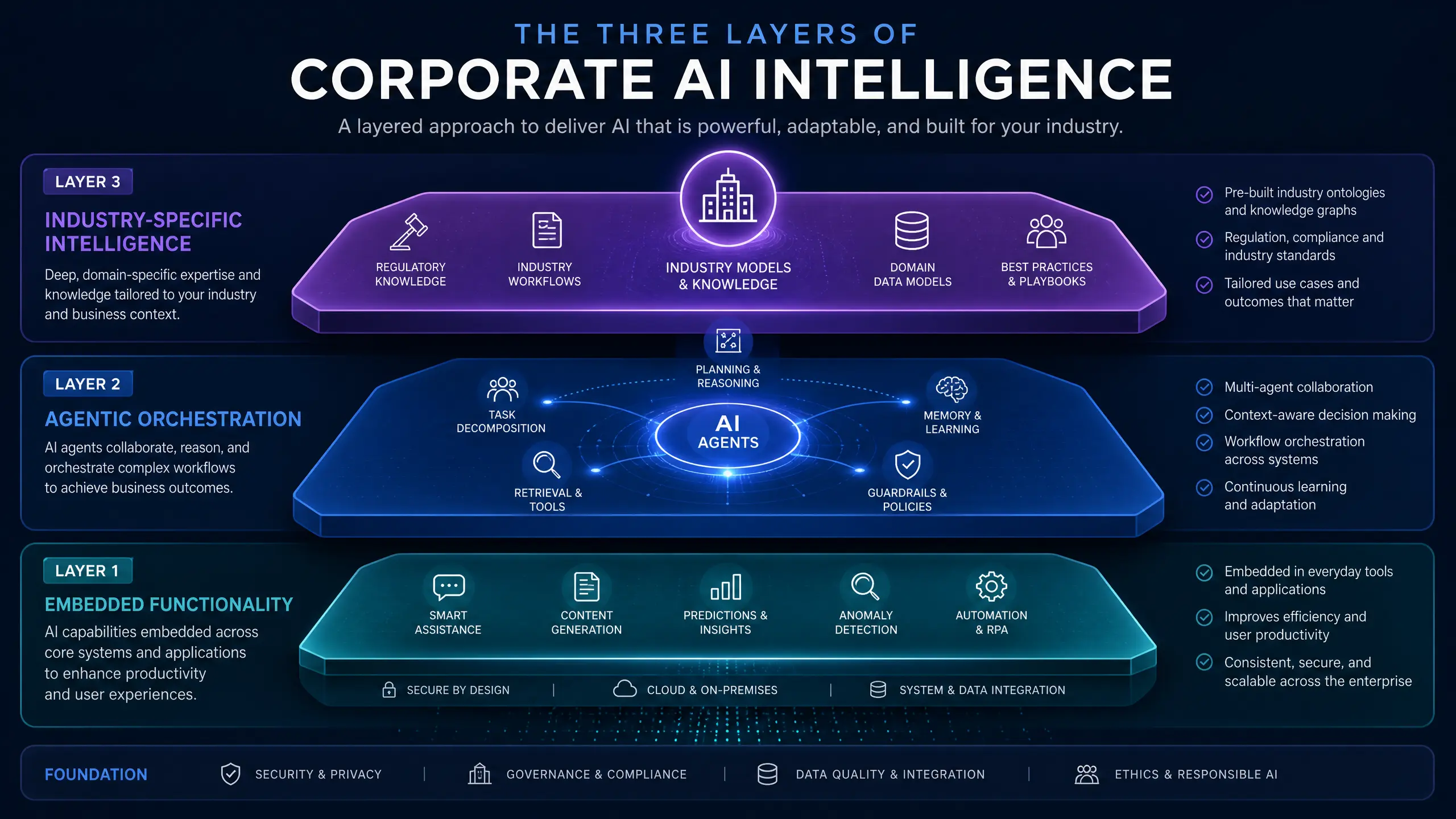
Practical Explanations: Engineering Competitive Defense
Deploying corporate intelligence effectively requires a multi-layered strategy:
- Embedded Functionality: Integrating persona-driven productivity gains directly into core applications for immediate returns.
- Agentic Orchestration: Facilitating coordination across multiple agents and cross-system workflows.
- Industry-Specific Intelligence: Developing deeply specialized applications tailored to the unique challenges of a particular sector.
Conclusion
The financial gap between near-accuracy and full certainty is where true enterprise value resides. Governance decisions made today will determine whether AI deployments become a source of durable competitive advantage or an expensive misstep. By prioritizing deterministic control, structuring relational intelligence, and engineering intent-based interfaces, organizations can secure their profit margins and navigate the complex landscape of enterprise AI.
Ready to master AI?
Join 1,000+ professionals getting the edge in AI marketing. 3 minutes a day to 10x your growth.
Join Free NowKeep reading
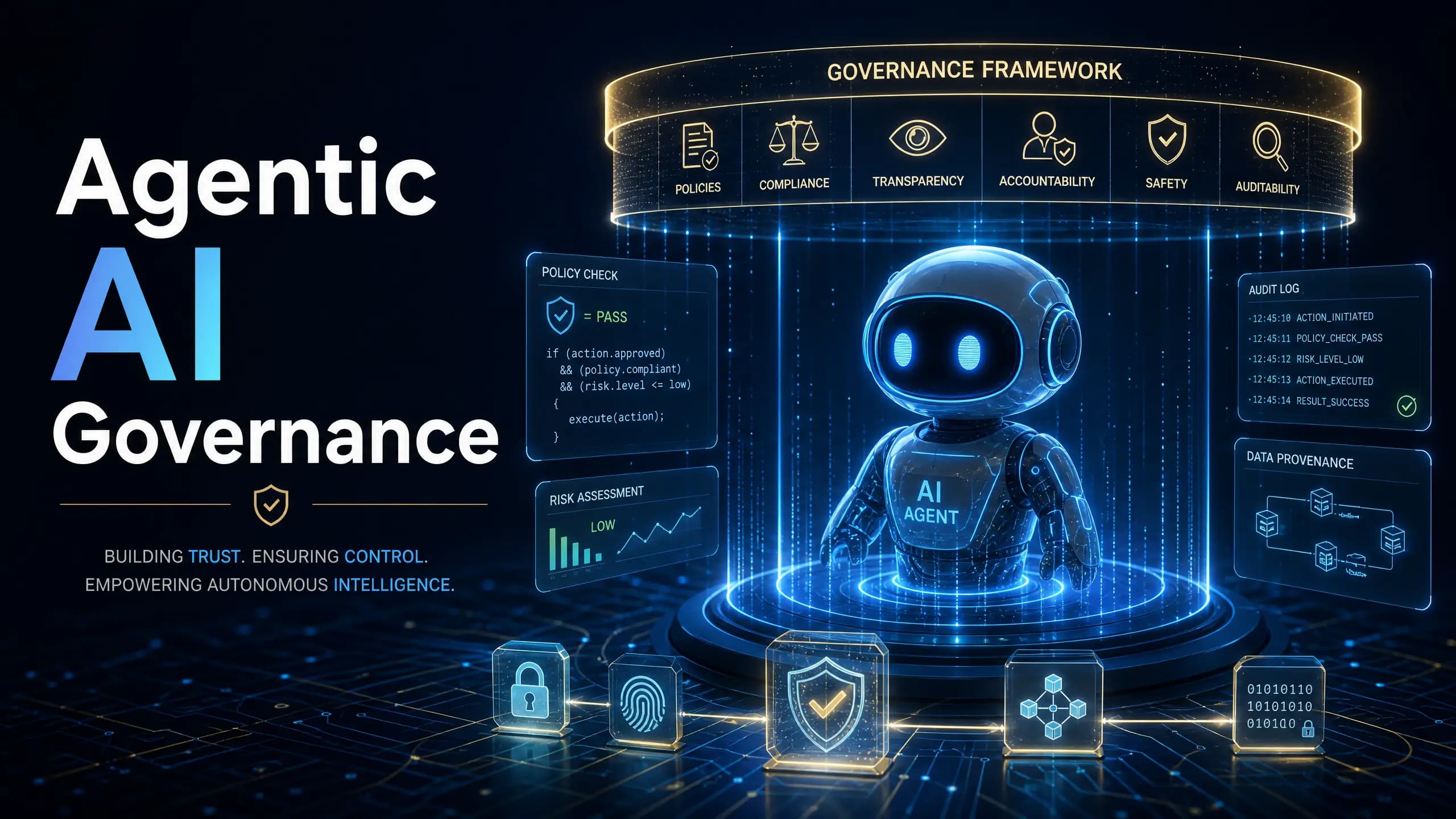
Agentic AI Governance Enterprise Readiness
Explore Google's innovative agentic AI governance platform and assess whether enterprises are truly prepared for the shift towards autonomous AI systems.
Malik Farooq/

AI Agents Interaction Infrastructure
Explore why AI agents require robust interaction infrastructure to prevent automation waste and ensure efficient, secure, and compliant operations in enterprise environments.
Malik Farooq/
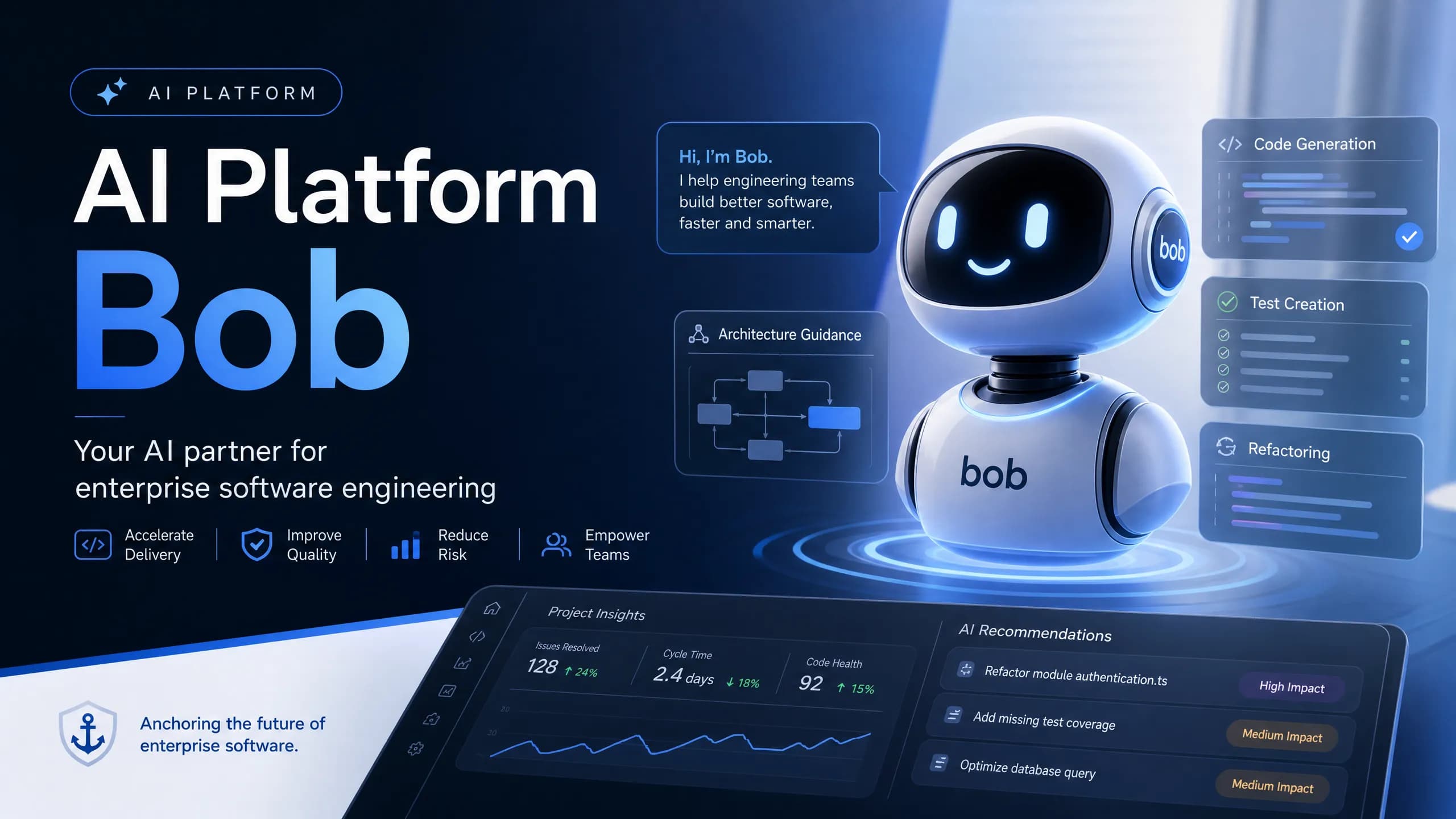
AI Platform Bob: Revolutionizing SDLC Cost Regulation
Discover how IBM's AI platform Bob is transforming software development lifecycle (SDLC) governance and cost regulation for enterprises.
Malik Farooq/
Back to archive
Share