Explore how Rowspace, with $50M in funding, is transforming private equity by leveraging AI to scale judgment, connect disparate data, and provide finance-native insights.
Malik Farooq
May 6, 2026
Deep Dive
Unlocking Institutional Knowledge: How Rowspace is Redefining AI in Private Equity
Private equity, a sector heavily reliant on nuanced judgment and extensive institutional knowledge, has long struggled with the challenge of scaling these critical assets. Decades of invaluable data—deal memos, underwriting models, partner notes, and portfolio performance—are often fragmented across disparate systems, making it incredibly difficult for analysts to access and synthesize historical insights. Each new deal typically requires analysts to start from scratch, even when the answers to their most pressing questions are buried within the firm’s own archives.
Real-world Example: Imagine a private equity firm evaluating a potential investment in a new technology startup. Analysts need to quickly assess past similar investments, analyze the performance of previous portfolio companies in the same sector, and understand the rationale behind successful and unsuccessful exits. Without a unified platform, this involves sifting through countless documents, spreadsheets, and internal communications, a time-consuming and often incomplete process. Rowspace aims to solve this by providing a centralized, AI-powered platform that not only assists in decision-making but actively learns and scales the firm’s collective intelligence.
The Genesis of Rowspace: Solving a Stubborn Problem
Rowspace, a San Francisco-based startup, has emerged from stealth mode with a significant US$50 million in funding, backed by leading investors like Sequoia and Emergence Capital. The company was founded by Michael Manapat and Yibo Ling, both MIT graduates who recognized a critical gap in how AI was being applied to the finance sector. Manapat, with his experience building machine learning systems at Stripe and driving Notion’s AI expansion, brought deep technical expertise. Ling, a two-time CFO at Uber and Binance, intimately understood the challenges of making investment decisions by manually synthesizing data across fragmented systems. His frustration with the limitations of general AI tools like ChatGPT for due diligence tasks—where the need for the right information in the right context was paramount—became the founding thesis for Rowspace.
Industry Insight: Ling succinctly articulated the problem: “Most tech tools aren’t comprehensive or nuanced enough for finance. And most finance tools need to raise their technical ceiling. We intend to do both.” This dual focus on finance-native understanding and advanced technical capabilities is what sets Rowspace apart. The company’s early success is evident in its customer base, which includes approximately ten top private equity and credit firms managing hundreds of billions to nearly a trillion dollars in assets, already on seven-figure annual contract values.
The Mechanics of AI for Private Equity
Rowspace’s platform is designed to connect both structured and unstructured data across a firm’s entire historical footprint. This includes document repositories, investment and accounting systems, legacy PowerPoint presentations, and deal memos. Crucially, the platform applies what Manapat describes as a “finance-native lens,” which reflects how a firm genuinely reconciles information, interprets discrepancies, and ultimately makes decisions. A key differentiator is that all data processing occurs within the client’s own cloud environment, ensuring that the firm’s sensitive data never leaves its control.
Practical Explanation: The platform’s output is accessible through Rowspace’s proprietary interface, as well as integrated directly into widely used tools like Excel and Microsoft Teams, or a firm’s existing data infrastructure. This seamless integration allows a first-year analyst, for example, to instantly surface decades of prior decisions, comparable transactions, and internal underwriting patterns without the need for extensive manual research or internal consultations. This capability transforms the analytical process, enabling faster, more informed decision-making.
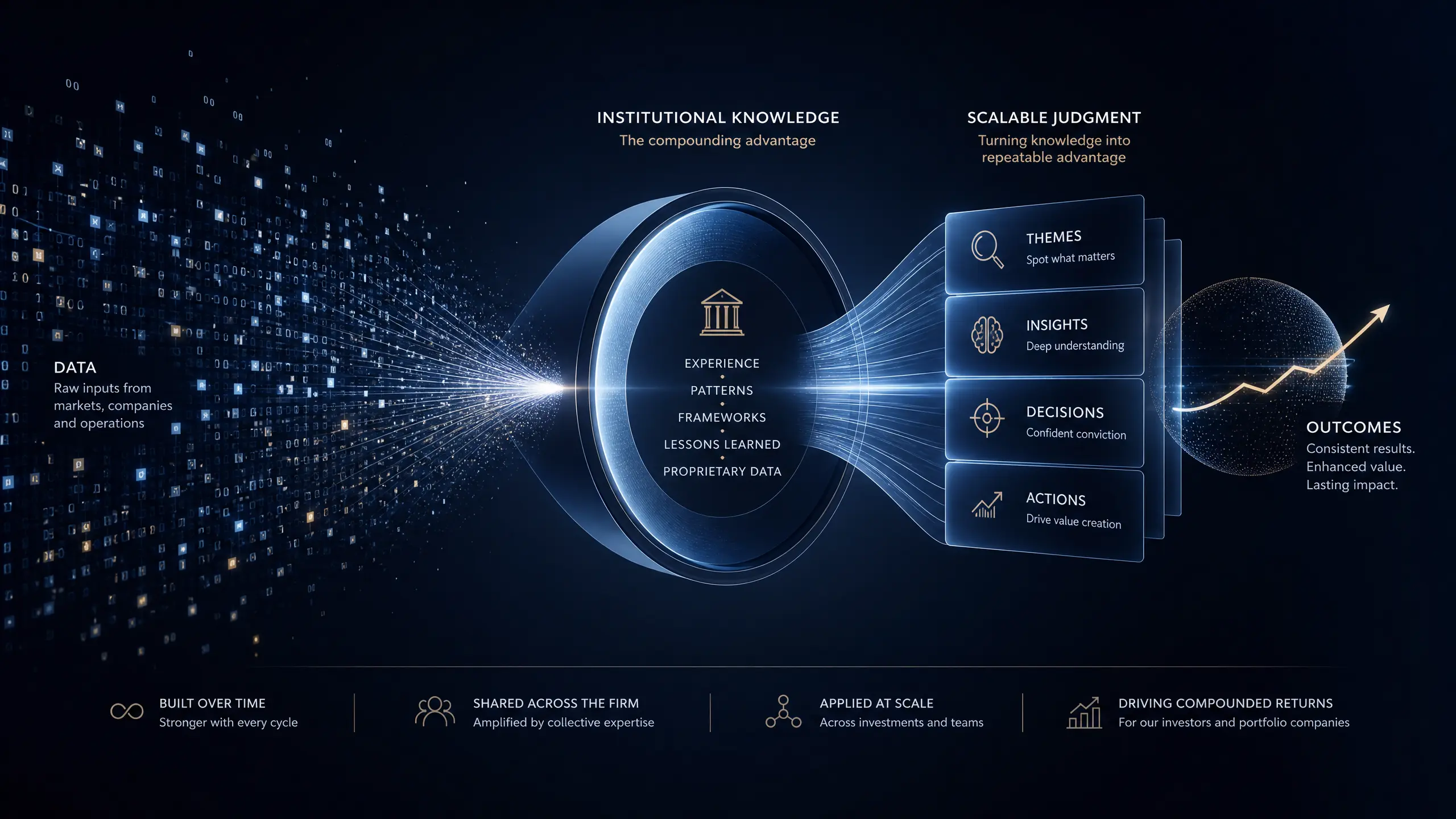
Experience-based Insight: Manapat’s internal mantra, “Imagine a firm that never forgets,” encapsulates the ambition. He envisions a future where an experienced investor’s complex workflows, often involving multiple tools and specific methodologies, can be codified and multiplied. This means that the collective judgment and institutional knowledge, which typically reside with a few senior partners, can be scaled across the entire organization, empowering even junior analysts to tap into a vast reservoir of experience. This approach ensures that judgment scales with the firm’s growth rather than being diluted.
Why Vertical AI is the Future: Investor Confidence in Rowspace
The substantial investment in Rowspace by firms like Sequoia and Emergence Capital signals a strong conviction in the power of vertical AI solutions. Alfred Lin, the Sequoia partner who led the investment, views Rowspace as a direct answer to the question of which AI applications will thrive amidst the rise of increasingly capable foundation models. Lin highlights the unique combination of technical depth and firsthand industry understanding brought by Manapat and Ling, stating that they have “seen the problem from both sides, pairing technical depth with firsthand understanding of what customers actually need.”
Statistics/Data Points: Jake Saper, General Partner at Emergence Capital, further emphasized the data infrastructure thesis, noting that Rowspace is performing the “previously impossible work of connecting proprietary data, and reconciling and reasoning over it with real rigour. Without this foundation, it doesn’t matter what other AI tools you’re using.” This perspective challenges the notion that foundation models will commoditize applications, instead suggesting that vertical AI systems built on deep, proprietary data layers are precisely where durable competitive advantages will be forged and compounded. For the private equity sector, where alpha is inherently firm-specific and non-replicable, this logic is particularly compelling. The back office of investment management has historically been a challenging frontier for general AI solutions, and Rowspace’s $50 million raise is a testament to its potential to finally crack this complex domain.
Conclusion
Rowspace’s innovative approach to AI in private equity represents a significant leap forward in leveraging technology to enhance human judgment and institutional knowledge. By building a platform that connects, reconciles, and reasons over vast amounts of proprietary data within a secure environment, Rowspace is enabling firms to scale their expertise, accelerate decision-making, and maintain a competitive edge. This investment in vertical AI solutions underscores a growing recognition that specialized, data-driven intelligence is crucial for navigating the complexities of high-stakes financial markets, ultimately transforming how private equity firms operate and thrive.