- Malik Logix
- Posts
- SAP AI Governance Profit Margins
SAP AI Governance Profit Margins
Discover SAP's perspective on enterprise AI governance, focusing on how deterministic control over AI systems can protect and enhance profit margins.

Malik Farooq
May 6, 2026
Deep Dive
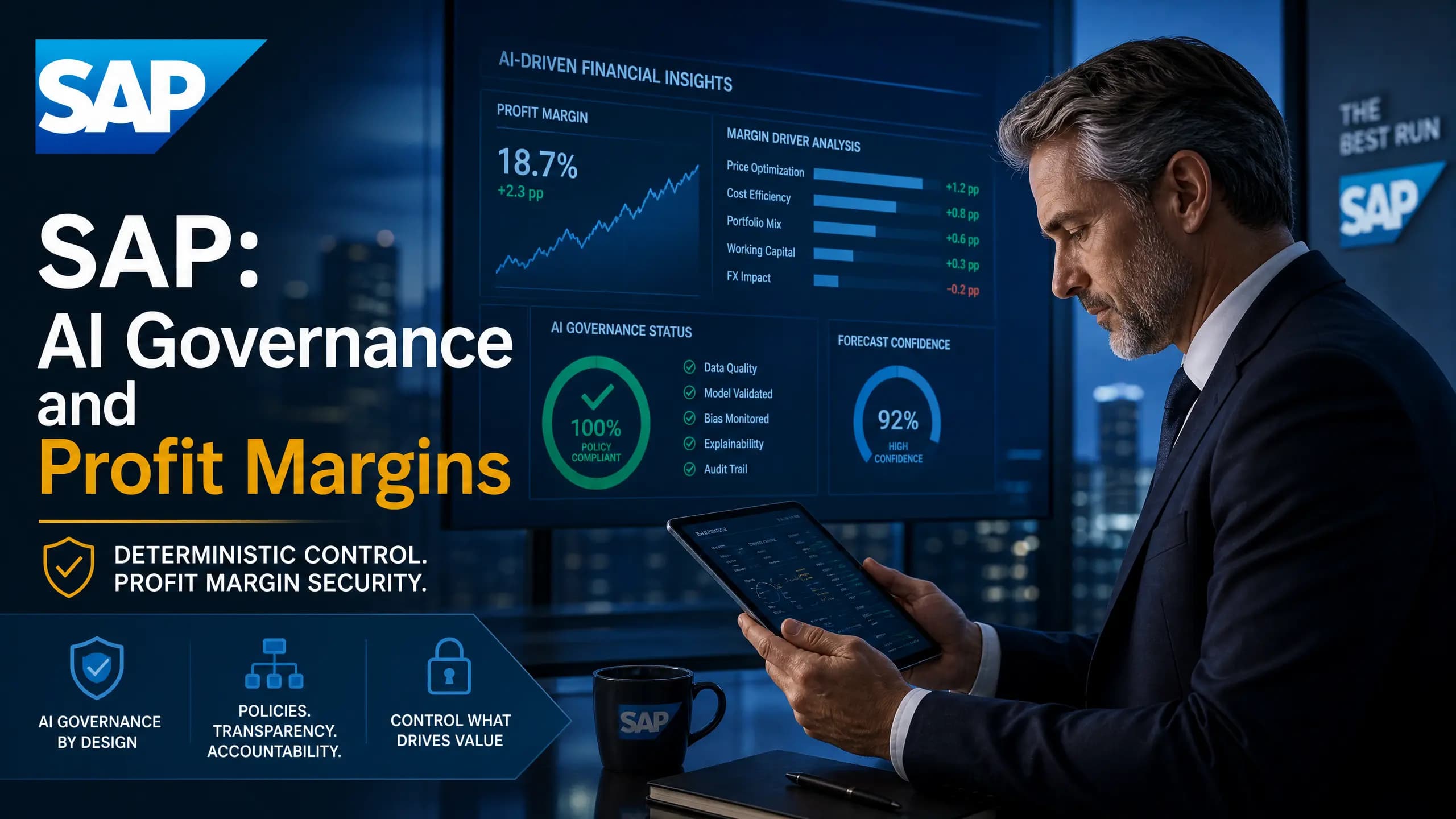
SAP: How Enterprise AI Governance Secures Profit Margins
In the rapidly evolving world of artificial intelligence, the transition from statistical approximations to deterministic control is becoming a critical differentiator for enterprise success. As organizations increasingly deploy large language models (LLMs) and agentic AI systems into production environments, the need for robust governance frameworks has never been more pressing. SAP, a global leader in enterprise software, emphasizes that securing profit margins in the age of AI hinges on replacing probabilistic guesses with precise, auditable control. This article explores SAP's insights into enterprise AI governance, highlighting the operational gaps, strategic imperatives, and architectural considerations necessary to safeguard and enhance profitability.
The Operational Gap: Precision Over Approximation
Manos Raptopoulos, Global President of Customer Success Europe, APAC, Middle East & Africa at SAP, underscores the critical distinction between near-perfect and perfect accuracy in AI deployments. While a consumer-grade model might tolerate a 10% error rate, such a margin is existential in enterprise contexts. As Raptopoulos states, "The distance between 90% and 100% accuracy is not incremental. In our world, it is existential." This perspective drives SAP's focus on precision, governance, scalability, and tangible business impact as the core evaluation criteria for AI in the enterprise.
From Passive Tools to Active Digital Actors
The fundamental challenge for corporate boards lies in managing the evolution of AI from passive tools to active digital actors. Agentic AI systems, capable of planning, reasoning, orchestrating, and executing workflows autonomously, interact directly with sensitive data and influence decisions at scale. Raptopoulos argues that failing to govern these systems with the same rigor applied to human workforces exposes organizations to severe operational risks, potentially leading to agent sprawl that mirrors past shadow IT crises, but with significantly higher stakes.
Mandatory Requirements for Agent Lifecycle Management
To mitigate these risks, SAP advocates for mandatory requirements in agent lifecycle management, including defining autonomy boundaries, enforcing policy, and instituting continuous performance monitoring. These measures are crucial for maintaining control over autonomous systems that can rapidly multiply identities and permissions.
Structuring Relational Intelligence for Commercial Operations
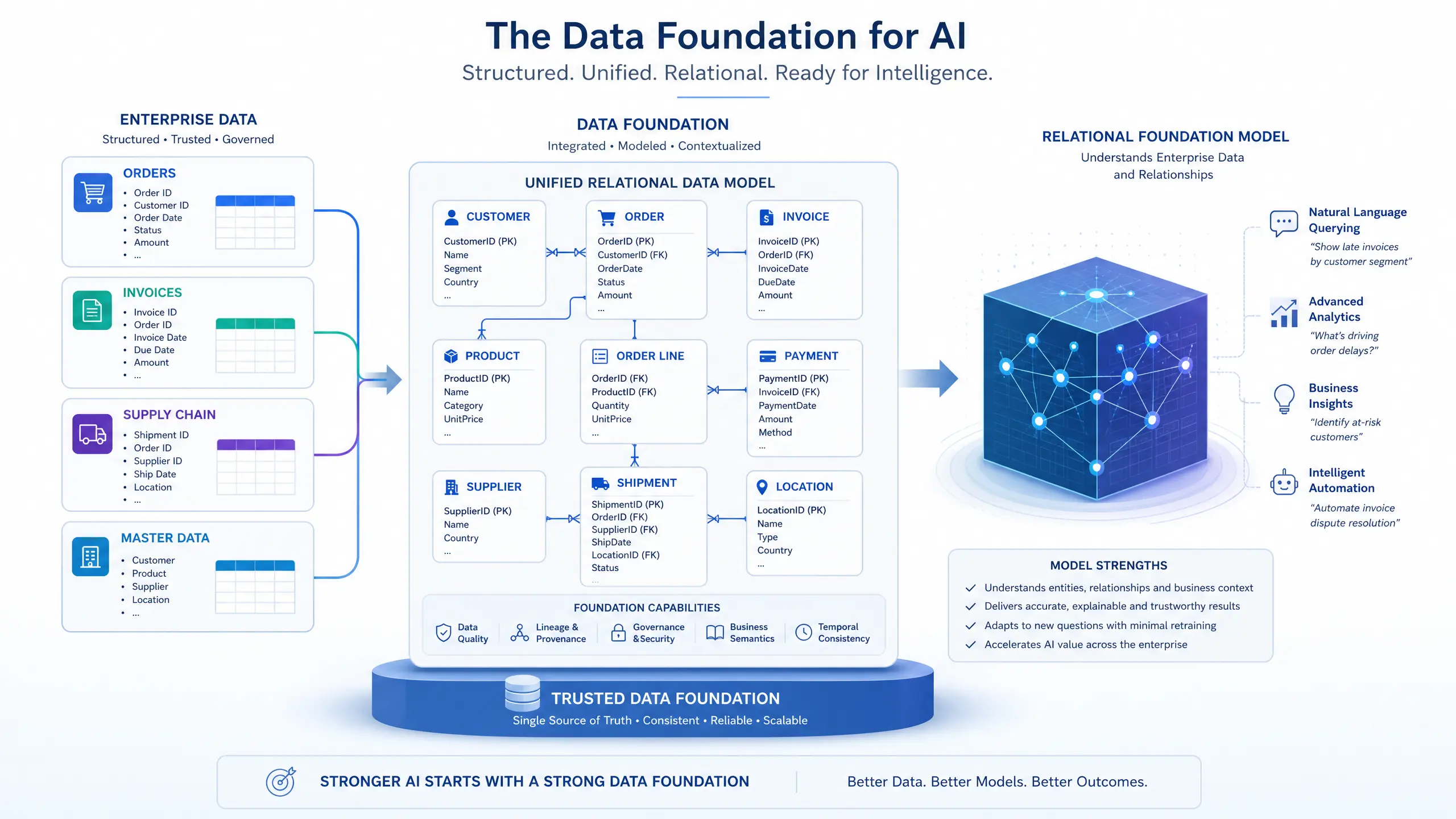
SAP emphasizes that the quality of AI systems is entirely dependent on the data and processes they operate upon—what Raptopoulos terms the "data foundation moment." Fragmented master data, siloed business systems, and over-customized ERP environments introduce dangerous unpredictability. If an autonomous agent relies on such flawed foundations, the resulting operational damage can scale instantly, impacting cash flow, customer relations, and compliance.
The Power of Proprietary Data and Relational Models
Extracting tangible enterprise value requires moving beyond generic large language models. True enterprise intelligence, according to Raptopoulos, must be grounded in proprietary corporate data—orders, invoices, supply chain records, and financial postings—embedded directly into business processes. Relational foundation models, optimized for structured business data, are poised to continually outperform generic models in forecasting, anomaly detection, and operational optimization.
Overcoming Data Engineering Challenges
The operational friction of making over-customized ERP environments intelligible to foundation models often halts deployments. Data engineering teams spend excessive cycles sanitizing fragmented master data. When relational models need to interpret complex, proprietary supply chain records alongside raw invoice data, underlying data pipelines must operate with zero latency. Ingest failures degrade predictive capabilities instantly, rendering agents functionally dangerous.
Designing Intent-Based Interfaces and Employee Trust
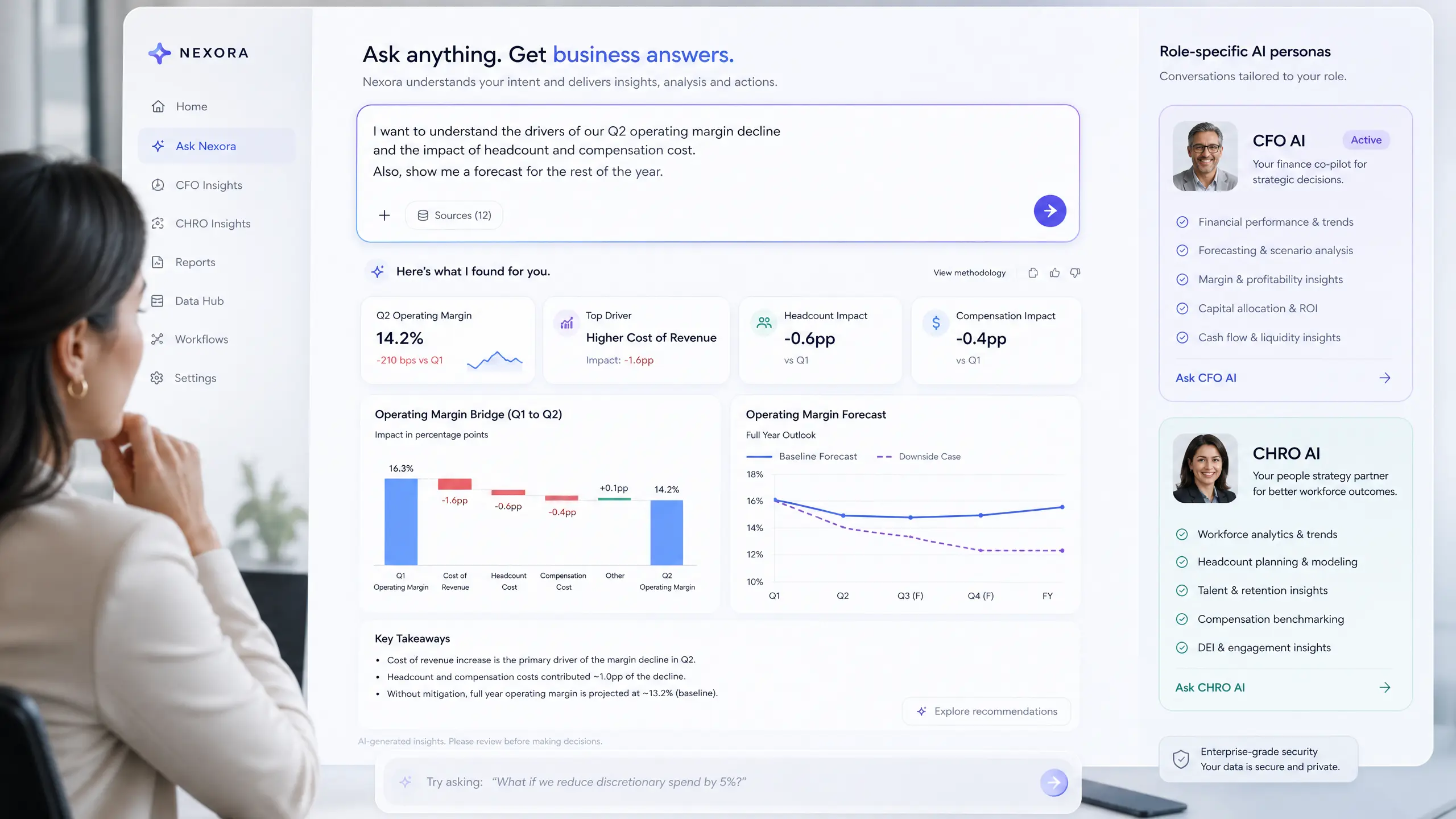
Enterprise application interaction is shifting from static interfaces to generative user experiences, marking the "employee interaction moment." Employees will express intent to systems, and AI agents will orchestrate workflows and surface recommended actions. However, Raptopoulos stresses that adoption hinges on trust. Employees must be confident that system outputs respect governance boundaries, reflect business rules, and deliver demonstrable productivity gains.
Role-Specific AI Personas
Engineering these systems demands role-specific AI personas tailored for positions like CFOs, CHROs, or heads of supply chain. These personas must be built on trusted data and embedded within familiar corporate workflows to close the adoption gap successfully. This level of integration is a design decision with heavy consequences: organizations investing in AI-native architecture accelerate ROI, while those bolting probabilistic models onto legacy interfaces struggle with trust, usability, and scale.
Engineering Competitive Defense and Strategic Orchestration
The financial return on AI surfaces fastest during customer interactions. Training models on proprietary records, internal rules, and historical logs creates customer-specific intelligence that rivals cannot easily copy. This is particularly effective in exception-heavy workflows like dispute resolution, claims, returns, and service routing.
Three Layers of Strategic Orchestration
Raptopoulos defines three layers of strategic orchestration for deploying corporate intelligence:
- Embedded Functionality: Persona-driven productivity gains integrated directly into core applications for fast returns.
- Agentic Orchestration: Multi-agent coordination across cross-system workflows.
- Industry-Specific Intelligence: Deeply specialized applications co-developed for high-value challenges within specific sectors.
Leaders must avoid false sequencing. Concentrating solely on embedded tools leaves massive financial value uncaptured, while jumping to deep industry applications without proper governance and data maturity multiplies corporate risk. Scaling these models requires matching corporate ambition to technical readiness, funding clean core architectures, updating data pipelines, and enforcing cross-functional ownership.
Conclusion: Governance as a C-Suite Mandate
SAP’s perspective is clear: AI governance is a C-suite mandate, not merely an IT project. The financial gap between 90% accuracy and full certainty dictates where true enterprise value lies. Governance decisions made today will determine whether AI deployments become a powerful source of durable advantage or an expensive lesson. By embedding deterministic control into probabilistic intelligence, enterprises can secure their profit margins and thrive in the autonomous future.
Real-World Examples and Industry Insights
- Supply Chain Optimization: Companies like Siemens use SAP solutions to govern AI agents that predict demand fluctuations and optimize logistics, directly impacting profit margins by reducing waste and improving efficiency.
- Financial Services: Banks leverage SAP’s governance frameworks to ensure AI-driven credit scoring models comply with regulations, minimizing financial risk and maintaining customer trust.
- Manufacturing: AI-powered predictive maintenance, governed by SAP, reduces downtime and extends asset life, leading to significant cost savings and increased profitability.
Key Statistics
- 90% vs. 100% Accuracy: The operational gap is existential in enterprise AI, directly impacting profit margins.
- Agent Sprawl: Without proper governance, agent sprawl can lead to shadow IT crises with higher stakes.
- Data Foundation: The quality of AI systems is entirely dependent on the data and processes they operate upon.
- ROI Acceleration: Organizations investing in AI-native architecture accelerate your return on investment.
Ready to master AI?
Join 1,000+ professionals getting the edge in AI marketing. 3 minutes a day to 10x your growth.
Join Free NowKeep reading
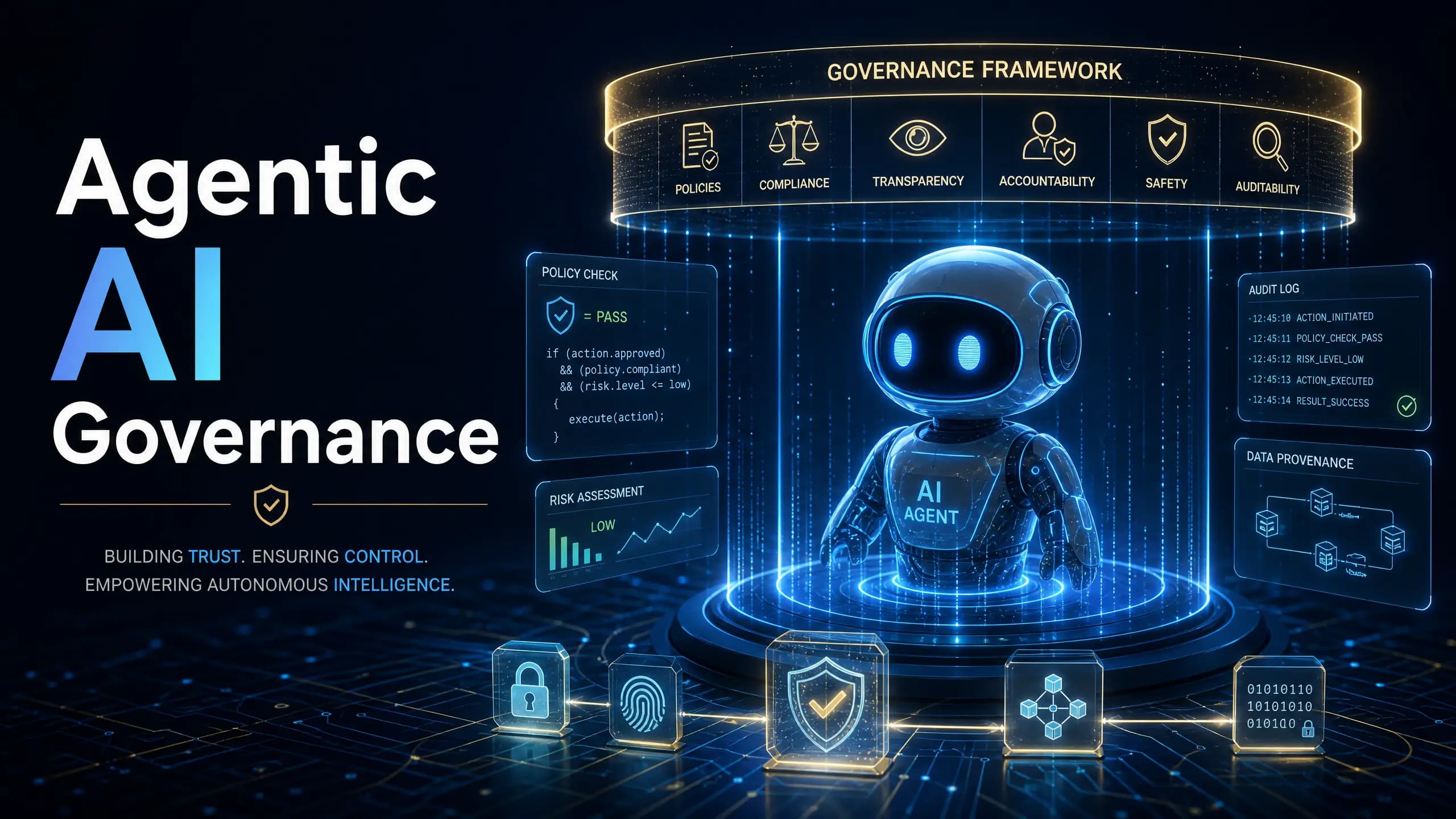
Agentic AI Governance Enterprise Readiness
Explore Google's innovative agentic AI governance platform and assess whether enterprises are truly prepared for the shift towards autonomous AI systems.
Malik Farooq/

AI Agents Interaction Infrastructure
Explore why AI agents require robust interaction infrastructure to prevent automation waste and ensure efficient, secure, and compliant operations in enterprise environments.
Malik Farooq/
AI Platform Bob: Revolutionizing SDLC Cost Regulation
Discover how IBM's AI platform Bob is transforming software development lifecycle (SDLC) governance and cost regulation for enterprises.
Malik Farooq/
Back to archive
Share