Cursor: Revolutionizing Code Editing with AI-Powered Assistance
Learn about the strategic decisions, technical challenges, and market dynamics that shaped this AI startup's journey.
Cursor: Revolutionizing Code Editing with AI-Powered Assistance
Cursor: Revolutionizing Code Editing with AI-Powered Assistance
Status
Success
Problem Solved
Software developers often grapple with maintaining high productivity while navigating complex codebases. Traditional code editors and IDEs provide helpful tools, yet they lack intelligent, context-aware assistance that can understand and manipulate code structure deeply. This limits developer efficiency, especially during code refactoring, exploration, and debugging.
Why It Succeeded
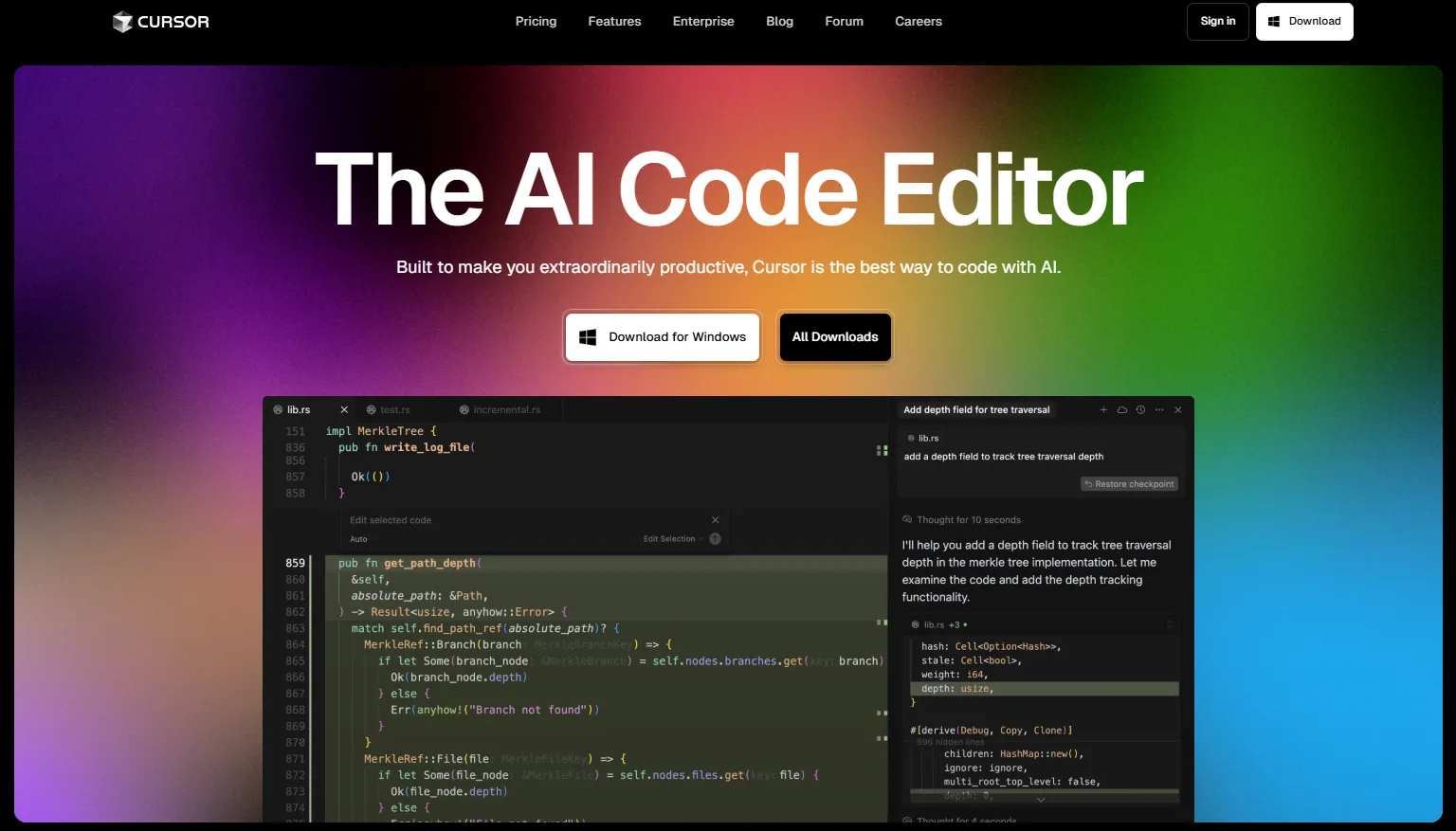
Cursor succeeded by focusing on advanced AI technologies — specifically leveraging foundation models fine-tuned for code understanding and manipulation — to build an intelligent code editor that deeply understands syntax and semantics. Unlike basic autocomplete or generic AI tools, Cursor's solution integrates with developers' workflows, offering in-line code suggestions, refactoring assistance, and code exploration powered by large language models specialized for programming languages. Its intuitive UX/UI and powerful capabilities made it a preferred choice for developers looking to boost productivity.
Strong backing from top-tier investors provided the startup with needed capital to iterate rapidly and scale. Moreover, the company strategically positioned itself at the intersection of AI and developer tools, capturing a fast-growing market demand for AI-driven coding assistance.
Funding and Evaluation
Total Funding: Approximately $21 million across Seed and Series A rounds.
Key Investors: Lightspeed Venture Partners, Initialized Capital, and a syndicate of early-stage angel investors.
How It Works
Cursor builds on state-of-the-art transformer-based foundation models trained on vast corpora of source code across multiple languages. The core technology includes:
Code Understanding: Using deep learning to parse code syntax trees and semantic features.
Contextual Suggestions: Leveraging contextual embeddings to predict next tokens, suggest refactorings, or generate code snippets inline.
By combining these techniques, Cursor delivers AI-powered insights embedded directly into the editing environment, helping developers write, debug, and refactor code more efficiently.
Perspective
Cursor exemplifies how AI can be meaningfully integrated into developer workflows, moving beyond generic code generation to a tool that understands structure and meaning. Its success highlights the importance of domain-specific model training, seamless UX design, and strong funding support. As AI continues to evolve, startups like Cursor demonstrate a promising pathway to augment developers' creativity and productivity sustainably, bridging the gap between raw AI potential and practical software engineering needs.
In summary, Cursor's approach combining powerful AI models, developer-centric design, and strong investor backing positioned it well to succeed in the competitive landscape of AI-assisted coding tools.
Peak Valuation: Estimated at around $100 million post-Series A.
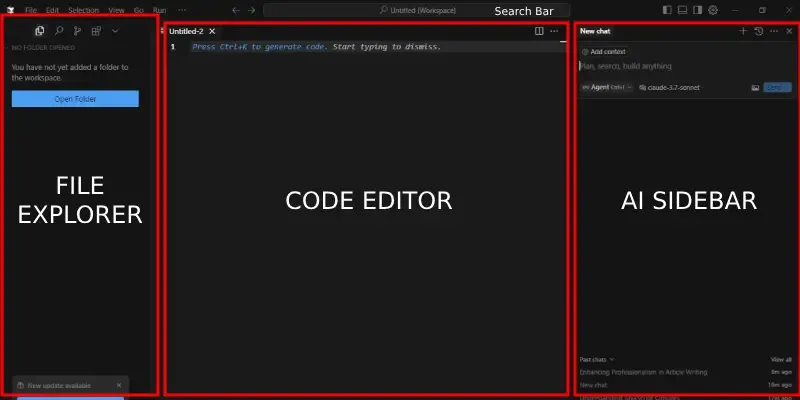
Interactive Editor: A custom code editor interface that allows developers to interact with AI-driven prompts, refactor large code segments intelligently, and explore codebases via natural language queries.