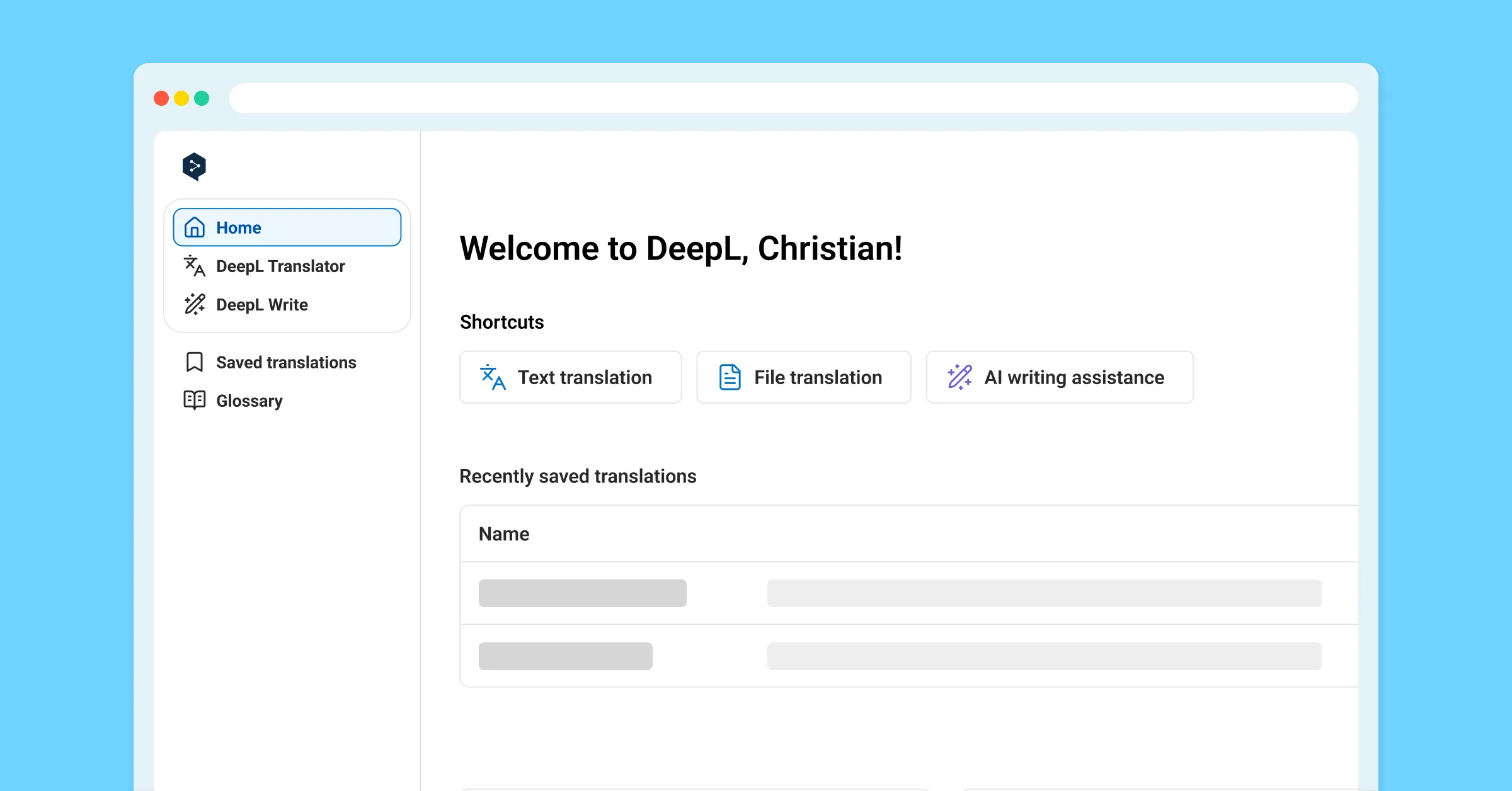
DeepL: Revolutionizing Neural Machine Translation with Superior Accuracy
DeepL: Revolutionizing Neural Machine Translation with Superior Accuracy
Status
Success
Problem Solved
Language barriers in communication and translation often lead to inaccuracies and loss of meaning, limiting global business, academic research, and cross-cultural exchange. Traditional machine translation tools struggled with nuance, context, and fluency, resulting in less reliable translations.
Why it Succeeded
DeepL succeeded by leveraging state-of-the-art neural network architectures specifically optimized for language translation. Their proprietary convolutional neural networks and advanced training techniques produced more natural and accurate translations than existing tools like Google Translate and Microsoft Translator. Furthermore, DeepL's focus on European languages initially allowed them to refine their models effectively, building a loyal user base. They combined ease of use, integration options, and consistent quality to become the preferred translation platform among professionals.
Funding and Evaluation
Funding
DeepL has remained relatively private about its funding rounds. Founded in 2009 initially as Linguee, it pivoted into DeepL in 2017 focused on AI-driven translation. Its main backer includes the German company DeepL GmbH and funding support from European tech investors, with reported seed and subsequent rounds reportedly amounting to over €10 million. They have not publicly disclosed large Series funding rounds nor valuations akin to typical Silicon Valley startups.
Evaluation
While exact valuations are not publicly known, DeepL is widely regarded as the gold standard in neural machine translation due to its superior algorithmic performance and strong commercial footprint, especially in Europe. Its technology licensing agreements and growing SaaS revenues suggest a high market valuation, estimated by industry observers to be in the hundreds of millions of euros.
How it Works
DeepL’s translation engine uses advanced deep learning models combining convolutional neural networks (CNNs), transformer architectures, and proprietary training data from Linguee’s extensive bilingual corpus. Unlike many competitors relying primarily on recurrent neural networks or standard transformers, DeepL engineered specialized architectures enabling better context understanding and handling of idiomatic expressions.
The system preprocesses input text to identify linguistic features, then applies neural models trained on billions of words to generate high-quality target language translations. Continuous learning and model updates are based on both user feedback and new parallel corpora.
DeepL also offers an API and desktop applications integrating seamlessly with professional tools, supporting real-time translation and document preservation of formatting.
Perspective
DeepL’s success underscores the power of focusing on niche excellence rather than broad generalization early on. By honing exceptional quality in machine translation first for European languages, they effectively differentiated from industry giants. It highlights the importance of model innovation—the use of CNNs alongside transformers was unconventional but yielded a significant edge.
Their semi-private funding and gradual rollout reflect a sustainable growth model driven by product merit over hype. For startups aiming at AI-based language applications, DeepL is a blueprint on balancing research depth, user-centric product development, and measured market expansion.
Sustaining this success may require aggressive expansion into more languages and integration into global platforms, but their foundational technology and reputation make them a formidable long-term player in AI translation services.
Visuals