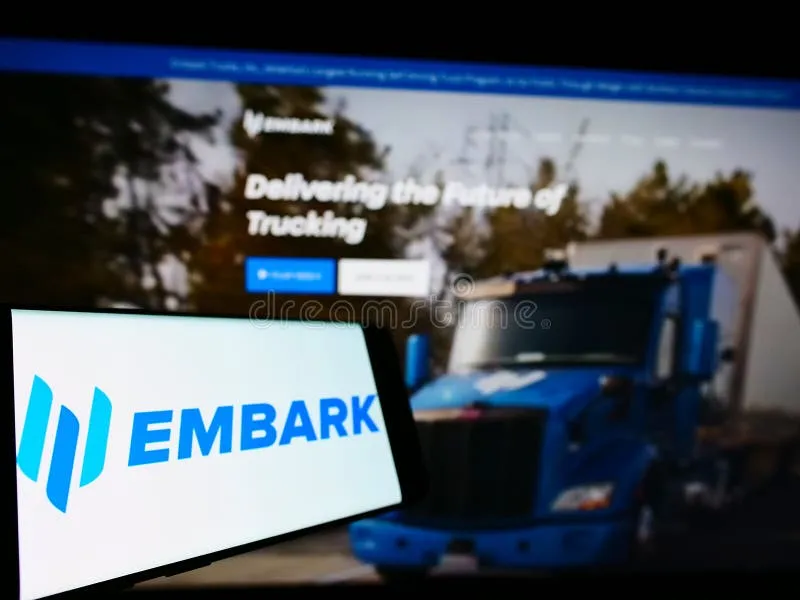
Embark Trucks: A Case Study of AI Startup Failure in Autonomous Trucking
Embark Trucks: Autonomous Trucking Startup
Status: Failed
Problem Solved
Long-haul trucking is a critical component of the logistics industry, yet faces challenges such as driver shortages, high operational costs, and safety concerns. Embark Trucks aimed to solve these problems by developing self-driving truck technology to automate freight transportation, thereby increasing efficiency, reducing costs, and improving road safety.
Why It Failed
Despite early promise, Embark Trucks ultimately failed due to a combination of market readiness challenges, intense competition, technological hurdles, and funding difficulties. The autonomous trucking space proved more complex and capital intensive than anticipated, with slow regulatory acceptance and limited commercial deployments. Moreover, Embark struggled to secure sufficient long-term customer contracts and scale its technology in a way that was financially sustainable.
Funding and Evaluation
- Total Funding: Approximately $117 million
- Peak Valuation: Around $700 million post-SPAC merger
- M12 (Microsoft’s venture arm), Volvo Group, Next47 (Siemens’ venture capital unit), and others
How It Works (Technical Overview)
Embark Trucks built an autonomous driving system tailored specifically for long-haul trucks. The technology combined a suite of sensors—including LiDAR, radar, and cameras—with machine learning algorithms and detailed mapping to navigate highways safely. Their software stack focused on enabling trucks to operate autonomously on interstate highways, where driving patterns and environments are more predictable, while transitioning control back to human drivers in complex urban or off-duty scenarios. The system also integrated with existing trucking fleets enabling retrofit applications.
Perspective
Embark Trucks represents a cautionary tale in the AI and autonomous vehicle sectors. While addressing a significant logistics challenge, the startup underestimated the complexity of technological, regulatory, and commercial hurdles. Autonomous trucking demands not only advanced AI but also deep integration with industry players and infrastructure, which proved difficult. Furthermore, investor enthusiasm around autonomous vehicles tends to fluctuate, making sustained funding uncertain. Embark’s failure underscores the necessity for realistic timelines, diversified strategies beyond pure technology development, and early collaboration with regulatory bodies and customers. Future startups may build on Embark’s lessons by focusing on incremental automation features and hybrid human-machine workflows to better navigate the transition period.
Visuals