Case Study: Glean - Revolutionizing Enterprise Search with AI
Status
Success
Problem Solved
Enterprises often struggle with information silos and inefficient internal knowledge discovery. Employees waste time searching through fragmented data sources like emails, documents, collaboration tools, and intranets. This slows down productivity and hinders decision-making.
Why it Succeeded
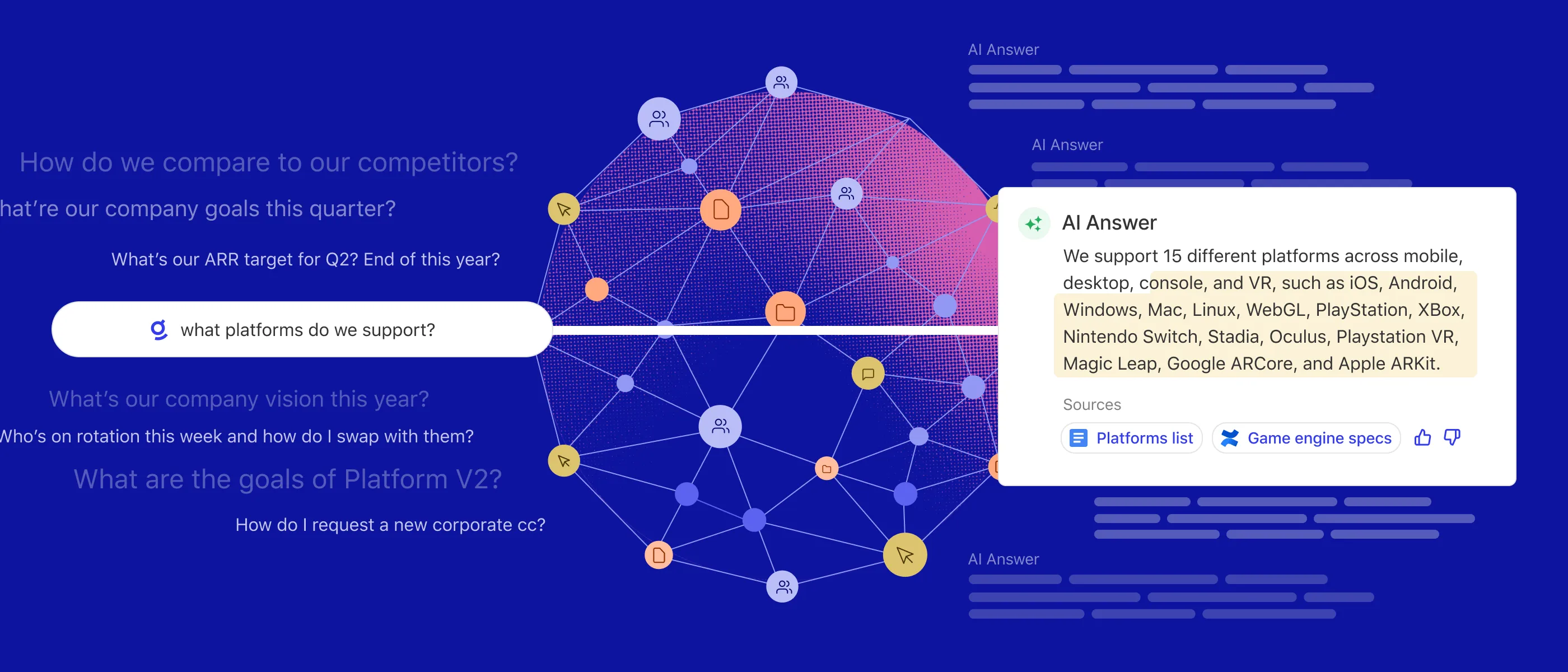
Glean succeeded by delivering an AI-powered universal search platform that aggregates and organizes enterprise knowledge across disparate systems into a single, intelligent interface. Its ability to understand context and deliver relevant results quickly improved employee efficiency dramatically.
Key reasons for success include:
- Advanced semantic searching using natural language processing (NLP).
- Unified indexing across multiple enterprise apps (Slack, Google Workspace, Salesforce, etc.).
- Intuitive user experience designed for non-technical users.
Funding and Evaluation
Glean has raised multiple funding rounds totaling approximately $72 million, with key investors such as Andreessen Horowitz (a16z), Greylock Partners, and Redpoint Ventures. As of mid-2023, the company was valued at over $500 million, reflecting strong investor confidence and rapid market traction.
How it Works (Technical Overview)
Glean uses AI algorithms, primarily leveraging natural language processing and machine learning, to crawl, index, and semantically analyze documents and messages across enterprise platforms. It builds a contextual knowledge graph that allows it to understand relationships between data entities and respond to users’ queries with highly relevant answers rather than just keyword matching.
The platform integrates via APIs and connectors with popular SaaS applications, continuously syncing data while respecting security and access controls. Its search interface supports natural language queries, enabling users to find answers with conversational ease.
Under the hood, Glean applies:
- NLP techniques like entity recognition and intent detection.
- Embeddings and vector search for semantic relevance.
- Advanced ranking models based on user behavior and context.
Perspective (Analysis)
Glean’s success underscores the critical need for AI-driven knowledge management in modern enterprises. By transforming fragmented data into an accessible, intelligent resource, Glean addresses one of the most pervasive productivity challenges.
The company’s focus on seamless integration and user-friendly design lowers barriers to adoption. Moreover, their deep understanding of enterprise security builds trust crucial for handling sensitive internal data.
Looking ahead, maintaining differentiation against larger players (e.g., Microsoft, Google) and continuous innovation in AI capabilities will be important. However, Glean’s early momentum, strong funding, and clear value proposition position it well for sustained growth in the enterprise search market.
Visuals