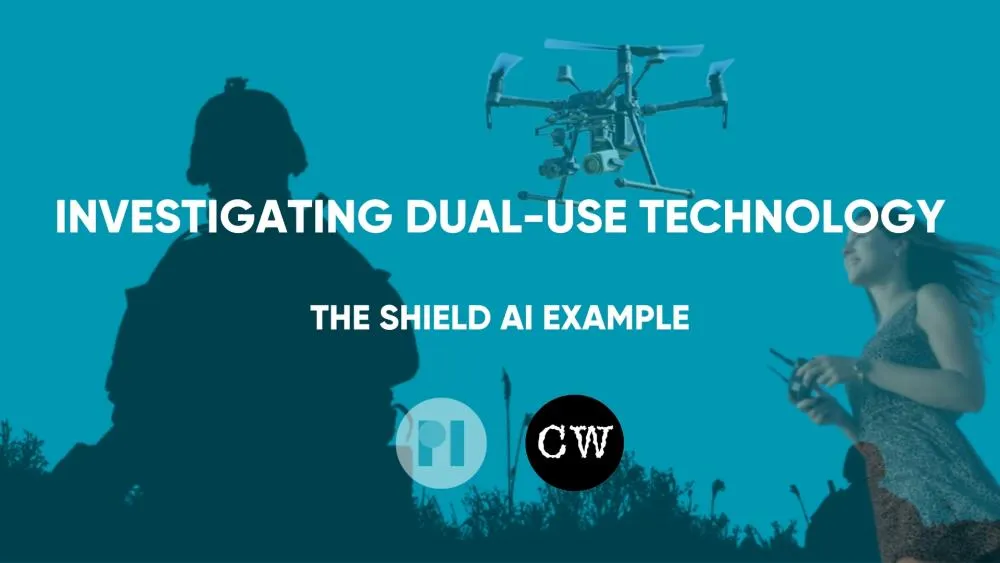
Case Study: Shield AI - Pioneering Autonomous Defense Technologies
Shield AI: Revolutionizing Autonomous Defense Systems
Status
Success
Problem Solved
Shield AI addresses the critical challenge of enabling autonomous systems to operate safely and effectively in complex and unpredictable environments, particularly in military and defense contexts. It solves the problem of reducing human risk in high-stakes reconnaissance, surveillance, and combat operations by using AI-driven drones and robotic systems capable of independent navigation and decision-making, even in GPS-denied or communication-denied environments.
Why it Succeeded
Shield AI succeeded due to a strong focus on cutting-edge AI research tailored to real-world defense applications, a clear product-market fit within the Department of Defense, and the ability to deliver tangible operational advantages. Their technology's robustness and reliability in demanding environments fostered trust and adoption by military customers. Strategic leadership, domain expertise from founders and early hires with military and AI backgrounds, and securing key government contracts accelerated growth and market penetration.
Funding and Evaluation
- Total Funding: Approximately $143 million (as of mid-2024)
- Peak Valuation: Reported valuations around $1 billion, reaching unicorn status
How it Works
Shield AI develops advanced AI software that powers autonomous drones and robotic platforms capable of navigating and mapping complex environments without human input or external navigation aids like GPS. Using a combination of computer vision, simultaneous localization and mapping (SLAM), sensor fusion, and machine learning, their systems can:
- Conduct indoor and outdoor reconnaissance missions autonomously
- Identify and classify targets or obstacles in real time
- Operate in communications-denied and contested environments
A flagship product is their autonomous drone named "Hivemind," which pairs advanced onboard AI with rugged hardware. The AI enables real-time decision-making to adapt to dynamic mission parameters, minimizing risk to human soldiers and increasing mission success rates.
Perspective
Shield AI exemplifies how tightly integrating AI research with domain-specific military challenges can create impactful, real-world solutions. Their successes highlight the importance of reliability, safety, and mission-critical performance in AI deployments, especially in defense where stakes are high. As autonomous systems become increasingly pivotal, Shield AI’s approach of blending robotics, perception, and strategic understanding will likely remain a benchmark. However, ongoing challenges around ethics, regulatory frameworks, and potential escalation in autonomous warfare technologies will require careful management.
Overall, Shield AI’s trajectory underscores that success in AI startups often hinges not just on innovative technology but also on deep domain expertise, committed customer partnerships, and adaptability to complex operational environments.
Visuals