Synthesia: Revolutionizing Video Content Creation through AI
Status
Success
Problem Solved
Creating high-quality video content traditionally requires expensive equipment, professional talent, and extensive time investment. This creates barriers for businesses and individuals seeking scalable, multilingual, and personalized video communication.
Why it Succeeded
Synthesia succeeded by combining advanced AI-driven video synthesis with an easy-to-use platform. It empowered users without technical or production expertise to generate realistic, customizable videos featuring AI avatars speaking multiple languages. The company carved out a competitive niche in corporate training, marketing, and communication by reducing costs and accelerating production times.
Funding and Evaluation
- Total Funding: Over $66 million raised through multiple funding rounds.
- Peak Valuation: Approximately $1 billion (unicorn status as of 2022).
- Key Investors: Firstminute Capital, EQT Ventures, and BMP Ventures, among others.
How it Works (Technical Overview)
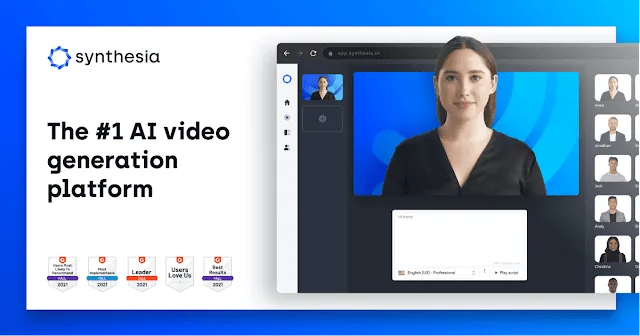
Synthesia uses deep learning techniques, primarily leveraging generative adversarial networks (GANs) and neural rendering, to create photorealistic synthetic avatars capable of lip-syncing to any provided script. Users input text, select an AI presenter avatar, and optionally customize backgrounds, languages, and voice styles. The platform's AI models synthesize speech and facial movements, producing seamless video outputs without the need for cameras or actors.
Perspective (Analysis)
Synthesia represents a breakthrough in democratizing video production by automating complex creative tasks using AI. Its success highlights the growing demand for scalable, accessible media solutions in global business contexts. By focusing on ease of use, multilingual support, and enterprise-ready features, Synthesia tapped into multiple high-value markets. However, ethical considerations around synthetic media and potential misuse remain challenges the company must navigate. Overall, Synthesia exemplifies how AI can transform traditional creative industries while raising new questions about authenticity and digital content governance.
Visuals